

Cyclical unemployment is a pivotal concept in macroeconomics, representing the fluctuations in the unemployment rate tied closely to the business cycle. It characteristically rises during recessions and declines when the economy experiences growth. This type of unemployment is a key element in understanding the dynamics of the labor market and the broader economy. In this article, we will delve into the causes, implications, and the broader context of cyclical unemployment, comparing it with other forms of unemployment and examining its role during economic downturns such as the 2008 financial crisis.
What Is Cyclical Unemployment?
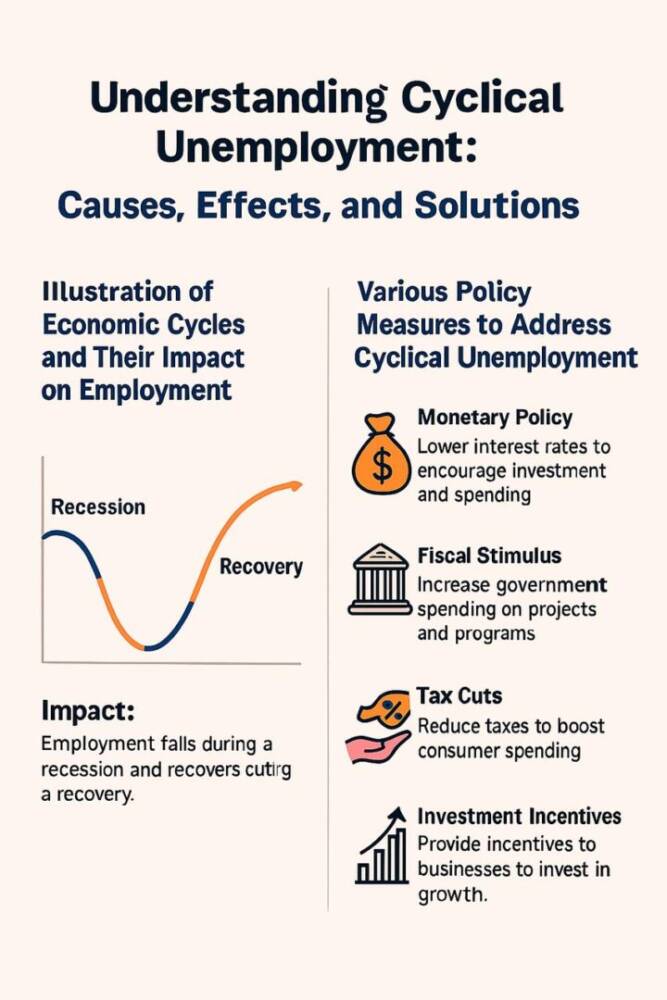
Cyclical unemployment occurs when there is a lack of demand for goods and services in the economy, leading to a reduction in workforce needs by businesses. This unemployment type is intrinsically linked to the cyclical trends of the economy, where periods of economic decline, such as recessions, lead to higher unemployment rates. The core idea is that when economic activity slows down, businesses experience less revenue, necessitating cost-cutting measures, often through workforce reductions.
A critical aspect of cyclical unemployment is its temporary nature. Unlike structural unemployment, which can result from a mismatch of skills, cyclical unemployment tends to resolve as the economy recovers. Economists closely monitor cyclical unemployment as it provides insights into the health of the economy. When a recovery begins, businesses gradually increase hiring to meet rising demand, thus reducing unemployment rates.
Understanding cyclical unemployment also involves recognizing its relationship with GDP. During expansions, GDP rises, leading to increased production and employment. Conversely, during recessions, GDP falls, and unemployment rises. This relationship underscores why cyclical unemployment is a focal point for policymakers who aim to smoothen economic cycles and sustain employment levels.
One way to gauge the extent of cyclical unemployment is by examining the gap between actual and potential output. When the economy operates below its potential, it signifies underutilized resources, including labor, leading to cyclical unemployment. Conversely, when the economy is booming, this gap closes, and unemployment tends to decrease, highlighting the cyclical nature of such joblessness.
Key Drivers of Cyclical Unemployment
The primary driver of cyclical unemployment is the fluctuation in economic activity as dictated by the business cycle. During downturns, demand for products and services declines, prompting businesses to lay off employees. These fluctuations are a natural part of the economic cycle, characterized by expansions and contractions. Various factors can influence these cycles, including changes in consumer confidence, fiscal policies, and global economic conditions.
Consumer confidence plays a significant role in driving cyclical unemployment. When consumers feel uncertain about the economy’s future, they tend to reduce spending, leading to decreased demand for goods and services. This decreased demand compels businesses to cut back on production and, subsequently, their workforce. Thus, consumer sentiment can amplify the effects of cyclical unemployment during a downturn.
Fiscal and monetary policies are also crucial in managing cyclical unemployment. Governments often deploy fiscal measures like tax cuts or increased public spending to stimulate demand during recessions. Similarly, central banks may adjust interest rates to influence borrowing and spending. These policy tools aim to mitigate the severity of economic downturns and, by extension, cyclical unemployment.
Global economic conditions can further exacerbate or alleviate cyclical unemployment. For instance, a global recession can depress export demand, affecting domestic industries and leading to job losses. Conversely, global economic growth can boost demand for exports, leading to increased production and employment. Thus, cyclical unemployment is not only a domestic issue but also influenced by international economic trends.
Stages of Cyclical Unemployment
Cyclical unemployment tends to move in waves, following a pretty familiar pattern every time the economy takes a turn. Let’s break it down step by step:
The Downturn Begins
It all starts when the economy hits a snag — maybe a global pandemic, a financial meltdown, or simply consumers losing confidence and spending less. Suddenly, the smooth rhythm of growth starts to slow.
Layoffs Begin to Roll Out
As companies see sales drop and profits shrink, they scramble to cut expenses. Unfortunately, that often means laying off workers. Businesses try to ride out the storm by downsizing, pausing new projects, or freezing hiring.
Unemployment Rises Across the Board
Job losses ripple through multiple sectors. With fewer paychecks circulating, people tighten their budgets, which only deepens the slowdown. The cycle can keep spiraling until government action or a shift in economic conditions breaks the pattern.
Confidence Slowly Returns
After months (or years) of struggle, consumer and business confidence start to rebound. Maybe a stimulus package helps, or interest rates drop, making it easier to borrow and spend again.
Recovery and Rehiring
As demand picks up, businesses open their doors to more workers. People who lost jobs begin to find new opportunities, and industries that were hit hardest finally stabilize.
Growth and Expansion Phase
The economy doesn’t just recover—it often experiences a burst of growth as pent-up demand drives production and spending. Companies expand operations, wages rise, and optimism fuels investment.
Stability and Vigilance
Once the market balances out, the focus shifts to maintaining stability. Policymakers watch for early warning signs of another downturn so they can act quickly to prevent another employment crisis.

Key Causes of Cyclical Unemployment
So, what actually sparks this rollercoaster of job gains and losses? Here are the usual suspects behind cyclical unemployment:
Economic Recession
The classic cause. When businesses face slower sales, they cut back on staff to reduce costs.
Drop in Business Investment
If companies hold off on new projects or expansion plans, fewer workers are needed to get things done.
Falling Industrial Output
When factories or service sectors produce less, they simply don’t need as many hands on deck.
Financial Crashes or Market Shocks
A stock market crash or banking crisis can shake confidence across the board, leading to spending freezes and layoffs.
Global Events
Pandemics, wars, or supply chain disruptions can throw entire economies off balance, halting production and shrinking demand.
Consumer Behavior Shifts
Sometimes, people just change how they spend. For example, if consumers suddenly prefer digital products over physical goods, industries tied to manufacturing might face layoffs before others adjust.
Technological Overlap During Recession
Even though tech advances aren’t the root of cyclical unemployment, automation and digitalization can amplify it during downturns, as companies adopt machines to cut costs while jobs are already scarce.
Cyclical Unemployment in Economic Downturns: The 2008 Financial Crisis
The 2008 financial crisis serves as a classic example of cyclical unemployment, where a severe economic downturn led to widespread job losses. The crisis was characterized by a collapse in the housing market, leading to a cascade of financial institution failures and a sharp contraction in economic activity. As businesses grappled with declining revenues, massive layoffs ensued, resulting in a spike in unemployment rates.
During the crisis, cyclical unemployment surged as businesses across various sectors reduced their workforce. Industries such as construction, manufacturing, and finance were particularly hard-hit, reflecting the pervasive impact of the recession. The severity of the crisis underscored the interconnectedness of global economies, as the downturn spread internationally, leading to a synchronized rise in unemployment rates worldwide.
One of the critical challenges during the 2008 crisis was the slow recovery of the labor market, even after GDP growth resumed. This slow recovery was partly attributed to “sticky” wages, where wages did not adjust downward quickly enough to reflect economic conditions. As a result, businesses remained cautious in hiring, prolonging the period of high cyclical unemployment.
Policymakers responded to the crisis with unprecedented measures aimed at stimulating the economy and curbing unemployment. These included massive fiscal stimulus packages and aggressive monetary policy interventions. The aim was to restore confidence, revive demand, and expedite the recovery of the labor market. The experience of the 2008 crisis highlighted the importance of timely and coordinated policy responses in managing cyclical unemployment.
Why Cyclical Unemployment Matters
Cyclical unemployment doesn’t just show up on charts—it hits real people and real businesses hard. Here’s why it’s such a big deal:
Loss of Income – Families have less money to cover essentials, which leads to reduced overall spending in the economy.
Shaky Consumer Confidence – When people are worried about their jobs, they delay big purchases like cars, houses, or vacations. That hesitation keeps demand low.
Long-Term Damage – If unemployment drags on, workers can lose valuable skills or drop out of the workforce completely. That makes recovery even slower once the economy bounces back.
Wider Social Impact – Rising unemployment can lead to more stress, reduced mental health, and greater inequality between those who stay employed and those who don’t.
How to Reduce Cyclical Unemployment
Here’s the good news: governments and communities aren’t powerless. There are proven ways to soften the blow and help economies recover faster.
1. Government and Central Bank Action
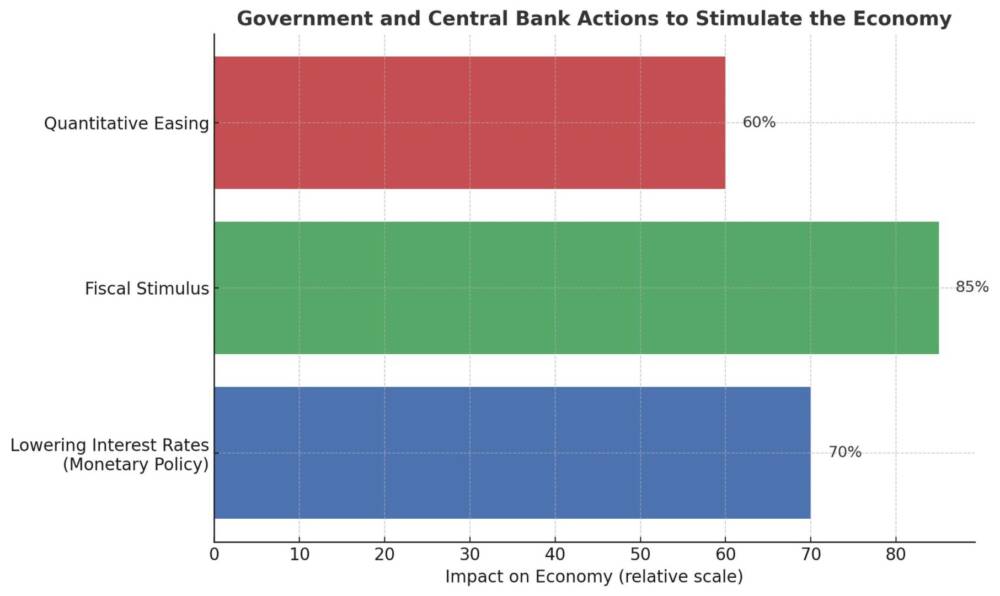
Policymakers have several tools to keep the economy moving:
- Lowering Interest Rates (Monetary Policy) – When borrowing is cheaper, businesses are more likely to invest and hire.
- Fiscal Stimulus – Governments can inject money into the system through tax breaks, public projects, or direct payments to citizens, boosting demand and encouraging companies to rehire.
- Quantitative Easing – Central banks can buy financial assets to pump liquidity into markets, keeping credit flowing and restoring confidence.
2. Boosting Consumer Confidence
When people believe the future looks bright, they start spending again. Encouraging confidence through clear communication, job security initiatives, and visible recovery efforts helps restart the economic engine.
3. Job Retraining and Upskilling
Helping people adapt is key. By providing access to training programs, workers can transition into new or growing industries more easily when the economy starts to recover.
4. Support for Vulnerable Groups
Unemployment benefits, small business loans, and food or rent assistance can prevent families and companies from collapsing during downturns. Safety nets buy time until conditions improve.
5. Promoting Innovation and Small Business Growth
Encouraging startups and innovation can breathe life into struggling economies. New ventures often create fresh job opportunities and help diversify markets, making future downturns less severe.
6. Strengthening Global Cooperation
In an interconnected world, one country’s downturn can ripple across borders. International cooperation on trade, supply chains, and crisis management can help stabilize employment worldwide when recessions hit.
Comparing Cyclical Unemployment With Other Types
Cyclical unemployment is just one of several types of unemployment that economists study. To fully understand it, it’s essential to compare it with other forms like structural, frictional, and seasonal unemployment. Structural unemployment arises from a mismatch between workers’ skills and job requirements, often due to technological advancements or shifts in the economy. Unlike cyclical unemployment, structural unemployment can persist even in a booming economy.
Frictional unemployment, on the other hand, occurs when individuals are temporarily unemployed while transitioning between jobs. This form of unemployment is considered natural and even beneficial as it allows for better matching of jobs and skills. Unlike cyclical unemployment, frictional unemployment exists irrespective of the economic cycle and tends to be short-term.
Seasonal unemployment is another distinct category, driven by changes in demand at different times of the year. For example, industries like agriculture and tourism experience seasonal fluctuations in employment. While cyclical unemployment is influenced by broader economic trends, seasonal unemployment is predictable and occurs regularly.
By understanding these differences, we can appreciate the unique challenges posed by cyclical unemployment. While other types of unemployment may require targeted interventions, cyclical unemployment often necessitates broad economic policies aimed at stimulating demand and restoring growth. This distinction is crucial for policymakers in devising effective strategies to address unemployment.
Policy Responses to Cyclical Unemployment
Addressing cyclical unemployment requires a range of policy responses designed to stimulate economic activity and boost employment. Governments and central banks play a pivotal role in implementing these policies, which can include both fiscal and monetary measures. The goal is to smoothen economic cycles and mitigate the adverse effects of downturns on the labor market.
Fiscal policy is a key tool in combating cyclical unemployment. During recessions, governments may implement expansionary fiscal policies, such as increasing public spending or cutting taxes, to inject demand into the economy. These measures aim to boost consumer spending and business investment, thereby reducing unemployment rates.
Monetary policy also plays a crucial role in managing cyclical unemployment. Central banks can lower interest rates to make borrowing more attractive, encouraging both consumer spending and business investment. Additionally, unconventional measures like quantitative easing can be employed to increase money supply and liquidity in the financial system.
Coordinated international efforts can further enhance the effectiveness of policy responses. Since cyclical unemployment can have global implications, collaborative actions among countries can help stabilize the global economy. Such coordination can involve synchronized policy measures or agreements to boost trade, which can support economic recovery and employment.
In conclusion, cyclical unemployment is a dynamic and complex component of the labor market, deeply intertwined with the broader economic cycle. Understanding its causes, implications, and policy responses is essential for navigating economic fluctuations and fostering sustained employment growth. By recognizing the unique characteristics of cyclical unemployment and employing targeted policy measures, we can mitigate its impact and support a more resilient economy.
| Type | Cause | Duration |
|---|---|---|
| Cyclical | Economic downturns | Short to medium-term |
| Structural | Skill mismatch | Long-term |
| Frictional | Job transitions | Short-term |
| Seasonal | Seasonal demand | Predictable |

Janet Ekelt is a seasoned content writer and SEO expert, with experience in digital media. She has held various senior writing positions at enterprises like CloudTDMS (Synthetic Data Factory), Barrownz Group, and ATZA. Janet has also been Editorial Writer at The Irish Times, a leading Irish English language news platform. She excels in content creation, proofreading, and editing, ensuring that every piece is polished and impactful. Her expertise in crafting SEO-friendly content for multiple verticals of businesses, including technology, healthcare, finance, sports, innovation, and more.