

Why AI Needs Infrastructure
Artificial intelligence has quickly moved from futuristic concept to daily reality. From chatbots answering customer questions to advanced medical diagnostics, AI is reshaping how businesses and societies operate. Yet, behind every breakthrough lies an invisible but essential foundation: infrastructure.
AI models are like powerful engines. They need racetracks, fuel, and mechanics to perform. In practice, these “racetracks” are global data centers, the “fuel” is massive energy consumption, and the “mechanics” are investors, engineers, and policymakers building and maintaining the backbone that keeps AI running.
Business Relevance of Infrastructure
For businesses, this matters more than ever. AI infrastructure investment is not a niche play—it’s the foundation of competitiveness. Governments, tech companies, and institutional investors are pouring billions into servers, chips, fiber optics, and renewable energy. These decisions will define which countries and corporations lead in the next technological era.
The Rise of AI and the Infrastructure Bottleneck
Rapid AI Adoption Outpacing Resources
AI adoption has accelerated dramatically. Banks use AI to monitor compliance and detect fraud. Retailers optimize supply chains with predictive models. Manufacturers apply machine learning for real-time quality control. Generative AI, from large language models to image generators, is being integrated into education, marketing, and healthcare.
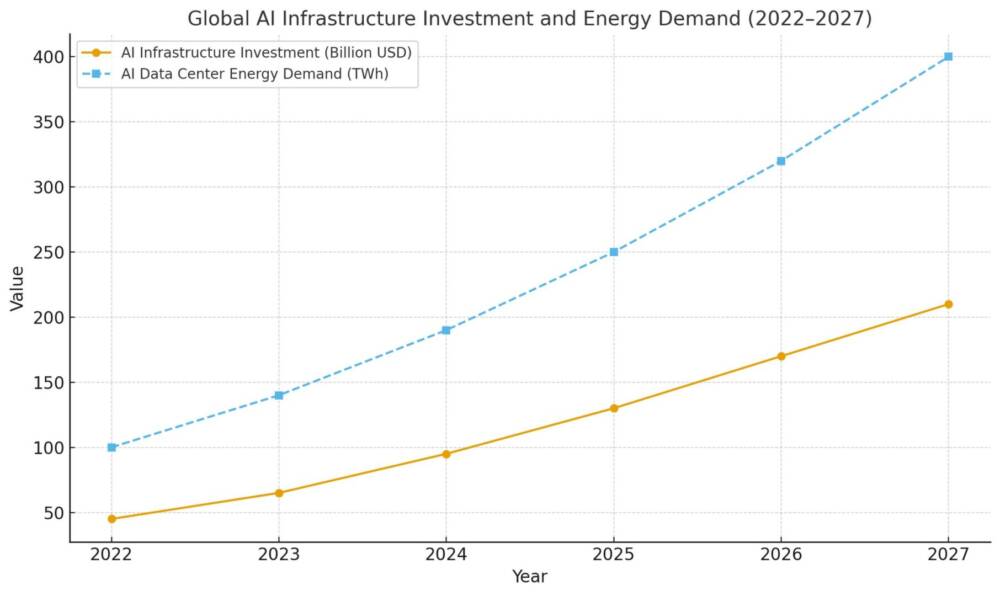
Yet this surge has exposed a bottleneck: resources are limited. GPUs are in short supply, data centers run near capacity, and energy demands keep growing. According to industry analysts, demand for AI compute could outpace supply by more than 2x over the next decade if investments do not accelerate.
Why AI Creates Unique Demands
Unlike conventional IT, AI workloads require parallel computation and massive datasets. Training a cutting-edge model can involve trillions of calculations, while serving it to millions of users requires fast networking and resilient storage. This is why infrastructure—not just algorithms—has become the limiting factor in AI progress.
Long-Term Implications for Business
This bottleneck creates both risks and opportunities. Companies unable to access scalable infrastructure may find themselves stuck with outdated AI tools, while those aligned with infrastructure growth will gain an advantage. For investors, this is not just a technology story—it’s an economic megatrend reshaping global markets.
Why AI Investment Matters
Driving Economic Growth
Investments in AI infrastructure ripple through economies. Building data centers requires engineers, electricians, construction workers, and logistics providers. Expanding semiconductor plants creates new supply chains across Asia, the US, and Europe. Every billion invested sparks growth across multiple industries.
For regions, hosting AI infrastructure often means attracting new jobs and talent. Just as cities once competed to host airports or rail hubs, today they compete for AI data centers and semiconductor facilities.
Principles of Smart Investment
As highlighted by leading infrastructure investors, AI may be new, but the principles of investment remain old. Projects require discipline, long-term vision, and careful risk assessment. Investors must balance the hype around AI with fundamentals like returns, sustainability, and resilience.
Competitive Advantage for Businesses
Companies that secure reliable access to AI infrastructure gain speed, efficiency, and scalability. For example, a pharmaceutical company with priority access to compute resources can accelerate drug discovery faster than rivals. Infrastructure investment therefore becomes a strategic moat, protecting leaders from disruption.
Data Centers: The New Oil Fields
Data Centers as Strategic Assets
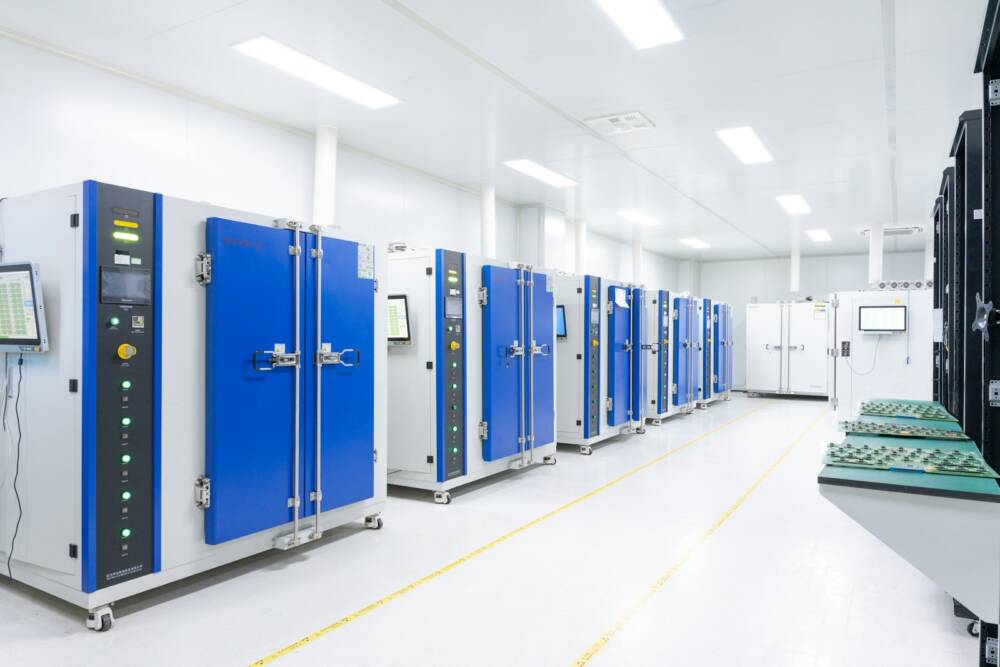
If “data is the new oil,” then data centers are the oil fields of the 21st century. These facilities are not just storage spaces—they are highly specialized environments optimized to handle AI’s extreme computational requirements.
Modern AI-focused data centers host racks of GPUs, specialized AI accelerators, and petabytes of storage. They require advanced cooling systems to prevent overheating and consume energy at unprecedented scales. Unlike traditional IT centers, they are designed for low latency, high bandwidth, and continuous availability.
Ownership of data centers has become a strategic asset. Investors and corporations alike recognize that controlling infrastructure is akin to controlling the resource that powers the entire AI economy.
The Sustainability Question
But rapid growth brings challenges. AI data centers consume immense amounts of electricity and water, straining local ecosystems. A single hyperscale facility can require as much energy as a mid-sized city. Communities are asking whether the economic benefits outweigh the environmental costs.
This is why sustainable data centers are now central to investment strategies. Techniques like liquid cooling, modular design, and renewable energy integration are moving from “nice to have” to non-negotiable. Investors who ignore sustainability risk not only regulatory backlash but also reputational harm in a world increasingly focused on climate responsibility.
Case Study: Aligned Data Centers Acquisition
A striking example of this trend is the acquisition of Aligned Data Centers by a consortium including BlackRock’s Global Infrastructure Partners and AIP Management. The deal, valued in the billions, highlights how institutional investors view data centers as critical, long-term assets.
Such acquisitions are not speculative bets—they’re treated as infrastructure staples, much like owning toll roads or power grids. For investors, the logic is simple: as AI grows, demand for data centers will rise steadily, making them reliable generators of cash flow.
The Role of Big Tech and Institutional Investors
Big Tech as Builders
Big Tech is not waiting for others to solve the infrastructure gap. Microsoft, for instance, announced a $30 billion investment in the UK’s AI future, including new data centers, training programs, and cloud services. This is not charity—it’s strategy. By embedding itself in regional economies, Microsoft ensures access to talent, government support, and market share.
Amazon and Google are also doubling down, building proprietary AI chips (AWS’s Trainium and Google’s TPU) to reduce dependency on third-party suppliers like NVIDIA. These moves tighten their control over the infrastructure pipeline, giving them a competitive edge.
Institutional Investors Betting on Infrastructure
On the financial side, institutional players like Brookfield and IFM Investors are approaching AI with caution but commitment. They stress that while the technology is new, investment principles remain timeless: evaluate risks, balance portfolios, and plan for decades, not years.
These investors view AI infrastructure as the next category of “essential services,” much like airports, ports, and utilities. The logic is straightforward: society cannot function without it, and demand is likely to rise regardless of economic cycles.
Partnerships Between Tech and Finance
The future is not about tech or finance operating alone—it’s about partnerships. Big Tech brings technological expertise, while institutional investors provide capital and long-term perspective. Together, they create infrastructure capable of meeting AI’s insatiable demand.
Such partnerships are already reshaping the market. Co-investments allow for faster scaling, shared risk, and broader geographic reach. The blending of Silicon Valley and Wall Street is a defining feature of the AI infrastructure boom.
Challenges Facing AI Infrastructure Growth
Energy Consumption Crisis
One of the largest challenges is energy. Training a state-of-the-art AI model can consume megawatt-hours equivalent to powering thousands of homes. As AI adoption grows, energy grids face unprecedented strain. Governments and companies must now integrate renewable energy sources to keep AI sustainable.
Some solutions include colocating data centers near renewable sources—hydroelectric dams, wind farms, and solar arrays. Others involve improving chip efficiency, such as NVIDIA’s new AI accelerators designed to deliver more performance per watt.

Environmental and Social Concerns
Beyond energy, data centers raise environmental questions. Cooling systems often require large amounts of water, creating tensions in drought-prone areas. Land use conflicts arise when large facilities compete with communities for space and resources.
Socially, the benefits of AI must also be considered. While AI can create jobs, it may also automate roles, raising questions about workforce disruption. Investors are increasingly expected to demonstrate social responsibility alongside profitability.
Regulatory Pressure
Governments are beginning to regulate AI infrastructure more actively. Policies on data privacy, carbon emissions, and national security are shaping how and where infrastructure can be built. For example, some regions now require proof of renewable integration before approving new data center projects.
This evolving regulatory landscape adds complexity but also opportunity. Companies that lead in compliance and sustainability can set the standards others must follow, creating barriers to entry.
Global Competition and Geopolitics
The New Tech Race
The competition for AI infrastructure has become a global race. The United States remains dominant thanks to its tech giants, venture capital ecosystem, and robust data center footprint. But it is far from alone.
The United Kingdom has positioned itself as a rising AI hub, backed by Microsoft’s $30 billion commitment and government policies designed to attract AI investment. Meanwhile, the European Union emphasizes a balanced approach—pushing both innovation and regulation, especially on sustainability and data privacy.
In Asia, countries like China, Taiwan, South Korea, and Singapore are investing heavily in semiconductors and data center clusters. Taiwan in particular is central to the global chip supply chain, while China is building mega AI parks to secure technological self-reliance.
Geopolitical Risks
This global competition comes with risks. Export controls on advanced semiconductors, such as restrictions placed by the US on high-performance chips to China, create ripple effects across the supply chain. Political tensions in the Taiwan Strait could disrupt global access to chips, while trade disputes risk slowing infrastructure growth.
For investors, this means diversification is key. Betting too heavily on one region or supplier could expose portfolios to geopolitical shocks. Businesses that spread infrastructure investment across multiple geographies will be better positioned to handle uncertainty.
National Security Considerations
Governments increasingly view AI infrastructure as a matter of national security. Just as control of oil pipelines was once strategic, control of AI data centers, chips, and energy grids is now critical. Nations are beginning to treat AI infrastructure as strategic assets requiring oversight and protection.

What This Means for Businesses of All Sizes
Opportunities for Small and Medium Enterprises
For SMEs, the rise of AI infrastructure represents opportunity. Access to powerful cloud-based AI services lowers barriers to entry. A small retailer can now use AI to analyze customer data, a local law firm can deploy AI-powered research tools, and a health clinic can leverage diagnostics—all without owning a single server.
As infrastructure investment expands, these services will become more affordable and reliable. This democratization of AI means innovation is no longer confined to Silicon Valley giants—it’s available to ambitious businesses worldwide.
Corporate Strategies for Large Enterprises
For larger corporations, AI infrastructure is both an opportunity and a strategic necessity. Banks rely on AI to monitor billions of transactions. Airlines use AI to optimize scheduling and maintenance. Manufacturers employ predictive AI to prevent costly breakdowns.
But scaling these solutions requires guaranteed access to infrastructure. This is why some corporations are co-investing in data centers or partnering directly with infrastructure funds. By securing early access to capacity, they protect themselves from bottlenecks and gain a first-mover advantage in deploying advanced AI solutions.
Long-Term Implications
For both small and large businesses, the message is clear: AI infrastructure investment today defines the competitive landscape of tomorrow. Those who align their strategies with infrastructure growth will innovate faster, deliver better customer experiences, and reduce costs. Those who wait risk falling behind.

The Future of AI Infrastructure Investment
Green Data Centers and Renewable Integration
The next decade will see a shift toward sustainable AI infrastructure. Investors and companies recognize that growth cannot come at the cost of the planet. Carbon-neutral facilities, renewable-powered hubs, and innovative cooling methods will move from fringe experiments to mainstream practice.
This isn’t just about compliance with regulations—it’s also about competitive advantage. Businesses that can market their AI as “green” will earn trust from consumers and gain favorable treatment from policymakers.
Edge Infrastructure and Decentralization
Not all AI will run in giant hyperscale facilities. The future also lies in edge infrastructure—smaller, distributed data centers that process data closer to the user. This is critical for applications like autonomous vehicles, smart cities, and real-time healthcare monitoring, where latency can mean the difference between success and failure.
Edge computing will not replace centralized hubs but complement them, creating a hybrid model. Investors who diversify across both central and edge infrastructure will benefit from this balance of power and proximity.
Long-Term Investment Principles
Despite the excitement, AI infrastructure investment must remain grounded in timeless principles. As Brookfield and IFM Investors emphasize, the fundamentals of risk assessment, return analysis, and long-term planning do not change. The challenge is to apply them wisely to a rapidly evolving technological landscape.
The winners will be those who balance vision with discipline—funding growth while avoiding speculative excess.
Conclusion: Why Now Is the Moment to Watch
Infrastructure as the AI Enabler
AI has the potential to transform every industry, but without infrastructure, it cannot scale. Chips, servers, data centers, and energy grids are the hidden enablers of progress. Just as railroads unlocked industrialization and the internet enabled globalization, AI infrastructure will define the next era.

The Strategic Imperative
For businesses, investors, and governments, the imperative is clear: act now. AI infrastructure investment is not a passing trend—it is the foundation of competitiveness in the 21st century. Those who move early will set the standards, capture the markets, and lead the innovation race. Those who hesitate risk being left behind.
Frequently Asked Questions (FAQ)
1. What is AI infrastructure investment?
It refers to funding the physical and digital backbone of artificial intelligence: data centers, chips, networking, and renewable energy systems that support AI models.
2. Why is AI infrastructure considered strategic?
Because without it, AI cannot scale. It’s essential for business competitiveness, economic growth, and even national security.
3. How much are companies investing in AI infrastructure?
Companies and investors are pouring tens of billions of dollars into infrastructure projects globally. Deals like Microsoft’s $30 billion UK investment and BlackRock’s acquisition of Aligned Data Centers highlight the scale.
4. What are the risks of AI infrastructure growth?
Key risks include energy consumption, environmental impact, regulatory scrutiny, and geopolitical instability across global supply chains.
5. What’s next for AI infrastructure?
Expect more green data centers, broader edge infrastructure, and deeper partnerships between Big Tech and institutional investors to meet global demand.

MKTPlace is a leading digital and social media platform for traders and investors. MKTPlace offers premiere resources for trading and investing education, digital resources for personal finance, news about IoT, AI, Blockchain, Business, market analysis and education resources and guides.