Madrid, Spain – The specialty fertilizer industry is undergoing a structural transition toward integrated, performance-driven systems, according to Vatren Jurin, Chief Technology Officer and Partner at DunhamTrimmer, who will speak at the NewAG International Conference & Exhibition 2026 on April 28–29 in Madrid.
Jurin’s presentation, “Market Trends for Specialty Fertilizers,” is based on a combined analysis of global patent filings, academic research, and proprietary market intelligence. The findings indicate that innovation is moving beyond nutrient composition toward the engineering of delivery systems, efficiency mechanisms, and biological integration.

“The industry is no longer centered on the nutrient itself, but on how it is delivered and optimized within a broader system,” Jurin said. “We are seeing a clear shift toward solutions designed to achieve specific agronomic outcomes.”
The transition is being driven by persistent inefficiencies in nutrient use, stricter environmental regulations, rising production costs, and supply chain instability. These factors are accelerating demand for technologies that improve nutrient-use efficiency and reduce losses.
As a result, R&D pipelines are increasingly focused on controlled-release fertilizers, advanced inhibitors, and solutions that combine chemical and biological components. Biological inputs, in particular, are gaining relevance as part of integrated formulations rather than standalone products.
Water-soluble and slow-release fertilizers remain key segments, supported by innovations in coating technologies and carrier materials. At the same time, biological integration is redefining product design, requiring new approaches to formulation and performance validation.
However, Jurin highlighted that combining multiple technologies into a single product raises formulation challenges, especially regarding stability and compatibility.
According to DunhamTrimmer’s analysis, four innovation fronts are converging: nutrient delivery systems, stabilizers and inhibitors, materials science, and biological inputs. Advances in these areas are enabling the development of more precise and adaptable fertilizer solutions.
Looking forward, Jurin expects the market to increasingly favor multi-functional systems that integrate nutrients, biologicals, and advanced materials. These systems are designed to deliver consistent performance under variable agronomic conditions.
In this context, competitive differentiation will depend on companies’ ability to integrate data, research, and technology into scalable solutions. “Value creation is shifting toward those who can manage complexity and translate it into reliable field performance,” Jurin noted.
NAI 2026 to Spotlight Innovation and Market Trends
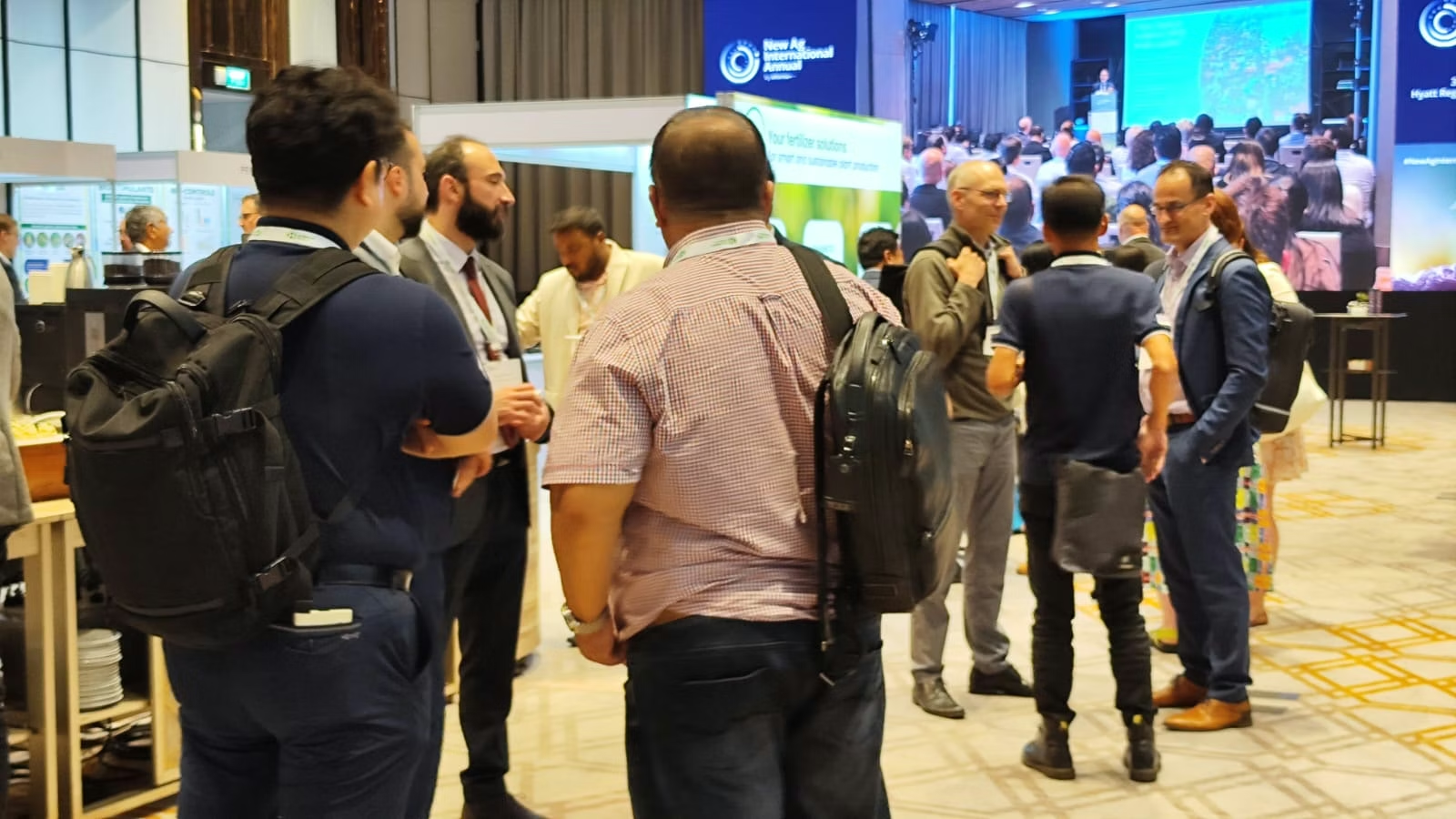 The NewAG International Annual 2026 will feature a dual-track agenda focused on specialty fertilizers and biological inputs. The program will cover innovations in sustainable fertilization, biostimulants, biocontrol technologies, and circular economy approaches, including waste-based fertilizers.
The event will also provide insights into the European market, where regulatory pressure and sustainability goals are driving adoption of advanced agricultural inputs.
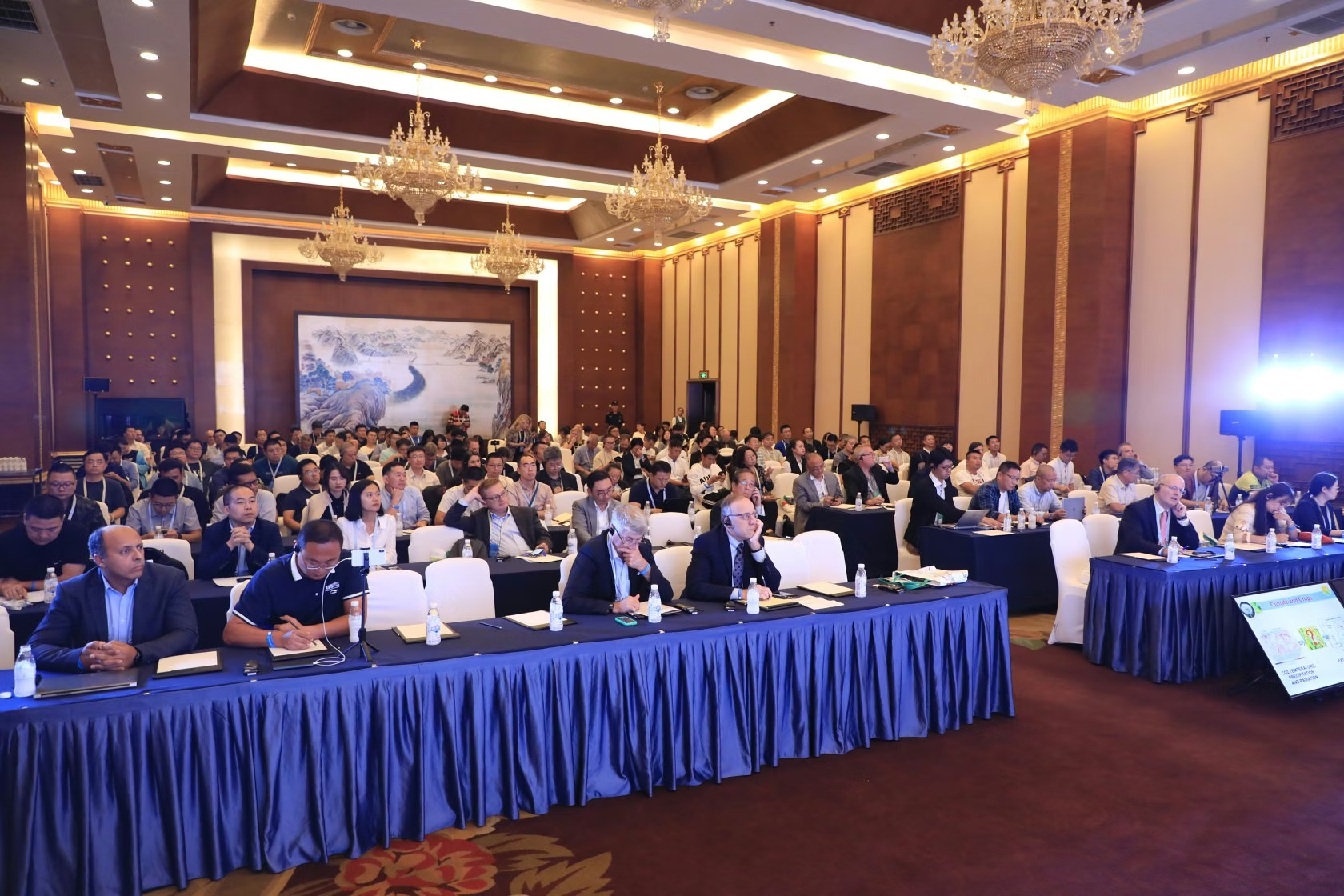
With participation from industry leaders, researchers, and distributors, the conference is expected to serve as a key platform for discussing technological trends and business opportunities in the global specialty fertilizer sector.