
The biological inputs market is accelerating across Latin America, but only a limited number of companies will achieve sustainable profitability, warns DunhamTrimmer
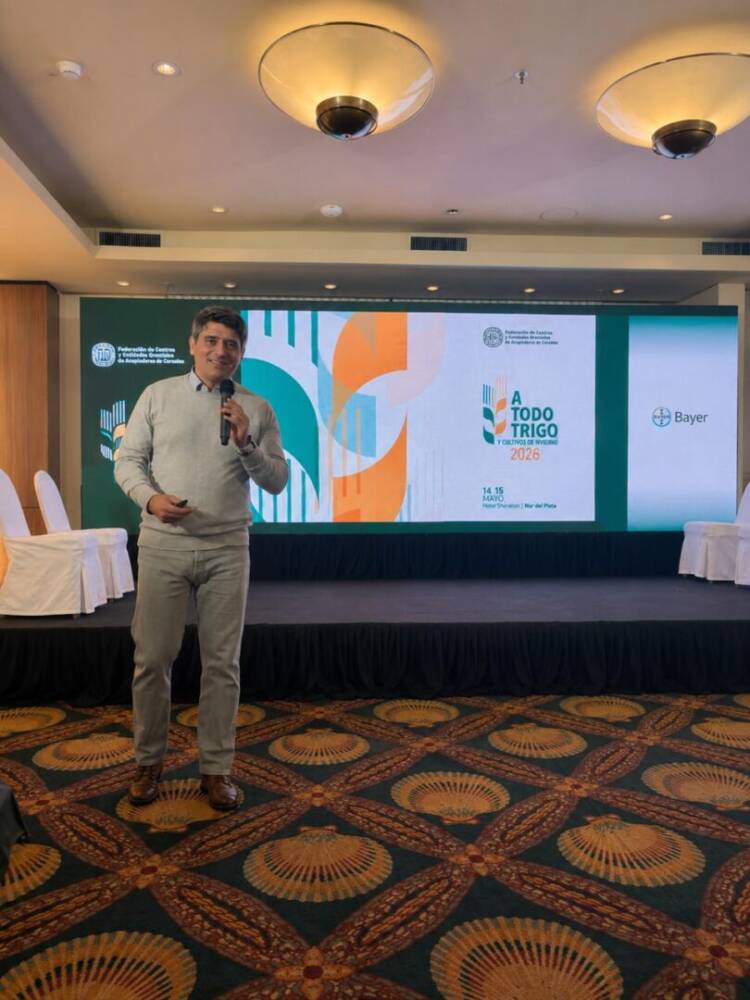
“The market is growing, but value is being captured by those capable of differentiating themselves.” With that statement, Ignacio Moyano summarized the current landscape of biological inputs during his participation at A Todo Trigo 2026. According to the Vice President of Business Development for Latin America at DunhamTrimmer, the rapid expansion of the sector in Latin America is creating significant opportunities, while also introducing a new competitive challenge: transforming market growth into sustainable profitability.
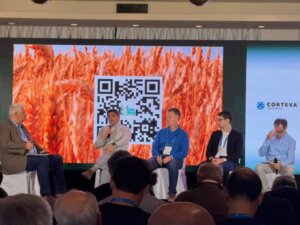
Moyano warned that the global supply of biological solutions is expanding faster than demand, placing increasing pressure on prices and margins. According to the market intelligence specialist, numerous companies are entering the business with similar portfolios, volume-driven strategies, and limited technical differentiation. “The region is leading global growth in biologicals, but leadership will ultimately be defined by execution, not by the product itself,” he stated during the panel “Use of Biological Inputs in Agriculture and Application Technologies.”
Within this context, the specialist emphasized that future competitive advantages will depend on the ability to generate agronomic evidence, develop solutions tailored to specific production systems, and provide consistent technical support to growers. “The real challenge is not adoption, but value capture,” he noted.
Latin America Outlook: Expansion and Consolidation
 Projections presented by DunhamTrimmer point to strong expansion in the biologicals market through 2030. According to the data shared by Moyano, the Latin American biological inputs market could reach US$6.7 billion by the end of the decade, driven primarily by biocontrol and biostimulants, with a compound annual growth rate approaching 14% between 2025 and 2030.
The report also indicates that Latin America is undergoing an accelerated consolidation process. Mergers and acquisitions (M&A) are advancing as a mechanism to scale biological innovation and capture technological differentiation. Investment funds, multinational corporations, and strategic capital are increasing participation in startups and specialized companies focused on agricultural microbiology, regenerative agriculture, and carbon- and sustainability-related solutions.
Another key point highlighted by Moyano was the structural heterogeneity of the regional market. Brazil emerged as the primary engine of the sector, representing close to 50% of the Latin American biologicals market and operating within a more advanced regulatory environment compared to the rest of the region. The executive also highlighted the high adoption rate of biological technologies in intensive production systems and the growing integration between biologicals and digital agriculture.
In the case of Argentina, DunhamTrimmer described a market valued at approximately US$124 million in 2024, characterized by a more conservative adoption profile and a strong focus on economic efficiency and agronomic return. However, Moyano stressed that the country maintains strong technical leadership and a highly qualified professional base, factors that could accelerate future segment growth.
For Mexico, Colombia, Peru, and Chile, the analysis presented markets that remain fragmented, with biocontrol and biostimulants dominating current demand, while gradually moving toward more specialized technical models and premium value capture.
Drivers of the Future
 Moyano also linked the future of biological inputs to broader transformations in global agricultural trade. Among these, he highlighted the Mercosur–European Union agreement, which could expand access to international markets while simultaneously increasing competitive pressure on regional production systems. In this environment, he argued, biological innovation will become increasingly strategic for maintaining competitiveness, productivity, and sustainability.
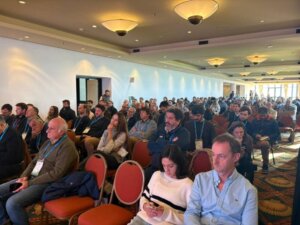
DunhamTrimmer participated in A Todo Trigo 2026, held on May 14-15 at the Sheraton Mar del Plata Hotel. Organized by the Federación de Acopiadores de Granos, the event has consolidated its position over more than two decades as one of Argentina’s leading forums for the grain value chain, bringing together grain handlers, input suppliers, exporters, technical institutions, researchers, and public policy leaders.
The 2026 edition unfolded amid a particularly favorable outlook for Argentina’s winter crop season. With wheat area projected at approximately 6.7 million hectares — a level comparable to the 2021/22 record — alongside improved soil moisture profiles after years of drought and more favorable input-to-output economics, the sector is preparing for a significant production recovery. At the same time, winter crops such as barley, canola, carinata, and camelina are gaining strategic importance within regional farming systems.
Against this backdrop, biological inputs are becoming increasingly integrated into productivity efficiency and sustainability strategies. However, according to Moyano’s central message, market expansion alone no longer guarantees profitability. The next stage of the biologicals business in Latin America will be defined by those capable of transforming technical innovation into tangible economic value for growers.