Inpasa shows how integrated production models are accelerating the grain’s share in Brazil’s biofuel matrix
Corn ethanol is expected to reach a one-third share of Brazilian production as early as the 2027/28 crop year, two years ahead of projections, according to an estimate by consultancy StoneX, reflecting the rapid expansion of installed corn-processing capacity in the country. Corn ethanol currently accounts for 27% of the total volume produced in Brazil – a share that is expected to reach 33.6% in 2027/28.
This evolution will be accompanied by strong growth in industrial capacity. According to the consultancy, corn ethanol production is expected to reach 13.6 billion liters in 2027/28, up 29.7% from the previous season.
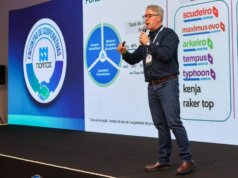
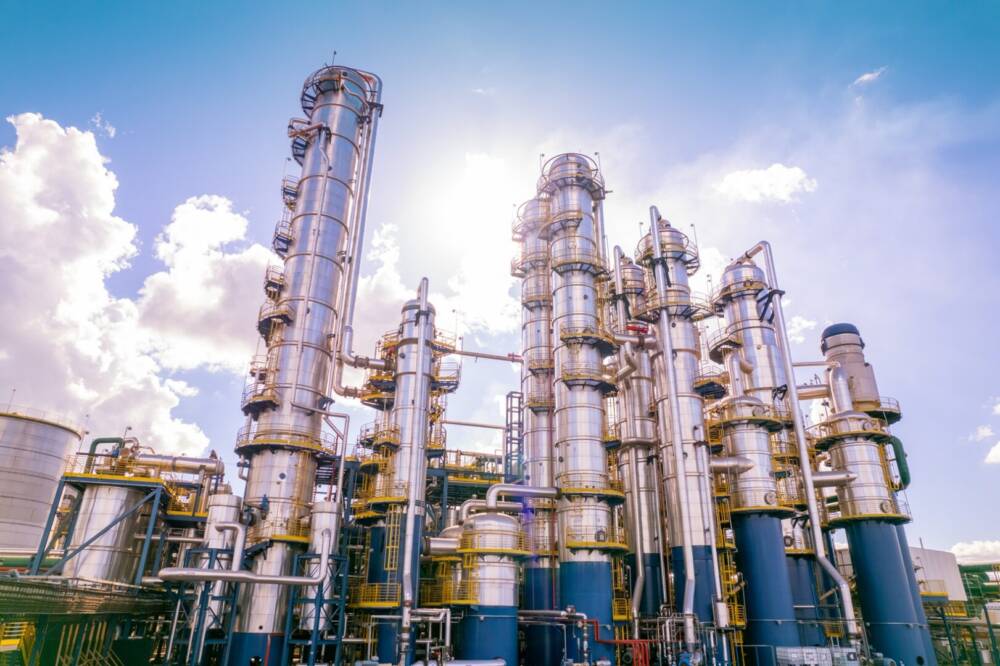
The movement also highlights the transformation of corn into an industrial platform capable of generating multiple products beyond fuel. One of the main examples is Inpasa, which is already the world’s second-largest ethanol producer. The company produced 6.7 billion liters of ethanol in 2026, with production projected to reach 8.6 billion liters in 2027. Over the same period, grain processing is expected to increase from 15 million to 19 million metric tons.
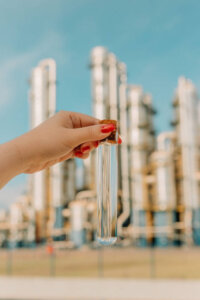
The company’s model combines anhydrous, hydrated and neutral ethanol with co-products such as DDGS, technical corn oil, as well as electricity. The platform processes corn, sorghum and biomass, transforming different fractions of the raw materials into fuels, animal nutrition ingredients and industrial inputs.
Among the main co-products is FortiPro DDGS, obtained during the production of corn ethanol. Rich in protein, energy and digestible fiber, the ingredient is intended for cattle, swine and poultry feed. Inpasa projects DDGS production of 3.5 million metric tons in 2026.
Another relevant stream is technical corn oil, whose production capacity at the company is expected to reach 340,000 metric tons per year in 2026 and 436,000 metric tons in 2027. The product can be used as a feedstock for FAME, HVO and SAF, as well as by the chemical industry.
Industrial expansion is being accompanied by investments in logistics and infrastructure. Inpasa operates at eight Brazilian and European ports, has more than 500 trucks of its own and is expanding its rail, waterway and storage infrastructure to support growing volumes. The company also reports exports to more than 40 countries.
One of the differentiating factors highlighted by the company is Brazil’s second-crop corn production model. The grain is grown after the soybean harvest, using the same agricultural area and avoiding, according to the company, the need to open new areas. The system also enables the simultaneous generation of fuel and co-products for animal nutrition.
According to Bruno Maier, Inpasa’s Institutional Relations Manager, the company demonstrates in practice that it is possible to reconcile agricultural production for food purposes with the generation of clean and sustainable energy.
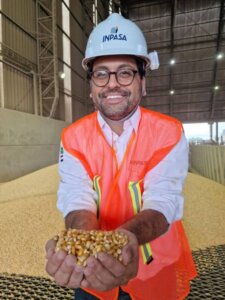
“Unlike the European model, which often fuels the debate over competition between ‘food versus fuel,’ the Brazilian multi-cropping system offers an integrated solution for food and energy security,” the executive argues.
Inpasa has also been expanding the potential uses of ethanol beyond road transportation. In October 2025, the Laura Mærsk vessel conducted an E10 blend test using the company’s second-crop corn ethanol. In December, an E50 test confirmed the operational feasibility of a 50% ethanol blend. In May 2026, the first voyage using 100% ethanol was completed on a dual-fuel vessel prepared for methanol.
In turn, the International Maritime Organization (IMO) recognized the route of Brazilian second-crop corn ethanol, with an almost 78% reduction in greenhouse gas emissions compared with conventional bunker fuel.
The growth projected by StoneX, therefore, is occurring in parallel with the transformation of corn ethanol into a broader industrial platform. The expansion of production capacity is expected to increase not only the supply of biofuel, but also the availability of protein for animal feed, oils for other biofuels and new industrial applications for a value chain based on the full utilization of the grain.