Home Blog Page 2

AI Infrastructure Investment: The Backbone of the Next Digital Revolution

0
AI Infrastructure Investment
Photo by Alexandre Viard on Unsplash

Why AI Needs Infrastructure

Artificial intelligence has quickly moved from futuristic concept to daily reality. From chatbots answering customer questions to advanced medical diagnostics, AI is reshaping how businesses and societies operate. Yet, behind every breakthrough lies an invisible but essential foundation: infrastructure.

AI models are like powerful engines. They need racetracks, fuel, and mechanics to perform. In practice, these “racetracks” are global data centers, the “fuel” is massive energy consumption, and the “mechanics” are investors, engineers, and policymakers building and maintaining the backbone that keeps AI running.

Business Relevance of Infrastructure

For businesses, this matters more than ever. AI infrastructure investment is not a niche play—it’s the foundation of competitiveness. Governments, tech companies, and institutional investors are pouring billions into servers, chips, fiber optics, and renewable energy. These decisions will define which countries and corporations lead in the next technological era.


The Rise of AI and the Infrastructure Bottleneck

Rapid AI Adoption Outpacing Resources

AI adoption has accelerated dramatically. Banks use AI to monitor compliance and detect fraud. Retailers optimize supply chains with predictive models. Manufacturers apply machine learning for real-time quality control. Generative AI, from large language models to image generators, is being integrated into education, marketing, and healthcare.

Yet this surge has exposed a bottleneck: resources are limited. GPUs are in short supply, data centers run near capacity, and energy demands keep growing. According to industry analysts, demand for AI compute could outpace supply by more than 2x over the next decade if investments do not accelerate.

Why AI Creates Unique Demands

Unlike conventional IT, AI workloads require parallel computation and massive datasets. Training a cutting-edge model can involve trillions of calculations, while serving it to millions of users requires fast networking and resilient storage. This is why infrastructure—not just algorithms—has become the limiting factor in AI progress.

Long-Term Implications for Business

This bottleneck creates both risks and opportunities. Companies unable to access scalable infrastructure may find themselves stuck with outdated AI tools, while those aligned with infrastructure growth will gain an advantage. For investors, this is not just a technology story—it’s an economic megatrend reshaping global markets.


Why AI Investment Matters

Driving Economic Growth

Investments in AI infrastructure ripple through economies. Building data centers requires engineers, electricians, construction workers, and logistics providers. Expanding semiconductor plants creates new supply chains across Asia, the US, and Europe. Every billion invested sparks growth across multiple industries.

For regions, hosting AI infrastructure often means attracting new jobs and talent. Just as cities once competed to host airports or rail hubs, today they compete for AI data centers and semiconductor facilities.

Principles of Smart Investment

As highlighted by leading infrastructure investors, AI may be new, but the principles of investment remain old. Projects require discipline, long-term vision, and careful risk assessment. Investors must balance the hype around AI with fundamentals like returns, sustainability, and resilience.

Competitive Advantage for Businesses

Companies that secure reliable access to AI infrastructure gain speed, efficiency, and scalability. For example, a pharmaceutical company with priority access to compute resources can accelerate drug discovery faster than rivals. Infrastructure investment therefore becomes a strategic moat, protecting leaders from disruption.

Data Centers: The New Oil Fields

AI Infrastructure Investment - Data Centers as Strategic Assets
Data Centers as Strategic Assets – Photo by Lightsaber Collection on Unsplash

Data Centers as Strategic Assets

If “data is the new oil,” then data centers are the oil fields of the 21st century. These facilities are not just storage spaces—they are highly specialized environments optimized to handle AI’s extreme computational requirements.

Modern AI-focused data centers host racks of GPUs, specialized AI accelerators, and petabytes of storage. They require advanced cooling systems to prevent overheating and consume energy at unprecedented scales. Unlike traditional IT centers, they are designed for low latency, high bandwidth, and continuous availability.

Ownership of data centers has become a strategic asset. Investors and corporations alike recognize that controlling infrastructure is akin to controlling the resource that powers the entire AI economy.

The Sustainability Question

But rapid growth brings challenges. AI data centers consume immense amounts of electricity and water, straining local ecosystems. A single hyperscale facility can require as much energy as a mid-sized city. Communities are asking whether the economic benefits outweigh the environmental costs.

This is why sustainable data centers are now central to investment strategies. Techniques like liquid cooling, modular design, and renewable energy integration are moving from “nice to have” to non-negotiable. Investors who ignore sustainability risk not only regulatory backlash but also reputational harm in a world increasingly focused on climate responsibility.

Case Study: Aligned Data Centers Acquisition

A striking example of this trend is the acquisition of Aligned Data Centers by a consortium including BlackRock’s Global Infrastructure Partners and AIP Management. The deal, valued in the billions, highlights how institutional investors view data centers as critical, long-term assets.

Such acquisitions are not speculative bets—they’re treated as infrastructure staples, much like owning toll roads or power grids. For investors, the logic is simple: as AI grows, demand for data centers will rise steadily, making them reliable generators of cash flow.


The Role of Big Tech and Institutional Investors

Big Tech as Builders

Big Tech is not waiting for others to solve the infrastructure gap. Microsoft, for instance, announced a $30 billion investment in the UK’s AI future, including new data centers, training programs, and cloud services. This is not charity—it’s strategy. By embedding itself in regional economies, Microsoft ensures access to talent, government support, and market share.

Amazon and Google are also doubling down, building proprietary AI chips (AWS’s Trainium and Google’s TPU) to reduce dependency on third-party suppliers like NVIDIA. These moves tighten their control over the infrastructure pipeline, giving them a competitive edge.

Institutional Investors Betting on Infrastructure

On the financial side, institutional players like Brookfield and IFM Investors are approaching AI with caution but commitment. They stress that while the technology is new, investment principles remain timeless: evaluate risks, balance portfolios, and plan for decades, not years.

These investors view AI infrastructure as the next category of “essential services,” much like airports, ports, and utilities. The logic is straightforward: society cannot function without it, and demand is likely to rise regardless of economic cycles.

Partnerships Between Tech and Finance

The future is not about tech or finance operating alone—it’s about partnerships. Big Tech brings technological expertise, while institutional investors provide capital and long-term perspective. Together, they create infrastructure capable of meeting AI’s insatiable demand.

Such partnerships are already reshaping the market. Co-investments allow for faster scaling, shared risk, and broader geographic reach. The blending of Silicon Valley and Wall Street is a defining feature of the AI infrastructure boom.


Challenges Facing AI Infrastructure Growth

Energy Consumption Crisis

One of the largest challenges is energy. Training a state-of-the-art AI model can consume megawatt-hours equivalent to powering thousands of homes. As AI adoption grows, energy grids face unprecedented strain. Governments and companies must now integrate renewable energy sources to keep AI sustainable.

Some solutions include colocating data centers near renewable sources—hydroelectric dams, wind farms, and solar arrays. Others involve improving chip efficiency, such as NVIDIA’s new AI accelerators designed to deliver more performance per watt.

Environmental and Social Concerns
Environmental and Social Concerns – Photo by Priscilla Du Preez 🇨🇦 on Unsplash

Environmental and Social Concerns

Beyond energy, data centers raise environmental questions. Cooling systems often require large amounts of water, creating tensions in drought-prone areas. Land use conflicts arise when large facilities compete with communities for space and resources.

Socially, the benefits of AI must also be considered. While AI can create jobs, it may also automate roles, raising questions about workforce disruption. Investors are increasingly expected to demonstrate social responsibility alongside profitability.

Regulatory Pressure

Governments are beginning to regulate AI infrastructure more actively. Policies on data privacy, carbon emissions, and national security are shaping how and where infrastructure can be built. For example, some regions now require proof of renewable integration before approving new data center projects.

This evolving regulatory landscape adds complexity but also opportunity. Companies that lead in compliance and sustainability can set the standards others must follow, creating barriers to entry.

Global Competition and Geopolitics

The New Tech Race

The competition for AI infrastructure has become a global race. The United States remains dominant thanks to its tech giants, venture capital ecosystem, and robust data center footprint. But it is far from alone.

The United Kingdom has positioned itself as a rising AI hub, backed by Microsoft’s $30 billion commitment and government policies designed to attract AI investment. Meanwhile, the European Union emphasizes a balanced approach—pushing both innovation and regulation, especially on sustainability and data privacy.

In Asia, countries like China, Taiwan, South Korea, and Singapore are investing heavily in semiconductors and data center clusters. Taiwan in particular is central to the global chip supply chain, while China is building mega AI parks to secure technological self-reliance.
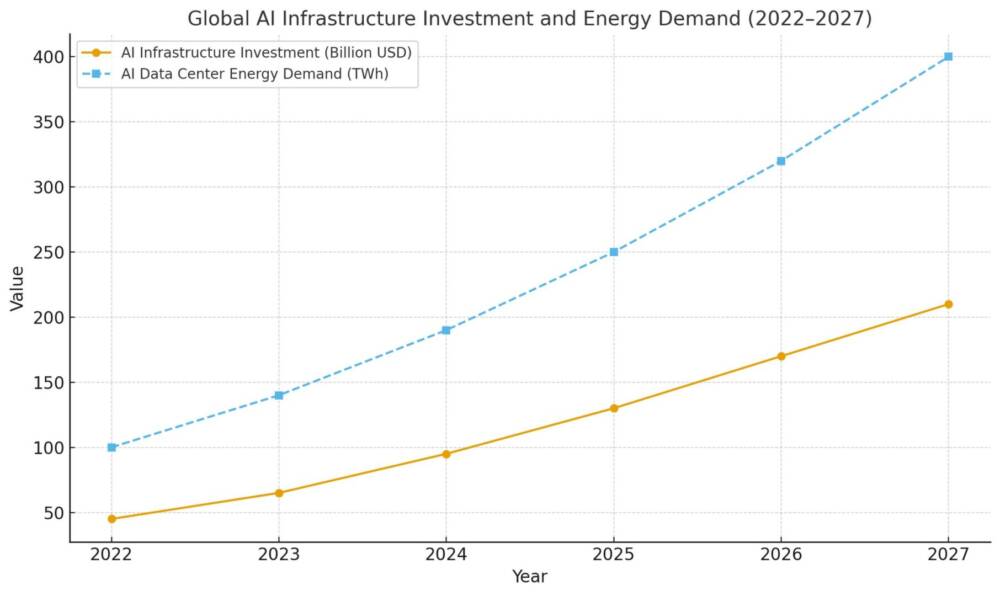
AI Infrastructure Investment - Global AI infrastructure investment
Global AI infrastructure investment is projected to soar from under $50 billion in 2022 to more than $200 billion by 2027, while energy demand from AI data centers could quadruple in the same period—highlighting both the growth potential and sustainability challenge of the AI era.

Geopolitical Risks

This global competition comes with risks. Export controls on advanced semiconductors, such as restrictions placed by the US on high-performance chips to China, create ripple effects across the supply chain. Political tensions in the Taiwan Strait could disrupt global access to chips, while trade disputes risk slowing infrastructure growth.

For investors, this means diversification is key. Betting too heavily on one region or supplier could expose portfolios to geopolitical shocks. Businesses that spread infrastructure investment across multiple geographies will be better positioned to handle uncertainty.

National Security Considerations

Governments increasingly view AI infrastructure as a matter of national security. Just as control of oil pipelines was once strategic, control of AI data centers, chips, and energy grids is now critical. Nations are beginning to treat AI infrastructure as strategic assets requiring oversight and protection.


Opportunities for Small and Medium Enterprises - AI Infrastructure Investment
Opportunities for Small and Medium Enterprises – Photo by Alex Hudson on Unsplash

What This Means for Businesses of All Sizes

Opportunities for Small and Medium Enterprises

For SMEs, the rise of AI infrastructure represents opportunity. Access to powerful cloud-based AI services lowers barriers to entry. A small retailer can now use AI to analyze customer data, a local law firm can deploy AI-powered research tools, and a health clinic can leverage diagnostics—all without owning a single server.

As infrastructure investment expands, these services will become more affordable and reliable. This democratization of AI means innovation is no longer confined to Silicon Valley giants—it’s available to ambitious businesses worldwide.

Corporate Strategies for Large Enterprises

For larger corporations, AI infrastructure is both an opportunity and a strategic necessity. Banks rely on AI to monitor billions of transactions. Airlines use AI to optimize scheduling and maintenance. Manufacturers employ predictive AI to prevent costly breakdowns.

But scaling these solutions requires guaranteed access to infrastructure. This is why some corporations are co-investing in data centers or partnering directly with infrastructure funds. By securing early access to capacity, they protect themselves from bottlenecks and gain a first-mover advantage in deploying advanced AI solutions.

Long-Term Implications

For both small and large businesses, the message is clear: AI infrastructure investment today defines the competitive landscape of tomorrow. Those who align their strategies with infrastructure growth will innovate faster, deliver better customer experiences, and reduce costs. Those who wait risk falling behind.


AI Infrastructure Investment
Photo by Austin Distel on Unsplash

The Future of AI Infrastructure Investment

Green Data Centers and Renewable Integration

The next decade will see a shift toward sustainable AI infrastructure. Investors and companies recognize that growth cannot come at the cost of the planet. Carbon-neutral facilities, renewable-powered hubs, and innovative cooling methods will move from fringe experiments to mainstream practice.

This isn’t just about compliance with regulations—it’s also about competitive advantage. Businesses that can market their AI as “green” will earn trust from consumers and gain favorable treatment from policymakers.

Edge Infrastructure and Decentralization

Not all AI will run in giant hyperscale facilities. The future also lies in edge infrastructure—smaller, distributed data centers that process data closer to the user. This is critical for applications like autonomous vehicles, smart cities, and real-time healthcare monitoring, where latency can mean the difference between success and failure.

Edge computing will not replace centralized hubs but complement them, creating a hybrid model. Investors who diversify across both central and edge infrastructure will benefit from this balance of power and proximity.

Long-Term Investment Principles

Despite the excitement, AI infrastructure investment must remain grounded in timeless principles. As Brookfield and IFM Investors emphasize, the fundamentals of risk assessment, return analysis, and long-term planning do not change. The challenge is to apply them wisely to a rapidly evolving technological landscape.

The winners will be those who balance vision with discipline—funding growth while avoiding speculative excess.


Conclusion: Why Now Is the Moment to Watch

Infrastructure as the AI Enabler

AI has the potential to transform every industry, but without infrastructure, it cannot scale. Chips, servers, data centers, and energy grids are the hidden enablers of progress. Just as railroads unlocked industrialization and the internet enabled globalization, AI infrastructure will define the next era.

AI Infrastructure Investment - Opportunities for Small and Medium Enterprises
The Strategic Imperative – Photo by Kaleidico on Unsplash

The Strategic Imperative

For businesses, investors, and governments, the imperative is clear: act now. AI infrastructure investment is not a passing trend—it is the foundation of competitiveness in the 21st century. Those who move early will set the standards, capture the markets, and lead the innovation race. Those who hesitate risk being left behind.


Frequently Asked Questions (FAQ)

1. What is AI infrastructure investment?

It refers to funding the physical and digital backbone of artificial intelligence: data centers, chips, networking, and renewable energy systems that support AI models.

2. Why is AI infrastructure considered strategic?

Because without it, AI cannot scale. It’s essential for business competitiveness, economic growth, and even national security.

3. How much are companies investing in AI infrastructure?

Companies and investors are pouring tens of billions of dollars into infrastructure projects globally. Deals like Microsoft’s $30 billion UK investment and BlackRock’s acquisition of Aligned Data Centers highlight the scale.

4. What are the risks of AI infrastructure growth?

Key risks include energy consumption, environmental impact, regulatory scrutiny, and geopolitical instability across global supply chains.

5. What’s next for AI infrastructure?

Expect more green data centers, broader edge infrastructure, and deeper partnerships between Big Tech and institutional investors to meet global demand.


- Advertisement -

Understanding Cyclical Unemployment: Causes, Effects, and Solutions

0
Understanding Cyclical Unemployment

Cyclical unemployment is a pivotal concept in macroeconomics, representing the fluctuations in the unemployment rate tied closely to the business cycle. It characteristically rises during recessions and declines when the economy experiences growth. This type of unemployment is a key element in understanding the dynamics of the labor market and the broader economy. In this article, we will delve into the causes, implications, and the broader context of cyclical unemployment, comparing it with other forms of unemployment and examining its role during economic downturns such as the 2008 financial crisis.

What Is Cyclical Unemployment?

Cyclical unemployment occurs when there is a lack of demand for goods and services in the economy, leading to a reduction in workforce needs by businesses. This unemployment type is intrinsically linked to the cyclical trends of the economy, where periods of economic decline, such as recessions, lead to higher unemployment rates. The core idea is that when economic activity slows down, businesses experience less revenue, necessitating cost-cutting measures, often through workforce reductions.

A critical aspect of cyclical unemployment is its temporary nature. Unlike structural unemployment, which can result from a mismatch of skills, cyclical unemployment tends to resolve as the economy recovers. Economists closely monitor cyclical unemployment as it provides insights into the health of the economy. When a recovery begins, businesses gradually increase hiring to meet rising demand, thus reducing unemployment rates.

Understanding cyclical unemployment also involves recognizing its relationship with GDP. During expansions, GDP rises, leading to increased production and employment. Conversely, during recessions, GDP falls, and unemployment rises. This relationship underscores why cyclical unemployment is a focal point for policymakers who aim to smoothen economic cycles and sustain employment levels.

One way to gauge the extent of cyclical unemployment is by examining the gap between actual and potential output. When the economy operates below its potential, it signifies underutilized resources, including labor, leading to cyclical unemployment. Conversely, when the economy is booming, this gap closes, and unemployment tends to decrease, highlighting the cyclical nature of such joblessness.

Key Drivers of Cyclical Unemployment

The primary driver of cyclical unemployment is the fluctuation in economic activity as dictated by the business cycle. During downturns, demand for products and services declines, prompting businesses to lay off employees. These fluctuations are a natural part of the economic cycle, characterized by expansions and contractions. Various factors can influence these cycles, including changes in consumer confidence, fiscal policies, and global economic conditions.

Consumer confidence plays a significant role in driving cyclical unemployment. When consumers feel uncertain about the economy’s future, they tend to reduce spending, leading to decreased demand for goods and services. This decreased demand compels businesses to cut back on production and, subsequently, their workforce. Thus, consumer sentiment can amplify the effects of cyclical unemployment during a downturn.

Fiscal and monetary policies are also crucial in managing cyclical unemployment. Governments often deploy fiscal measures like tax cuts or increased public spending to stimulate demand during recessions. Similarly, central banks may adjust interest rates to influence borrowing and spending. These policy tools aim to mitigate the severity of economic downturns and, by extension, cyclical unemployment.

Global economic conditions can further exacerbate or alleviate cyclical unemployment. For instance, a global recession can depress export demand, affecting domestic industries and leading to job losses. Conversely, global economic growth can boost demand for exports, leading to increased production and employment. Thus, cyclical unemployment is not only a domestic issue but also influenced by international economic trends.

Cyclical Unemployment-Global conditions
Photo by Cory Schadt on Unsplash

Stages of Cyclical Unemployment

Cyclical unemployment tends to move in waves, following a pretty familiar pattern every time the economy takes a turn. Let’s break it down step by step:

The Downturn Begins

It all starts when the economy hits a snag — maybe a global pandemic, a financial meltdown, or simply consumers losing confidence and spending less. Suddenly, the smooth rhythm of growth starts to slow.

Layoffs Begin to Roll Out

As companies see sales drop and profits shrink, they scramble to cut expenses. Unfortunately, that often means laying off workers. Businesses try to ride out the storm by downsizing, pausing new projects, or freezing hiring.

Unemployment Rises Across the Board

Job losses ripple through multiple sectors. With fewer paychecks circulating, people tighten their budgets, which only deepens the slowdown. The cycle can keep spiraling until government action or a shift in economic conditions breaks the pattern.

Confidence Slowly Returns

After months (or years) of struggle, consumer and business confidence start to rebound. Maybe a stimulus package helps, or interest rates drop, making it easier to borrow and spend again.

Recovery and Rehiring

As demand picks up, businesses open their doors to more workers. People who lost jobs begin to find new opportunities, and industries that were hit hardest finally stabilize.

Growth and Expansion Phase

The economy doesn’t just recover—it often experiences a burst of growth as pent-up demand drives production and spending. Companies expand operations, wages rise, and optimism fuels investment.

Stability and Vigilance

Once the market balances out, the focus shifts to maintaining stability. Policymakers watch for early warning signs of another downturn so they can act quickly to prevent another employment crisis.

Cyclical Unemployment
Photo by Hennie Stander on Unsplash

Key Causes of Cyclical Unemployment

So, what actually sparks this rollercoaster of job gains and losses? Here are the usual suspects behind cyclical unemployment:

Economic Recession

The classic cause. When businesses face slower sales, they cut back on staff to reduce costs.

Drop in Business Investment

If companies hold off on new projects or expansion plans, fewer workers are needed to get things done.

Falling Industrial Output

When factories or service sectors produce less, they simply don’t need as many hands on deck.

Financial Crashes or Market Shocks

A stock market crash or banking crisis can shake confidence across the board, leading to spending freezes and layoffs.

Global Events

Pandemics, wars, or supply chain disruptions can throw entire economies off balance, halting production and shrinking demand.

Consumer Behavior Shifts

Sometimes, people just change how they spend. For example, if consumers suddenly prefer digital products over physical goods, industries tied to manufacturing might face layoffs before others adjust.

Technological Overlap During Recession

Even though tech advances aren’t the root of cyclical unemployment, automation and digitalization can amplify it during downturns, as companies adopt machines to cut costs while jobs are already scarce.

Understanding Cyclical Unemployment
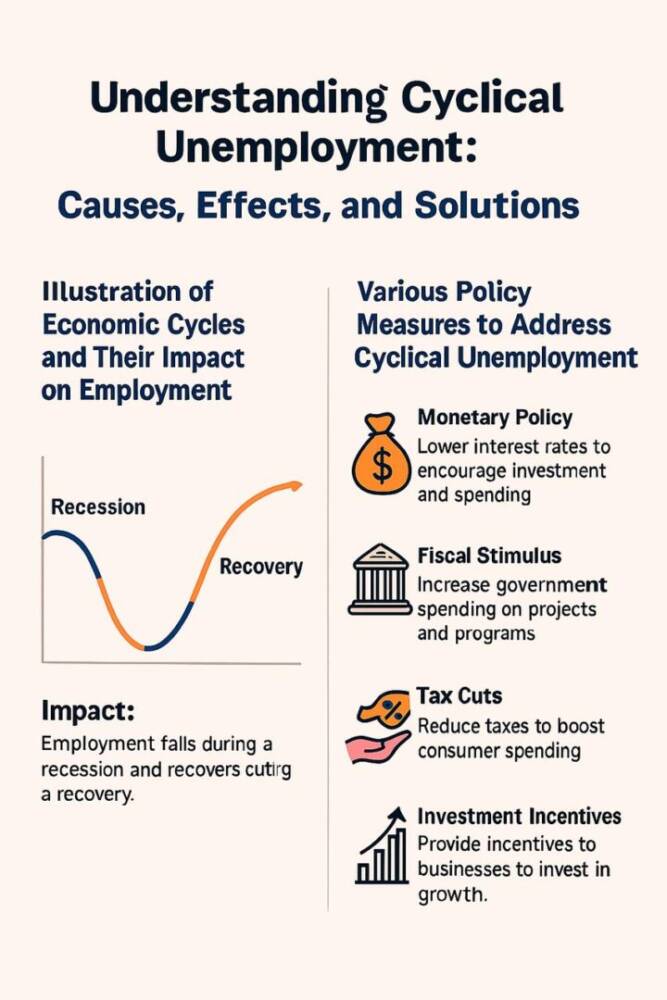
Understanding Cyclical Unemployment-Illustration of Economic Cycles and Their Impact on Employment

Cyclical Unemployment in Economic Downturns: The 2008 Financial Crisis

The 2008 financial crisis serves as a classic example of cyclical unemployment, where a severe economic downturn led to widespread job losses. The crisis was characterized by a collapse in the housing market, leading to a cascade of financial institution failures and a sharp contraction in economic activity. As businesses grappled with declining revenues, massive layoffs ensued, resulting in a spike in unemployment rates.

During the crisis, cyclical unemployment surged as businesses across various sectors reduced their workforce. Industries such as construction, manufacturing, and finance were particularly hard-hit, reflecting the pervasive impact of the recession. The severity of the crisis underscored the interconnectedness of global economies, as the downturn spread internationally, leading to a synchronized rise in unemployment rates worldwide.

One of the critical challenges during the 2008 crisis was the slow recovery of the labor market, even after GDP growth resumed. This slow recovery was partly attributed to “sticky” wages, where wages did not adjust downward quickly enough to reflect economic conditions. As a result, businesses remained cautious in hiring, prolonging the period of high cyclical unemployment.

Policymakers responded to the crisis with unprecedented measures aimed at stimulating the economy and curbing unemployment. These included massive fiscal stimulus packages and aggressive monetary policy interventions. The aim was to restore confidence, revive demand, and expedite the recovery of the labor market. The experience of the 2008 crisis highlighted the importance of timely and coordinated policy responses in managing cyclical unemployment.

Why Cyclical Unemployment Matters

Cyclical unemployment doesn’t just show up on charts—it hits real people and real businesses hard. Here’s why it’s such a big deal:

Loss of Income – Families have less money to cover essentials, which leads to reduced overall spending in the economy.

Shaky Consumer Confidence – When people are worried about their jobs, they delay big purchases like cars, houses, or vacations. That hesitation keeps demand low.

Long-Term Damage – If unemployment drags on, workers can lose valuable skills or drop out of the workforce completely. That makes recovery even slower once the economy bounces back.

Wider Social Impact – Rising unemployment can lead to more stress, reduced mental health, and greater inequality between those who stay employed and those who don’t.

How to Reduce Cyclical Unemployment

Here’s the good news: governments and communities aren’t powerless. There are proven ways to soften the blow and help economies recover faster.

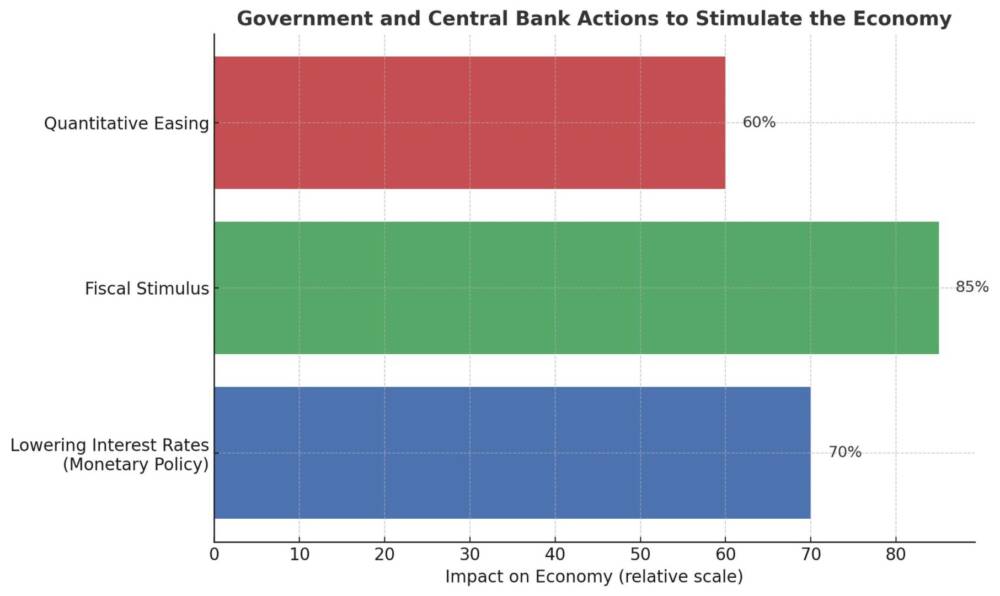
1. Government and Central Bank Action

Policymakers have several tools to keep the economy moving:

  • Lowering Interest Rates (Monetary Policy) – When borrowing is cheaper, businesses are more likely to invest and hire.
  • Fiscal Stimulus – Governments can inject money into the system through tax breaks, public projects, or direct payments to citizens, boosting demand and encouraging companies to rehire.
  • Quantitative Easing – Central banks can buy financial assets to pump liquidity into markets, keeping credit flowing and restoring confidence.
Cyclical Unemployment-Government and Central Bank Actions to Stimulate the Economy

2. Boosting Consumer Confidence

When people believe the future looks bright, they start spending again. Encouraging confidence through clear communication, job security initiatives, and visible recovery efforts helps restart the economic engine.

3. Job Retraining and Upskilling

Helping people adapt is key. By providing access to training programs, workers can transition into new or growing industries more easily when the economy starts to recover.

4. Support for Vulnerable Groups

Unemployment benefits, small business loans, and food or rent assistance can prevent families and companies from collapsing during downturns. Safety nets buy time until conditions improve.

5. Promoting Innovation and Small Business Growth

Encouraging startups and innovation can breathe life into struggling economies. New ventures often create fresh job opportunities and help diversify markets, making future downturns less severe.

6. Strengthening Global Cooperation

In an interconnected world, one country’s downturn can ripple across borders. International cooperation on trade, supply chains, and crisis management can help stabilize employment worldwide when recessions hit.

Comparing Cyclical Unemployment With Other Types

Cyclical unemployment is just one of several types of unemployment that economists study. To fully understand it, it’s essential to compare it with other forms like structural, frictional, and seasonal unemployment. Structural unemployment arises from a mismatch between workers’ skills and job requirements, often due to technological advancements or shifts in the economy. Unlike cyclical unemployment, structural unemployment can persist even in a booming economy.

Frictional unemployment, on the other hand, occurs when individuals are temporarily unemployed while transitioning between jobs. This form of unemployment is considered natural and even beneficial as it allows for better matching of jobs and skills. Unlike cyclical unemployment, frictional unemployment exists irrespective of the economic cycle and tends to be short-term.

Seasonal unemployment is another distinct category, driven by changes in demand at different times of the year. For example, industries like agriculture and tourism experience seasonal fluctuations in employment. While cyclical unemployment is influenced by broader economic trends, seasonal unemployment is predictable and occurs regularly.

By understanding these differences, we can appreciate the unique challenges posed by cyclical unemployment. While other types of unemployment may require targeted interventions, cyclical unemployment often necessitates broad economic policies aimed at stimulating demand and restoring growth. This distinction is crucial for policymakers in devising effective strategies to address unemployment.

Policy Responses to Cyclical Unemployment

Addressing cyclical unemployment requires a range of policy responses designed to stimulate economic activity and boost employment. Governments and central banks play a pivotal role in implementing these policies, which can include both fiscal and monetary measures. The goal is to smoothen economic cycles and mitigate the adverse effects of downturns on the labor market.

Fiscal policy is a key tool in combating cyclical unemployment. During recessions, governments may implement expansionary fiscal policies, such as increasing public spending or cutting taxes, to inject demand into the economy. These measures aim to boost consumer spending and business investment, thereby reducing unemployment rates.

Monetary policy also plays a crucial role in managing cyclical unemployment. Central banks can lower interest rates to make borrowing more attractive, encouraging both consumer spending and business investment. Additionally, unconventional measures like quantitative easing can be employed to increase money supply and liquidity in the financial system.

Coordinated international efforts can further enhance the effectiveness of policy responses. Since cyclical unemployment can have global implications, collaborative actions among countries can help stabilize the global economy. Such coordination can involve synchronized policy measures or agreements to boost trade, which can support economic recovery and employment.

In conclusion, cyclical unemployment is a dynamic and complex component of the labor market, deeply intertwined with the broader economic cycle. Understanding its causes, implications, and policy responses is essential for navigating economic fluctuations and fostering sustained employment growth. By recognizing the unique characteristics of cyclical unemployment and employing targeted policy measures, we can mitigate its impact and support a more resilient economy.

Comparison: Types of Unemployment
Type Cause Duration
Cyclical Economic downturns Short to medium-term
Structural Skill mismatch Long-term
Frictional Job transitions Short-term
Seasonal Seasonal demand Predictable
- Advertisement -

The Power of Technology: How Digital Tools Can Supercharge Your Productivity Hacks

0
Digital Tools Can Supercharge Your Productivity
Photo by Fernando Hernandez on Unsplash

Digital Tools Can Supercharge Your Productivity. In today’s fast-paced world, achieving peak productivity is a challenge many face. With an ever-growing list of tasks and responsibilities, finding the right tools to manage and enhance productivity is crucial. Digital tools have emerged as indispensable allies in this quest, offering solutions that streamline workflows, foster collaboration, and automate mundane tasks. This article explores how digital tools can supercharge your productivity, transforming the way you work and live.

The Power of Collaborative Digital Tools

Collaboration is at the heart of modern work environments, and digital tools have revolutionized how teams interact. Tools like Slack and Microsoft Teams have become essential, allowing seamless communication regardless of geographical barriers. These platforms enable real-time messaging, file sharing, and video conferencing, making remote work as effective as being in the office.

Moreover, project management tools like Trello and Asana provide a structured approach to task management. By organizing tasks into boards and lists, teams can track progress and deadlines effortlessly. This transparency ensures that everyone is on the same page, reducing the chances of miscommunication and missed deadlines.

Cloud-based solutions, such as Google Workspace and Microsoft 365, further enhance collaboration by allowing multiple users to work on documents simultaneously. This real-time collaboration minimizes the back-and-forth of email exchanges, speeding up decision-making processes. With these tools, teams can focus on what truly matters—creativity and innovation.

To make the most of these tools, it’s essential to understand the specific needs of your team. Assessing how each tool fits into your workflow will ensure maximum efficiency and productivity. Don’t hesitate to experiment with different platforms until you find the perfect fit for your team’s unique dynamics.

Scheduling Processes
Scheduling Processes – Photo by Walls.io on Unsplash

Streamlining Your Scheduling Processes

Scheduling can be a time-consuming task, but digital tools have made it significantly easier. Tools like Calendly and Doodle eliminate the hassle of back-and-forth emails when trying to find a suitable meeting time. By allowing participants to select their availability, these tools automatically find the best time slot for everyone involved.

For those managing multiple calendars, tools like Outlook and Google Calendar offer seamless synchronization across devices. This ensures that you never miss an appointment, whether you’re on your computer, phone, or tablet. The integration of reminders and notifications further keeps you on track, reducing the risk of double-booking or forgetting important meetings.

Automated scheduling tools also allow for buffer times between meetings, ensuring you have enough time to prepare and transition smoothly. This small adjustment can significantly reduce stress and enhance the quality of your interactions, allowing you to be fully present and engaged.

By utilizing these digital scheduling tools, you can reclaim valuable time and mental energy. The simplicity they bring to your day-to-day operations frees you up to focus on strategic tasks, ultimately boosting your productivity and efficiency.

Automating Routine Tasks for Efficiency

Automation is one of the most significant advantages digital tools offer. Repetitive tasks, such as data entry or email responses, can consume valuable time and drain mental energy. Automation tools like Zapier and IFTTT can take over these tasks, allowing you to focus on more strategic activities.

One of the most common uses of automation is in email management. Tools like SaneBox and Unroll.Me help organize your inbox by filtering important emails from the clutter. This not only saves time but also enhances your focus by reducing distractions.

In addition to email management, automation can be applied to social media scheduling, file backups, and even customer relationship management. By setting up workflows that trigger specific actions, you can ensure that routine tasks are completed without manual intervention.

The key to successful automation is starting small. Identify the tasks that are most time-consuming and explore how they can be automated. As you become more comfortable with automation tools, you’ll be able to implement more complex workflows, further enhancing your productivity.

Optimizing Space Utilization with Smart Technology

The physical workspace plays a crucial role in productivity, and digital tools can help optimize it. Smart technology, such as IoT devices, can transform traditional office spaces into environments that foster productivity and creativity. From smart lighting systems to temperature control, these tools create a comfortable and efficient workspace.

Digital tools like Robin and DeskFlex allow for efficient space management, particularly in hybrid work environments. These platforms enable employees to book desks, meeting rooms, and other resources in advance, ensuring optimal utilization of office space. This not only reduces congestion but also enhances the overall work experience.

Moreover, integrating digital signage in workplaces can keep employees informed and engaged. These displays can share important announcements, project updates, and even motivational content, creating a dynamic and connected work environment.

By leveraging smart technology, businesses can create workspaces that adapt to the needs of their employees. This flexibility not only boosts productivity but also enhances employee satisfaction, leading to a more motivated and committed workforce.

Prioritizing Employee Engagement for Peak Productivity

Employee engagement is a critical factor in achieving peak productivity, and digital tools can play a significant role in fostering it. Platforms like Officevibe and 15Five allow managers to gather real-time feedback from their teams, addressing concerns and recognizing achievements promptly.

Gamification tools, such as Badgeville and Bunchball, introduce an element of fun into the workplace. By rewarding employees for completing tasks and reaching milestones, these tools boost motivation and encourage healthy competition among team members.

Furthermore, digital tools that support professional development can enhance employee satisfaction and productivity. Learning management systems like Coursera and LinkedIn Learning offer employees opportunities to acquire new skills and advance their careers, aligning personal growth with organizational goals.

Collaborative tools enhance team efficiency and communication.
Photo by Brooke Cagle on Unsplash

Collaborative tools enhance team efficiency and communication.

Do⁣ you ever feel like you’re constantly spinning your‌ wheels, trying to keep ‍up with the never-ending tasks on your to-do list? We’ve ‌all been there.⁤ But what if⁤ there​ was a way to make⁣ your ‌life easier, ‍more ​efficient, and ​ultimately more productive? The answer⁣ lies in ⁢the power of ​technology. By ⁢leveraging digital tools and apps, you can supercharge‍ your productivity hacks ⁣and take your‍ efficiency to the next level. ‌From organizing ​your schedule to automating repetitive tasks, ⁣the possibilities are endless.So⁢ buckle ⁣up‍ and ‌get ​ready to unlock the true potential ⁢of ‍technology in boosting ⁢your productivity.

Technology ⁢to Boost Your Efficiency
Photo by Alexandr Podvalny on Unsplash

The⁤ Potential: Harnessing Technology ⁢to Boost Your Efficiency

Technology has become⁢ an integral part of our daily lives,‍ transforming the‍ way we work and communicate. ⁤From smartphones to cloud computing, digital⁢ tools have revolutionized the way we ⁤do⁤ business, making tasks more efficient ​and streamlined. By harnessing the power of technology,​ you can unlock⁢ a​ world of possibilities to boost your ⁣productivity hacks ⁢and‍ supercharge your ⁢workflow.

One of the key benefits of using digital tools is‍ the ability‌ to ⁣automate repetitive ⁣tasks, saving ⁢you​ time and⁢ effort. ⁢With the​ help ⁢of project management software, you can⁤ easily track deadlines, ‍collaborate with​ team members, and manage tasks more effectively. Additionally, utilizing communication tools such as Slack ‍or Microsoft Teams can streamline your⁤ workflow and‌ ensure that everyone ‌is on ‌the same page. ‌By incorporating ⁣these tools‌ into your daily routine, you can unleash⁤ your potential ‍and​ take ⁢your efficiency‍ to the ‌next​ level.

Streamlining​ Your Workflow: ​Integrating⁢ Digital Tools⁣ for Maximum Productivity

As we navigate the fast-paced world of work, it’s⁣ essential to ​find ways⁢ to optimize ⁢our productivity. By ​leveraging ​the power of digital tools,we can streamline our workflow and maximize⁤ our efficiency. Whether you’re a seasoned pro⁤ or just ⁣starting out, integrating these tools into your daily routine can help you⁢ work smarter, ⁤not ⁢harder.

One of ⁢the ⁢key ‍benefits‍ of using digital ⁤tools is ‌the ‌ability‌ to⁤ automate⁣ repetitive tasks,‌ freeing up valuable‍ time ‌for more crucial work. From project management​ platforms to communication tools, there are countless options available to help you stay organized and focused. By incorporating⁢ these tools into⁤ your workflow, ‌you can eliminate distractions and stay on track to meet your goals.⁣ Embrace⁤ the power of technology and ‌unlock your full potential today!

Mastering the Art ‍of Time⁢ Management:⁣ Tips ‌and Tricks for ‌Using Technology ⁤to stay on Track

Technology has revolutionized the⁤ way we manage ⁣our ‍time, ⁣making ‍it ⁤easier than⁣ ever to stay organized and ​productive. By harnessing the ⁤power of digital tools, we can supercharge our productivity​ hacks and‍ unlock our ‍full ⁤potential. From apps ‍that help us prioritize tasks to devices ‍that ​keep⁤ us‍ on schedule, there⁤ are countless​ ways to make​ the most of⁤ our time with the help of technology.

One⁣ key tip for mastering ‌the art ⁣of time ⁢management is to utilize ​digital​ calendars and scheduling apps. ​By inputting deadlines, meetings, and important⁢ events into a⁣ digital calendar, we can easily visualize our ⁤upcoming tasks and stay ⁣on ⁢track. Additionally, setting reminders ​and⁢ alerts ⁤can definitely help ⁤ensure⁢ that we ‌never miss a ⁢deadline​ or overlook an critically important task. Another helpful tool ​is the use of‌ task management apps, wich allow⁢ us to create to-do‌ lists, set priorities, and​ track our progress. By⁢ breaking down larger tasks into smaller, manageable steps, we ‍can increase ​our efficiency and​ productivity.

Digital⁤ Solutions to Achieve⁢ Your Goals
Digital⁤ Solutions to Achieve⁢ Your Goals – Photo by Kaleidico on Unsplash

Optimizing Your Productivity: Leveraging Digital⁤ Solutions to Achieve⁢ Your Goals

When⁢ it comes to maximizing your productivity, leveraging digital solutions can be a‌ game-changer. With the right tools at your fingertips, you‍ can streamline your workflow, stay ‍organized, and ultimately achieve your​ goals more efficiently. Whether​ you’re ​a ‌busy professional,a student juggling multiple deadlines,or simply someone looking to make the most‍ out of ⁣their time,incorporating ⁢digital ‍tools into ‍your routine can‍ help you supercharge ⁣your productivity hacks.

From‌ task management apps ⁣like trello and Asana ‌to⁢ time-tracking tools such as rescuetime, there are countless⁣ digital solutions available to ‍help you‌ optimize your ⁢productivity.‍ By utilizing ⁤these ⁢tools, you ⁢can prioritize ​your tasks, set deadlines, track your progress, and ‌stay ⁢focused⁣ on ​what matters most. ‍Additionally, integrating tools like⁤ Google‍ Calendar for scheduling, Evernote ‍for note-taking, and Slack ‌for team communication‌ can further enhance your productivity and ​collaboration efforts. ‍The key is to find the right combination ⁤of tools that align with your ‍workflow and goals, allowing‍ you to work smarter,⁤ not ‍harder.

Wrapping Up

So‍ there ‍you have it, folks! Embrace the digital age and unlock the ⁤power of technology ⁤to supercharge your productivity hacks. With ‌the right tools⁤ at⁢ your fingertips, there’s​ no limit⁣ to‍ what you can ‍achieve. Whether it’s ⁣automating mundane ‍tasks, staying organized with project management apps, or ⁣collaborating seamlessly with ⁤team members⁣ across the globe, technology is your secret weapon. So go ahead,dive⁤ in,experiment,and find the⁢ perfect digital tools that work for you. Your productivity will‍ thank you!

A focus on employee engagement through digital tools not only boosts productivity but also reduces turnover rates. When employees feel valued and connected to their work, they are more likely to go above and beyond, driving the organization towards success.

Digital Tool Function Benefit
Slack Team Communication Real-time messaging and collaboration
Calendly Scheduling Streamlines meeting coordination
Zapier Automation Automates repetitive tasks
Officevibe Employee Engagement Real-time feedback and recognition

In conclusion, digital tools can supercharge your productivity by offering innovative solutions to everyday challenges. By embracing these tools, you can streamline processes, enhance collaboration, and focus on what truly matters—achieving your goals and living a fulfilling life.

- Advertisement -

Get Your Tech On: A Beginner’s Guide to Starting a Tech Blog!

0
Starting a Tech Blog
Photo by Jess Bailey on Unsplash

Interested in starting your own tech blog‌ but not⁤ sure where ⁣to begin? Look no‍ further! In this beginner’s guide, we’ll⁢ walk you through teh⁢ basics of ⁣getting your tech‌ blog up and running. ​Whether you’re a tech enthusiast looking to share your knowledge or a beginner wanting to learn more about the world ‌of tech⁣ blogging, we’ve got you‍ covered. So, grab your ‌laptop ⁣and⁤ get ready⁣ to dive into ⁢the exciting world of tech⁢ blogging!

How to Choose the⁤ Right ⁤Blogging Platform for Your Tech⁢ Blog

When starting a tech blog, choosing the right platform ‍is crucial. With so many ​options available,⁣ it can be ⁢overwhelming ⁤to ⁤decide which one is best for your needs. To help​ you make the right choice, consider ⁣the following ⁣factors:

First, think⁤ about your technical skills. ‍If you’re a beginner, you‌ may want to ⁣choose a user-kind platform like WordPress. WordPress is ​easy to use and offers a wide range of⁢ themes ‍and⁤ plugins that can ⁤help‍ you‌ customize⁤ your blog. If ​you’re⁢ more experienced,you may want⁣ to consider‌ platforms like Joomla ‍or Drupal,which offer‍ more⁤ advanced features and customization options.

Next, think about your budget. Some platforms, ⁤like ⁢WordPress.com,⁤ offer free hosting, while ​others, like WordPress.org,require you to purchase hosting.‌ Consider ⁤how much you’re ​willing ⁢to spend and ⁤choose a ‍platform that fits within⁢ your‍ budget.⁢ Remember,you can always start with a free platform⁣ and upgrade to a paid one later on as your⁣ blog ‌grows.⁢

the​ key ‌is to ​choose a ⁢platform that meets your technical skills, budget, and⁢ customization needs. ⁣By taking the ⁢time ⁢to research⁤ and ​compare⁣ different options, ⁢you can find ⁢the perfect platform for your tech blog. Get your tech on and start blogging today!

Creating Engaging and relevant⁣ Content for Your Tech Blog

Starting a tech blog can be⁢ an exciting venture for those looking to share​ their passion for ⁣all things tech-related. to ⁣ensure your blog stands out from the rest, it’s crucial‌ to create ⁣engaging and‌ relevant ​content that ⁢will captivate your audience. One‍ way​ to do this is by ‍focusing on topics that⁣ are both⁣ timely⁣ and ​interesting to your readers. ​

when brainstorming‌ ideas for your⁤ tech blog,consider⁤ the latest trends in ⁢the​ tech industry and how they⁣ can‍ be ⁢applied to your content.​ Whether you’re discussing the newest⁣ gadgets on the market ⁢or offering ⁣tips⁤ and tricks for troubleshooting⁢ common⁣ tech issues, ‍make⁣ sure⁢ your‍ content is both informative and⁢ entertaining. ‍Additionally, incorporating multimedia‌ elements such as ‌videos,⁣ images, and infographics can help to⁤ further engage‍ your audience and make⁤ your content more visually appealing.

To ⁣keep your readers ⁢coming back for ⁤more,⁢ it’s notable⁤ to ⁢maintain a consistent posting schedule and interact with your audience ⁤through comments⁣ and social media. By creating content that is both engaging and ⁤relevant to your readers, you ⁤can ⁤establish yourself as a trusted source⁤ of information in‍ the⁣ tech community.

Building your online⁣ Presence and growing ⁣Your Tech Blog⁣ Audience

Starting ⁣a⁢ tech blog ⁣can ‌be an exciting ⁣journey⁣ filled with ​endless possibilities for‌ growth and creativity. Building your online presence is key to⁢ reaching a wider audience and​ establishing yourself as a credible source in the tech industry.

To grow ⁢your tech blog audience, it’s important to focus on creating high-quality, engaging content that ⁣resonates with your ⁣target ‌audience. Utilize‌ SEO strategies⁣ to improve your blog’s ⁤visibility on search engines, and engage with your readers through social media and email‍ marketing ‍campaigns. By consistently providing valuable content and interacting with⁢ your audience,you⁤ can build‌ a loyal ⁢following ‌and​ establish ‍your ⁣blog⁢ as a ⁣go-to resource in the tech community.

Monetizing Your Tech Blog: Tips ​and Tricks ⁢for Success

Starting a⁣ tech blog can be an exciting and rewarding venture ​for anyone with a passion for technology. Whether you’re a seasoned‍ tech enthusiast⁢ or ‌just starting⁣ out, there are ​plenty of tips and ‌tricks ‍to help you⁣ monetize your blog and achieve success in‍ the tech blogging world.

One of ‌the first steps to monetizing ⁣your tech blog is ‌to focus on creating high-quality, ‌engaging content that will attract readers and keep them coming back ‍for more. Consider incorporating a mix of reviews, ⁤tutorials, and industry news⁢ to ⁢appeal to a wide range⁣ of tech-savvy readers. ⁤Additionally,don’t forget to optimize your ⁤blog for search engines by using relevant keywords and meta tags to improve your visibility online. By consistently producing valuable content and optimizing⁤ your blog for search engines, you’ll ‍be well​ on your way to building a successful tech⁤ blog​ that can generate income ⁢through advertising, ⁤sponsored posts, and​ affiliate marketing.

The Way Forward

So there you have it,⁤ tech ‌enthusiasts! You are now ⁤equipped with the ​knowledge and tools to​ start⁣ your very ⁢own tech blog.Remember, the ⁢key is to be passionate, stay curious, and never stop learning. Whether you’re interested​ in ​gadgets,software,or coding,there’s a place‌ for you in the tech ​blogging world.‌ So⁤ go ahead, get your tech‌ on ‍and ​share your love for​ all things tech ‌with the​ world. Happy blogging!

- Advertisement -

Ready to Turn Your Hobby into a Business? How to Start an Etsy Store

0
Start an Etsy Store
Photo by Team Nocoloco on Unsplash

How to Start an Etsy Store (Complete 2025 Guide to Build a Thriving Online Business)

Turning creativity into income has never been easier. Whether you love making art, jewelry, or digital designs, Etsy lets you share your passion with millions of buyers who appreciate handmade, unique, and custom goods. But success on Etsy isn’t luck — it’s strategy.

This guide walks you through every stage of building your Etsy business, from picking a niche and naming your shop to optimizing listings, pricing right, and marketing smart. By the end, you’ll know exactly how to start an Etsy store that stands out, attracts buyers, and grows into a reliable source of income.


1. Why Start an Etsy Store?

Starting an Etsy store is one of the easiest and most rewarding ways to enter e-commerce. Unlike other marketplaces that focus on mass-produced items, Etsy celebrates individuality and creativity. It’s home to artisans, designers, crafters, and small-business owners who sell everything from handmade furniture to digital downloads.

The beauty of Etsy is that it provides an instant audience. You don’t need to spend months building a website or learning complex marketing systems. When you start an Etsy store, you plug into a global platform with millions of monthly visitors already looking for something special — exactly what you offer.

It’s also low-risk. You can launch your shop for only a few cents per listing and test the waters before investing heavily. You don’t even need to stock inventory if you sell digital items or use print-on-demand. Plus, Etsy’s built-in tools make it simple to track sales, manage messages, and analyze performance as your business grows.


2. Choosing Your Niche & Product Types

Every great Etsy business begins with a clear focus. Your niche defines who you’re serving and what you’re selling. Start by thinking about what you love to make — your interests often reveal strong business ideas.

To narrow your niche, browse Etsy’s search bar. Type in ideas like “handmade candles” or “digital planners” and look at the top results. Notice what sells, what’s trending, and where gaps exist. If thousands of shops sell similar bracelets, maybe focus on eco-friendly or personalized versions to stand out.

Popular Etsy categories include handmade jewelry, home décor, custom apparel, wedding goods, and printable art. Digital products are especially appealing for beginners because there’s no shipping or inventory — once you create it, it can sell forever. Print-on-demand products also work well, letting you design mugs, T-shirts, or posters that a fulfillment partner prints and ships automatically.

Choosing your niche isn’t just about products; it’s about story. Buyers love connecting with creators who have purpose — whether it’s sustainability, craftsmanship, or personal inspiration. That emotional connection often turns one-time shoppers into loyal fans.


3. Step-by-Step Setup of Your Store

Starting your Etsy shop is straightforward, and you can do it all in an afternoon.

Step 1: Create your account and open a shop.
Go to Etsy.com and click Sell on Etsy. Follow the prompts to set your language, country, and currency. When choosing your shop name, make sure it’s short, memorable, and relevant. Your name is part of your brand — it should reflect what you sell or the feeling you want your customers to have.

Step 2: Add your first listings.
Upload 5–10 clear, well-lit photos of each item from multiple angles. Then write your title and description. Use descriptive language that helps the buyer imagine owning your product — size, materials, colors, and how it’s used. Add up to 13 tags to describe your product with relevant search keywords.

Step 3: Set shop policies and payments.
Buyers want to know what to expect. Set your shipping times, refund rules, and customization options clearly. Connect a bank account and choose how you’ll get paid. Transparency builds trust, and trust leads to sales.

After setup, review your storefront as a customer would. Is it appealing? Does your profile picture and banner match your brand vibe? A cohesive first impression can turn browsers into buyers within seconds.


4. Listing Optimization (Titles, Descriptions, Tags, Photos)

Your listings are your storefront window. When you start an Etsy store, visibility is everything — and that begins with optimization.

Titles and keywords: Use phrases buyers actually type. Instead of just “bracelet,” use “personalized silver bracelet with birthstone.” Lead with your strongest keywords because Etsy’s algorithm prioritizes the beginning of titles.

Descriptions: Write naturally, like you’re speaking to a friend. Focus on benefits and emotional appeal — not just features. Instead of “made from oak,” try “crafted from durable oak wood that adds a warm, rustic touch to your home.” Sprinkle relevant keywords throughout, but keep the tone conversational.

Tags and attributes: Etsy gives you 13 tag slots. Use them all. Mix short and long phrases like “wedding gift,” “hand-stamped necklace,” or “boho wall art.” The more accurate your tags, the higher your chances of appearing in searches.

Photos: Clear, bright photos are the difference between clicks and scroll-by. Use natural light, consistent backgrounds, and multiple angles. Include at least one lifestyle photo — something showing your product in context. Visual storytelling sells.

The goal is to make your listings easy to find and impossible to resist once seen. Optimized listings get more visibility, traffic, and conversions — the foundation of a profitable Etsy business.

Start an Etsy Store
Start an Etsy Store – Photo by Team Nocoloco on Unsplash

5. Pricing, Fees & Shipping Strategy

Pricing can make or break your Etsy shop. Too low, and you’ll burn out without profit. Too high, and you might scare off new buyers. The trick is finding a balance between fair compensation and perceived value.

Start by adding up your costs — materials, packaging, shipping supplies, and your time. Then factor in Etsy’s fees: a small listing fee and a transaction percentage on each sale. Add payment-processing fees as well. After all that, build in your desired profit margin, usually between 20 % and 50 %.

When you’re new, it’s tempting to underprice to get sales, but it’s smarter to compete on quality, not price. Well-written listings, professional photos, and good branding justify premium pricing.

For shipping, create clear profiles for domestic and international orders. Decide if you’ll charge shipping separately or roll it into the product price and offer “free shipping.” Many buyers filter results by free shipping, so including it strategically can boost visibility.

Reliable packaging and accurate delivery times are also part of your brand. Customers remember when products arrive safely — and review accordingly.


6. Starting with No Money / Lean Launch Tactics

Think you need a big budget to start an Etsy store? Think again. You can launch with next to nothing using creativity and strategy.

One of the easiest ways is to sell digital products. Templates, planners, art prints, and fonts require no materials, no shipping, and no inventory. You design once and sell infinitely. It’s a dream model for passive income.

Another method is print-on-demand (POD). Partner with a company that prints and ships your designs on demand. You upload artwork for shirts, mugs, or tote bags, and they handle everything else. You pay only when you make a sale. It’s ideal for designers, photographers, or anyone good with visuals.

Finally, use free tools for branding and promotion. Platforms like Canva or Adobe Express let you design logos and banners without paying a dime. Promote through social media instead of ads. Authentic posts about your creative process or customer stories often outperform paid promotions.

Starting small keeps your risk low and forces you to focus on what matters — good products, great presentation, and happy customers.


7. Integrating with Print-on-Demand & Automation

Automation can save enormous time once you start an Etsy store. Print-on-demand integration is a game-changer, especially if you’re not ready to manage inventory.

Here’s how it works: you design a product (say, a T-shirt). Your print-on-demand partner handles printing and shipping whenever someone orders. You never touch the product. You simply collect profit from the price difference between your Etsy listing and the supplier’s cost.

The advantages are huge — no upfront inventory, no shipping headaches, and instant scalability. You can test hundreds of designs quickly to see what sells best.

To connect, sign up for a reputable POD service and link your Etsy account. Once synced, your products and stock automatically update. When an order comes in, it’s fulfilled hands-free. You focus on marketing and customer service while automation takes care of logistics.

Keep in mind that automation doesn’t mean detachment. Order samples to verify quality, and keep your communication warm and personal. After all, buyers love the human side of Etsy — even if your production is automated behind the scenes.

web automation-Start an Etsy Store
Web Automation – Start an Etsy Store – Photo by GuerrillaBuzz on Unsplash

8. Marketing, SEO & Growth Tactics

Launching your shop is only the first step. The real challenge is driving traffic. Marketing doesn’t have to be complicated — just consistent.

Start with Etsy SEO. Optimize your titles, descriptions, and tags for the right keywords. Update them regularly based on performance. If a product isn’t getting views, tweak its title or add trending tags. Etsy’s search favors fresh, active listings.

Then move outside Etsy. Use social media to share behind-the-scenes content: packaging videos, design timelapses, or before-and-after shots. Instagram and Pinterest are powerful visual platforms where Etsy sellers thrive. Hashtags help discovery, and storytelling builds loyalty.

Email marketing is another secret weapon. Collect emails from buyers (through packaging inserts or optional newsletters) and send updates about new products or limited-time discounts. Even a small list can generate repeat sales.

If you have budget later, experiment with Etsy Ads to boost top listings. But organic marketing — authentic storytelling and consistent posting — often converts better long-term.

Remember, Etsy rewards engagement. The more favorites, reviews, and activity your shop gets, the higher your listings rank. So keep interacting with customers and update your shop regularly.

Marketing & SEO - Start an Etsy Store
Marketing & SEO – Start an Etsy Store – Photo by Myriam Jessier on Unsplash

9. Common Pitfalls & Troubleshooting

Even the best shops hit bumps in the road. Knowing what to avoid can save you time and frustration.

The biggest mistake new sellers make is underestimating the importance of photos. Blurry or dark images kill trust instantly. Use daylight, a clean background, and multiple angles. If photography isn’t your strength, consider using mockups for digital products.

Another common issue is inconsistent branding. Your shop banner, logo, and listing images should look cohesive. Consistency builds recognition. It tells customers they’re dealing with a professional, not a hobbyist.

Also, avoid ignoring your analytics. Etsy provides valuable data on views, favorites, and conversion rates. If an item gets lots of clicks but few sales, the issue may be pricing or description clarity. Adjust, test, and refine.

Customer communication matters too. Respond to messages quickly, even if just to say, “Thanks for reaching out — I’ll get back to you soon.” Good communication turns issues into opportunities for positive reviews.

Lastly, don’t compare your beginning to someone else’s middle. Growth takes time. The first sale might take days or weeks — but once momentum builds, it often snowballs.


10. Final Thoughts & Checklist for Launch

You’ve now got the blueprint to start an Etsy store that can grow into a sustainable business. Let’s recap with a quick checklist:

  1. Pick a focused niche and product idea.
  2. Choose a memorable shop name and branding style.
  3. Set up your Etsy account and fill in every detail — policies, banner, bio, and profile image.
  4. Create a few high-quality listings with strong keywords and photos.
  5. Price smartly — cover costs, include fees, and ensure profit.
  6. Use print-on-demand or digital products to reduce startup costs.
  7. Promote your shop through SEO, social media, and customer engagement.
  8. Track your analytics and continuously improve listings.
  9. Ask happy buyers for reviews — they’re social proof gold.
  10. Stay consistent and patient. Success compounds over time.

Starting an Etsy shop isn’t just about selling things — it’s about sharing your creativity with the world. Each listing you post, photo you take, and message you send shapes your brand story. With effort and persistence, your Etsy store can become more than a side hustle; it can become a thriving business that reflects your passion and independence.

If you’ve ever dreamed of building your own creative brand, there’s no better time to begin. Open that shop, upload your first product, and take the first step toward turning your talent into a lasting business.


(Related reading: Entrepreneurship – Wikipedia)

- Advertisement -

Thinking of Creating a SaaS Product? Here’s How to Get Started!

0
Creating a SaaS Product: Complete Guide to Build, Launch and Scale
Photo by Austin Distel on Unsplash

Creating a SaaS Product: Complete Guide to Build, Launch and Scale

Creating a SaaS product is one of the most effective ways to convert expertise into recurring revenue. By delivering software via the browser or a mobile app—rather than local installs—you remove friction for customers, speed up releases, and make it possible for small teams to reach global markets. Still, winning in SaaS requires far more than writing code: you’ll need tight value positioning, validation, resilient architecture, pricing that matches value, strong security, thoughtful marketing, and disciplined retention. This guide distills proven practices and modern insights to help you build, launch, and scale a SaaS people return to every day.

1) Why Creating a SaaS Product Matters

Creating a SaaS product changes the nature of the business you’re in. Instead of selling a one-off license, you deliver continuous value and charge monthly or annually. That predictable cash flow improves planning, unit economics, and even company valuation. For customers, the benefit is obvious: no installs, automatic updates, web access from anywhere, and less IT overhead. This is why SaaS has become the de-facto model for business software.

Another reason to embrace SaaS is the immediate international reach. If your onboarding is clear, your product is in English (or localized), and you accept multiple currencies, nothing prevents customers in different countries from paying today and using the product right away. That combination of recurring revenue and global distribution changes the growth curve and creates room to invest in continuous improvement.

Of course, the same tailwinds also intensify competition. There’s a tool for almost everything, and buyers compare options in a few clicks. The edge comes from focus on a costly, frequent pain, superior UX, performance, smart integrations, and responsive support. The good news: you don’t need to invent a new category; you need to execute better in a specific niche and communicate hard benefits with clarity.

Finally, timing helps. Cloud, APIs, low-code, and AI have lowered the barrier to entry. A solo founder with disciplined scope can prototype, integrate billing, and publish a functional version in weeks—sometimes days. The hard part has shifted from “launching” to “retaining.” This guide focuses on that reality.

Duties of the SaaS Entrepreneur for Success: focus on a costly, frequent pain, superior UX, performance, smart integrations, and responsive support
Duties of the SaaS Entrepreneur for Success: focus on a costly, frequent pain, superior UX, performance, smart integrations, and responsive support – Photo by Vitaly Gariev on Unsplash

2) Foundations: Model, Architecture and Value

At the heart of creating a SaaS product sit three decisions: value proposition, architecture, and audience. Your value proposition answers, “Which expensive, recurring pain do we solve better?” Architecture determines how you deliver that value securely and at scale. Audience shapes the onboarding, language, and channels you’ll use. Aligning these three early avoids expensive rework after launch.

On architecture, most teams start with multi-tenant: a single application instance that isolates each customer’s data. Benefits: lower cost, simpler ops, and updates for everyone at once. Single-tenant often appears later when enterprise buyers demand stronger isolation, deep customizations, or specific compliance. A common hybrid is multi-tenant by default with dedicated instances as an Enterprise tier.

Structural advantages of SaaS include continuous updating without manual patches, centralized security, native telemetry, and the ability to A/B test core flows. That creates a feedback loop that installed software rarely matches: your product evolves with real usage, not just internal assumptions.

Above all, perceived value beats technical specs. Buyers pay to achieve outcomes—not to own “microservices” or “PostgreSQL 16.” Translate every technical choice into a customer benefit: fewer errors, 30% faster processes, fewer manual hours, higher conversion. Put those outcomes in the hero copy and echo them inside the product.

SaaS Foundations (Cloud Hosting, User Access)
Photo by Evgeniy Alyoshin on Unsplash

Foundations: cloud delivery, subscriptions, and an obsessive focus on customer outcomes.

3) Validate Before You Build: Problem, MVP and Pricing

The biggest risk isn’t technical; it’s building something few people want. Validate first. Start with a simple landing page that states the problem, your solution, and a measurable outcome. Offer a waitlist, a qualification form, or even pre-orders with a founder discount. Look for three signals: people recognize the pain, they believe you can solve it, and they’re willing to pay.

Once you have evidence of demand, design a Minimum Viable Product (MVP) that completes one high-value workflow end to end. Resist the temptation to add 20 screens “we’ll need someday.” The narrower the slice, the faster you validate and learn. Use prioritization frameworks like MoSCoW or RICE. And remember: saying “no” protects your speed, sanity, and product coherence.

Price from day one. Charging clarifies value and filters tire-kickers. Common patterns include tiered (Basic/Pro/Enterprise), per-user, usage-based (messages, gigabytes, API calls), flat for ultra-focused tools, and freemium when the “aha moment” is instant. The key is to anchor pricing to a value metric buyers recognize and measure.

Finally, create a feedback loop from day zero: a public board with ideas, votes, and statuses (planned, in progress, shipped) increases transparency and reduces assumptions. Turn praise into social proof and recurring complaints into prioritized backlog.

Validating Ideas (User Testing, Surveys)
Photo by airfocus on Unsplash

Lean validation: clickable prototype, interviews, a landing page with clear promise, and pre-sales.

  • Define a single user outcome for the MVP (e.g., “send an invoice in two clicks”).
  • Test pricing with anchors (monthly, annual with discount, team plan).
  • Publish a roadmap/changelog to educate and retain from day one.
  • Decline features that help one customer but harm the next hundred.

4) Tech Stack and Delivery: Ship Fast, Stay Safe

Creating a SaaS product calls for a stack that favors speed without compromising safety. On the backend, Node.js/Nest, Django, and Rails are mature choices. On the frontend, React, Vue, or Angular deliver modern experiences. PostgreSQL is a solid default; Redis helps with queues and caching; object storage (e.g., S3) holds files. Start with a well-structured monolith; move to microservices only when coupling pains are real.

Cloud platforms (AWS, GCP, Azure) provide auto-scaling, managed databases, queues, CDN, and observability. Turn on logs, metrics, tracing, and alerts from the MVP; debugging in the dark is expensive. CI/CD automation, versioned migrations, and feature flags reduce regression risk and let you roll out incremental changes safely.

Security is not optional. Enforce TLS, encrypt data at rest, use RBAC, strong password policies/SSO, key rotation, backups, authorization tests, and dependency scanning. If you handle sensitive data (health, finance), plan for consent, retention, and audit trails. Well-communicated security becomes a sales asset, not just a cost center.

AI as an accelerator: code copilots and builders can scaffold endpoints, UIs, and integrations in hours. Treat them as a very fast junior developer—review everything. Practical tips: modularize, protect critical files, paste exact errors into prompts, and avoid “auto-fix everything” buttons without context. Use AI to speed repetitive work while keeping domain logic under human control.

Stack Strengths Watch-outs
LAMP Low cost, huge community Scaling limits without heavy tuning
MERN Modern SPAs, full-stack JavaScript State management complexity
Rails Very high early productivity Performance at extreme scale
Django Admin out of the box, security minded More “opinionated” than Node
Hypothetical comparison of stacks:Hypothetical comparison of stacks: development speed, scalability, community, and learning curve.
5) Launch, Product-Led Growth and Marketing That Compounds

The “big launch day” is overrated. Treat launch as a drip: ship something every week and tell the story publicly. That cadence creates learning, trust, backlinks, and momentum. Make your evolution visible: roadmap, changelog, tutorials, and bite-sized case studies. The narrative of constant improvement is a marketing asset in itself.

Product-led growth (PLG) turns the product into a channel. Craft an onboarding that jumps straight to the outcome, add team invites, define usage limits that point to upgrades, and create shareable outputs (public link, exportable report, embeds). When a user experiences value and shares it, you earn new attention without paying for clicks.

Content still rules. “How-to” guides, honest comparisons (“us vs. alternatives”), ROI-backed case studies, and 90-second feature videos tend to convert. Paid spend captures intent: Google Ads for high-intent keywords and LinkedIn for B2B decision makers. Retargeting closes the loop on visitors who showed interest.

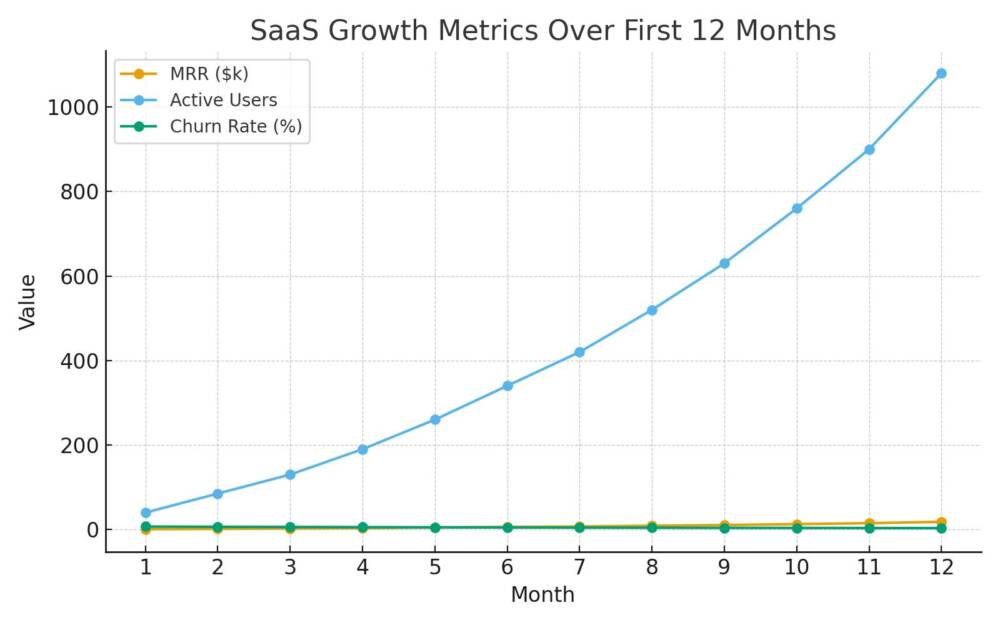
Measurement powers the engine: CAC, LTV, churn, activation, time-to-value, trial-to-paid, and expansion (upsell/cross-sell). Optimize the pricing and signup pages with A/B tests. Reduce checkout friction and offer annual plans with a discount to improve cash. And never forget: acquisition without retention is a leaky bucket.

SaaS growth metricsFirst-year metrics: rising MRR and active users, falling churn. Instrument these from day one.

6) Billing, Churn and Operations: Treat Revenue as a Product

In creating a SaaS product, the “revenue machine” deserves the same craftsmanship as the app itself. Support tiers, add-ons, trials, coupons, proration for mid-cycle changes, monthly/annual billing, and automated tax. Smart dunning, card-updaters, and well-timed retries reduce involuntary churn.

Pricing needs continuous tuning. Start simple and iterate with data: test usage thresholds, paywall premium capabilities, and adopt value metrics (contacts, projects, GB, messages) when they reflect how customers realize value. For enterprise, allow custom quotes and annual contracts with security clauses and SLAs.

Support and Customer Success are competitive advantages. A clear help center, tight SLAs, and a team that resolves issues fast can save at-risk accounts. Schedule proactive check-ins with strategic customers; prevention is cheaper than recovery. Feed recurring ticket themes into the product backlog.

Finally, governance: enforce role-based internal access, log sensitive actions, audit permissions, and keep clean environment separation (dev/staging/prod). These practices both prevent incidents and build confidence with enterprise buyers.

7) Scale, Enterprise and the Road Ahead

Scaling is deciding what not to build. Instead of multiplying modules, deepen the ones that deliver ROI. When demand patterns repeat (e.g., “integration with ERP X”), build a robust connector with excellent docs. Moving up-market? Be ready for SSO, SCIM, advanced reporting, audit controls, and data residency.

Trends to anticipate: Vertical SaaS (industry-specific workflows and language), AI-native features (recommendations, automations, agentic assistance), composable architectures (APIs/micro-frontends to assemble tailored solutions), and SaaS governance (controlling spend and access across sprawling tool stacks). Low-code/no-code continues empowering business teams to prototype without engineering queues—design your product to be extended safely.

If you’re migrating from on-prem to SaaS, take small steps: centralize data first (multi-tenant storage), keep the app layer isolated, then progressively converge services. Repackage contracts into subscriptions and communicate clear benefits: fewer outages, stronger security, continuous releases, and lower TCO over time.

Practical conclusion: the secret isn’t “launch fast” so much as “return to the user’s screen every day.” Validate, focus, charge early, iterate relentlessly, and treat retention as a first-class goal. With tight scope and compounding marketing, creating a SaaS product in 2025 is both feasible and promising.


Launch Checklist Status
Landing page with clear promise and CTA
MVP covering one end-to-end workflow
Billing with tiers, trial, proration and dunning
Observability (logs/errors/metrics/alerts)
Onboarding and activation content
Public roadmap/changelog
Basic SEO + high-intent ads
Core metrics (MRR, CAC, LTV, churn, activation)
- Advertisement -

OpenDream AI: Transforming the Future of Tech

0
opendream ai
Photo by Andrii Solok 🇺🇦 on Unsplash

Exploring the World of OpenDream AI: A New Frontier in AI Art Generation

Artificial Intelligence has become a cornerstone of technological innovation, and one of its most fascinating applications is in the realm of art creation. OpenDream AI stands at the forefront of this revolution, offering a powerful and intuitive platform for generating AI-driven artwork. Whether you’re an artist seeking new creative avenues or a tech enthusiast eager to explore AI capabilities, OpenDream AI provides an exciting gateway into the world of digital art. In this article, we’ll delve into the intricacies of OpenDream AI, exploring its features, capabilities, and the endless possibilities it offers.

The Magic of AI Art Generation with OpenDream

OpenDream AI has transformed the landscape of digital art by enabling users to create stunning visuals effortlessly. This innovative tool harnesses the power of machine learning to interpret text prompts and generate corresponding images, making art creation accessible to anyone, regardless of their artistic skill level. The process is incredibly straightforward: input a descriptive text, and within seconds, OpenDream AI conjures an image that captures the essence of your words.

The core technology behind OpenDream AI involves advanced algorithms that analyze language and convert it into visual representations. This technology not only democratizes art creation but also opens doors for new artistic expressions. Artists can experiment with styles, colors, and compositions that they might not have considered before. By bridging the gap between text and image, OpenDream AI fosters a unique synergy between language and visual art.

Beyond individual creativity, OpenDream AI is a valuable tool for various industries. Graphic designers can use it to rapidly generate concepts and prototypes, while marketers can create engaging visuals for campaigns. Moreover, educators can leverage the platform to illustrate complex ideas, making learning more interactive and engaging. The possibilities are truly limitless, highlighting OpenDream AI’s versatility and broad appeal.

opendream ai - art example

An example of stunning AI-generated art using OpenDream AI.

Exploring the OpenDream AI Gallery

The OpenDream AI platform features a rich gallery showcasing the diverse range of artworks created by its users. This gallery serves as a testament to the platform’s capabilities and the creativity it inspires. Users can explore a myriad of styles, from abstract and surreal to hyper-realistic and minimalist, each piece offering a glimpse into the potential of AI-assisted art.

Browsing through the OpenDream AI gallery is a journey through imagination. The artworks displayed demonstrate not only the technical prowess of the AI but also the unique perspectives of the users. Each piece tells a story, inviting viewers to interpret and engage with the art on a personal level. This interactive element enhances the appreciation of digital art, blurring the lines between creator and audience.

The gallery also serves as a source of inspiration for new users. By observing the diverse outputs that can be achieved, individuals are encouraged to experiment and push the boundaries of their creativity. This communal space fosters a sense of connection among users, creating a vibrant community centered around the love of art and innovation.

For those interested in contributing to the gallery, OpenDream AI offers an easy submission process. Users can share their creations, receive feedback, and connect with other artists and enthusiasts. This collaborative environment not only promotes artistic growth but also elevates the collective experience of using OpenDream AI.

Creating Stunning Artwork with OpenDream’s Free AI Art Generator

One of the most appealing aspects of OpenDream AI is its free AI art generator, which allows users to create breathtaking artwork without any cost. This accessibility is a game-changer for aspiring artists and hobbyists who might not have the resources to invest in expensive art tools. With OpenDream AI, anyone can unleash their creativity and produce high-quality art.

The free AI art generator is designed to be user-friendly, ensuring that even those with minimal technical knowledge can navigate the platform with ease. The interface is intuitive, guiding users through the process of entering text prompts and customizing their images. This simplicity encourages experimentation, allowing users to refine their skills and discover new artistic styles.

Moreover, OpenDream AI’s free tool is constantly updated with new features and improvements. This dedication to enhancing user experience ensures that the platform remains at the cutting edge of AI art technology. Users can look forward to regular updates that expand the tool’s capabilities, offering new possibilities for artistic expression.

For users seeking to elevate their experience, OpenDream AI also offers premium features and templates. These options provide additional customization and advanced tools for creating more intricate designs. Whether you’re a beginner or an experienced artist, OpenDream AI caters to a wide range of needs, making it an indispensable tool in the digital art landscape.

The Intersection of Text and Art: OpenDream’s Innovative Approach

OpenDream AI’s text-to-image generation is a pioneering approach that merges the worlds of language and visual art. This innovative technique allows users to bring their ideas to life by simply describing them in words. The AI interprets these descriptions and translates them into vibrant images, capturing the essence of the original thought.

The process begins with the user crafting a descriptive text, which serves as the foundation for the AI’s creative work. The more detailed and vivid the description, the more nuanced and accurate the resulting image will be. This interaction between text and art encourages users to think critically about their ideas, refining their ability to communicate visually.

OpenDream AI’s approach also highlights the importance of language in art creation. By focusing on descriptive storytelling, users learn to convey emotions, settings, and atmospheres through words, enhancing their overall artistic expression. This symbiotic relationship between text and image enriches the creative process, offering a deeper understanding of both mediums.

In addition to individual creativity, this method has practical applications across various fields. Writers can use it to visualize scenes from their stories, while businesses can create compelling visuals for branding and advertising. OpenDream AI’s text-to-image generation demonstrates the transformative power of AI, bridging the gap between imagination and reality.

Feature Description
Text-to-Image Conversion Transforms descriptive text into visual art.
Free Art Generator Accessible tool for creating high-quality artwork.
Gallery Showcases diverse user-generated artworks.
Premium Features Offers advanced tools and customization options.

Community and Collaboration on OpenDream AI

OpenDream AI is more than just a tool; it’s a thriving community of artists, technologists, and enthusiasts who share a passion for creativity and innovation. This vibrant ecosystem fosters collaboration and knowledge sharing, making it a valuable resource for anyone interested in AI art.

The platform offers various avenues for users to connect and engage with one another. From forums and discussion boards to online events and workshops, there are countless opportunities to learn and grow. These interactions not only enhance individual skills but also contribute to the collective advancement of AI art.

Collaboration is at the heart of OpenDream AI’s community. Users can work together on projects, combining their unique talents and perspectives to create something truly exceptional. This collaborative spirit encourages experimentation and risk-taking, pushing the boundaries of what is possible with AI-assisted art.

Ultimately, OpenDream AI’s community is a testament to the power of shared creativity. By bringing together individuals from diverse backgrounds, the platform creates a dynamic space where ideas can flourish and innovation can thrive. Whether you’re a seasoned artist or a curious newcomer, OpenDream AI invites you to join its ever-growing community and explore the limitless potential of AI art.

In conclusion, OpenDream AI is revolutionizing the way we approach art creation, offering an accessible and powerful tool for generating stunning visuals. Its innovative text-to-image technology, combined with a supportive community, makes it an invaluable resource for artists and enthusiasts alike. As AI continues to evolve, OpenDream AI stands as a beacon of creativity, inviting us all to explore the new frontier of digital art.

- Advertisement -

Unlocking the Future: How Google Search AI Mode Revolutionizes Modern Technology

0
google search ai mode

Exploring AI Mode: A New Era of Interaction with Google Search

In recent years, the rapid evolution of artificial intelligence has revolutionized the way we interact with technology. One standout development is the introduction of AI Mode in Google Search, a feature designed to enhance the search experience with personalized and agentic capabilities. AI Mode uses advanced reasoning and multimodal capabilities to tackle even the most complex queries, offering a new way to search and explore information. In this article, we will delve into the various facets of AI Mode, its functionalities, and its impact on users worldwide.

The Advent of AI Mode in Search

AI Mode represents a significant leap forward in search technology, transforming how users interact with information online. By leveraging the power of Google’s Gemini 2.5, AI Mode enhances the quality and depth of search results. This advanced system can handle sophisticated queries, breaking them down into subtopics and simultaneously searching for relevant content. The result is a more comprehensive and nuanced response that aligns with the user’s intent, making information discovery more intuitive and efficient.

One of the key features of AI Mode is its ability to provide AI-powered responses to a wide array of questions. Whether users opt for text or voice input, AI Mode can interpret the question, analyze available data, and deliver an informed answer. This is particularly beneficial for complex inquiries that require deeper exploration and understanding, as AI Mode can synthesize information from multiple sources to provide a cohesive answer.

AI Mode is not just about answering questions; it also enhances the search experience by offering follow-up questions and helpful web links. This feature allows users to explore topics further, ensuring they have access to the most relevant and up-to-date information. By presenting a set of web links alongside AI responses, AI Mode ensures that users can verify the information and delve deeper into their interests.

Despite its advanced capabilities, AI Mode acknowledges the limitations of early-stage AI products. Users are encouraged to provide feedback on the accuracy and helpfulness of AI responses through a simple thumbs up or thumbs down mechanism. This feedback loop is crucial for continuous improvement, ensuring that AI Mode becomes more reliable and effective over time.

Personalization and Agentic Features

AI Mode is not just about delivering accurate search results; it’s about creating a personalized and agentic experience for users. By understanding individual preferences and needs, AI Mode can tailor responses to better align with users’ interests. This personalization extends beyond search results, as AI Mode can also offer recommendations and insights based on previous interactions and preferences.

The agentic capabilities of AI Mode empower users to achieve more with less effort. Imagine planning a trip or organizing a project; AI Mode can assist by providing relevant information, suggesting itineraries, and even helping coordinate with others. This proactive approach simplifies complex tasks and enables users to make informed decisions without the need to sift through endless data manually.

AI Mode’s ability to personalize and assist extends to its interaction with other Google services. By integrating with tools like Google Maps, Calendar, and Gmail, AI Mode can streamline various aspects of daily life. For example, it can suggest routes based on traffic conditions, schedule meetings, and remind users of important tasks—all tailored to their specific context and preferences.

In a world where time is of the essence, AI Mode’s agentic features are invaluable. They help users accomplish tasks more efficiently, freeing up time for other pursuits and allowing for a more balanced lifestyle. By acting as a digital assistant, AI Mode bridges the gap between technology and everyday life, enhancing productivity and convenience.

Collaborative Exploration with AI Mode

collaborative exploration with Google Search AI mode

AI Mode not only enhances individual search experiences but also fosters collaboration among users. Whether you’re working on a group project or planning a family vacation, AI Mode can facilitate shared exploration by allowing multiple users to interact and contribute to the search process. This collaborative approach ensures that everyone involved has access to the same information and can participate in decision-making.

One of the ways AI Mode promotes collaboration is through shared recommendations and insights. By aggregating input from different users, AI Mode can present a comprehensive overview of options and suggestions. This is particularly useful when coordinating activities or making collective decisions, as it ensures that all perspectives are considered and valued.

Furthermore, AI Mode’s collaborative features extend to its integration with social platforms. Users can easily share AI-powered insights and recommendations with friends and family, fostering a sense of community and shared learning. This social aspect of AI Mode encourages users to explore new topics together and engage in meaningful conversations about the information they discover.

In addition to fostering collaboration, AI Mode enhances communication by providing a platform for users to discuss and refine their ideas. Whether through direct interaction or shared insights, AI Mode facilitates a dynamic and interactive search experience that goes beyond individual exploration. By promoting collaboration and communication, AI Mode transforms the way people interact with information and each other, making it a valuable tool for both personal and collective growth.

Global Reach and Accessibility

Google Search AI Mode - Global Reach

The introduction of AI Mode in Google Search marks a significant step towards making advanced search capabilities accessible to users around the world. By expanding its reach to various regions and languages, AI Mode ensures that more people can benefit from its advanced features and personalized experiences. This global expansion reflects Google’s commitment to inclusivity and accessibility, ensuring that technology serves a diverse and widespread audience.

AI Mode’s accessibility is further enhanced by its support for multiple input methods, including text and voice. This flexibility allows users to engage with the search experience in a way that suits their preferences and needs, whether they’re using a smartphone, tablet, or computer. By accommodating different devices and input methods, AI Mode ensures that users can access information wherever and whenever they need it.

The global reach of AI Mode also promotes cross-cultural exchange and understanding. By providing access to a wealth of information from around the world, AI Mode enables users to explore diverse perspectives and gain insights into different cultures and practices. This fosters a sense of global connectivity and encourages users to broaden their horizons and engage with the world in meaningful ways.

In addition to its global reach, AI Mode is designed to be user-friendly and intuitive, making it accessible to individuals of all ages and technological backgrounds. Whether you’re a tech-savvy professional or a casual user, AI Mode’s streamlined interface and responsive features make it easy to navigate and utilize. This user-centric approach ensures that AI Mode is a valuable resource for anyone seeking information and insights, regardless of their level of expertise.

Future Prospects and Continuous Improvement

As AI Mode continues to evolve, its potential to transform the search experience and enhance user interaction is boundless. With ongoing advancements in artificial intelligence and machine learning, AI Mode is poised to become even more sophisticated and capable, offering users an increasingly refined and personalized experience.

One area of future development is the integration of AI Mode with emerging technologies, such as augmented reality (AR) and virtual reality (VR). By combining AI with these immersive technologies, AI Mode could offer users a more interactive and engaging search experience, allowing them to explore information in new and exciting ways.

Another promising avenue for AI Mode is its potential to support lifelong learning and education. By providing access to a vast array of resources and insights, AI Mode can serve as a valuable tool for students, educators, and lifelong learners alike. Its ability to deliver personalized and contextually relevant information makes it an ideal companion for those seeking to expand their knowledge and skills.

As AI Mode continues to improve, user feedback will play a crucial role in shaping its development. By listening to user experiences and suggestions, Google can refine AI Mode’s features and capabilities, ensuring that it meets the evolving needs of its diverse user base. This iterative process of improvement and adaptation will ensure that AI Mode remains a cutting-edge tool for information discovery and interaction.

In conclusion, AI Mode in Google Search represents a significant advancement in search technology, offering users a personalized, agentic, and collaborative experience. By harnessing the power of artificial intelligence, AI Mode transforms the way we interact with information, making it more accessible, relevant, and engaging. As AI Mode continues to evolve, its impact on users worldwide will only grow, paving the way for a new era of interaction with technology.

Feature Description
Personalization Tailors responses based on user preferences and history.
Agentic Capabilities Assists in planning and organizing tasks.
Collaboration Facilitates shared exploration and decision-making.
Global Accessibility Available in multiple regions and languages.
- Advertisement -

Unlocking the Future: How Nano Banana AI is Revolutionizing Tech

0
nano banana ai
Photo by Igor Omilaev on Unsplash

In today’s fast-paced digital world, the term “nano banana AI” may sound like a quirky combination of words. However, it represents a fascinating convergence of advanced technology and innovative artificial intelligence. This blog post aims to peel back the layers of this intriguing concept, exploring its origins, applications, and potential impact on various industries. We’ll delve into the intricacies of nano banana AI, shedding light on why it’s becoming a buzzword in tech circles.

The Genesis of Nano Banana AI

The concept of nano banana AI stems from the integration of nanotechnology with artificial intelligence, two fields that have been transforming the technological landscape for decades. Nanotechnology refers to the manipulation of matter on an atomic, molecular, and supramolecular scale, usually less than 100 nanometers. This allows for the creation of materials and devices with unique properties, leading to advancements in medicine, engineering, and materials science.

Artificial intelligence, on the other hand, involves the development of algorithms and systems that can perform tasks typically requiring human intelligence. By combining these two fields, nano banana AI emerges as a cutting-edge technology capable of enhancing capabilities across various domains. This integration promises to revolutionize industries by making systems more efficient, adaptive, and intelligent.

A significant aspect of nano banana AI is its potential to enhance data processing and decision-making. By utilizing nanoscale materials and devices, AI systems can achieve unprecedented levels of precision and speed. This synergy allows for the development of smarter sensors, more efficient data storage solutions, and improved computational power, paving the way for breakthroughs in fields such as healthcare, robotics, and environmental science.

Furthermore, the unique properties of nanomaterials enable the creation of AI systems that are not only more powerful but also more sustainable. By reducing the size and energy consumption of AI components, nano banana AI can contribute to greener technology solutions, minimizing the environmental impact of our digital advancements.

Applications Across Industries

Nano banana AI is poised to revolutionize numerous industries, offering solutions that were previously unimaginable. In healthcare, for instance, this technology can lead to the development of smart diagnostic tools and personalized medicine. By leveraging nanosensors and AI algorithms, doctors can detect diseases at an earlier stage and tailor treatments to individual patients, improving outcomes and reducing costs.

In the field of agriculture, nano banana AI can optimize crop management and enhance food security. By deploying nanosensors in the field, farmers can monitor soil conditions, pest activity, and weather patterns in real-time. AI systems can then analyze this data to provide actionable insights, allowing farmers to make informed decisions about irrigation, fertilization, and pest control.

The manufacturing sector also stands to benefit from nano banana AI. By integrating nanoscale materials into production processes, manufacturers can create more efficient and sustainable products. AI algorithms can optimize supply chains, reduce waste, and improve quality control, leading to cost savings and increased competitiveness.

Moreover, the energy industry can leverage nano banana AI to enhance renewable energy solutions. By utilizing nanoscale materials in solar panels and batteries, we can achieve higher efficiency and longer lifespans. AI systems can optimize energy distribution, predict demand patterns, and facilitate the integration of renewable sources into the grid, promoting a more sustainable energy future.

Challenges and Considerations

Despite its potential, the implementation of nano banana AI is not without challenges. One of the primary concerns is the ethical implications of integrating AI with nanotechnology. As these systems become more autonomous and intelligent, questions arise about accountability, privacy, and security. Ensuring that nano banana AI is developed and deployed responsibly will require collaboration between technologists, policymakers, and ethicists.

Another challenge is the technical complexity involved in combining nanotechnology with AI. Developing nanoscale materials and devices that can seamlessly integrate with AI systems requires significant research and development efforts. This includes addressing issues related to scalability, reliability, and cost-effectiveness, which are crucial for widespread adoption.

Furthermore, there is a need for regulatory frameworks to guide the development and deployment of nano banana AI. Establishing standards and guidelines will be essential to ensure safety, interoperability, and ethical considerations are addressed. This will require cooperation between governments, industry leaders, and academic institutions to create a supportive environment for innovation.

Lastly, public perception and acceptance of nano banana AI will play a significant role in its success. Educating the public about the benefits and risks of this technology will be critical in building trust and fostering acceptance. Transparent communication and engagement with stakeholders will be essential in ensuring that nano banana AI is embraced as a force for good.

The Future of Nano Banana AI

Nanotechnology
Photo by Omar:. Lopez-Rincon on Unsplash           Illustration of Nanotechnology and AI Integration

Looking ahead, the future of nano banana AI is bright and full of possibilities. As research and development efforts continue to advance, we can expect to see even more innovative applications and breakthroughs. From autonomous vehicles to smart cities, the potential for this technology to reshape our world is vast.

In the realm of healthcare, we may witness the emergence of nanorobots capable of performing precise surgeries or delivering targeted therapies. Nano banana AI could enable the development of wearable devices that continuously monitor health metrics and provide real-time feedback, empowering individuals to take control of their well-being.

In environmental science, this technology could lead to the creation of nanosensors that monitor air and water quality, providing valuable data for mitigating pollution and protecting ecosystems. AI systems could analyze this data to predict environmental changes and inform policy decisions, promoting sustainability and resilience.

As we move towards a more interconnected world, nano banana AI will play a crucial role in enhancing connectivity and communication. By integrating nanoscale materials into telecommunications infrastructure, we can achieve faster data transmission and more reliable networks, facilitating the growth of the Internet of Things and smart devices.

Embracing the Nano Banana AI Revolution

energy - Nano technology applications
Photo by NASA on Unsplash   Energy: Potential Applications of Nano Banana AI Across Industries

In conclusion, nano banana AI represents a transformative leap in technology, offering unprecedented opportunities across various industries. By combining the power of nanotechnology with artificial intelligence, we can create systems that are more efficient, intelligent, and sustainable. While challenges remain, the potential benefits of this technology are immense, promising to revolutionize healthcare, agriculture, manufacturing, energy, and beyond.

As we embark on this exciting journey, it is essential to approach the development and deployment of nano banana AI with responsibility, collaboration, and transparency. By doing so, we can ensure that this technology serves as a force for good, enhancing our lives and driving progress towards a more sustainable and connected future.

Industry Potential Benefits
Healthcare Early disease detection, personalized medicine
Agriculture Optimized crop management, enhanced food security
Manufacturing Efficient production, reduced waste
Energy Improved renewable solutions, energy optimization
- Advertisement -

How to Compare Roofing Company Quotes the Right Way

0
Roofing Company Quotes
Photo by Gabrielle Henderson on Unsplash

When it comes to repairing or replacing your roof, getting multiple quotes from roofing companies is a smart first step. However, many homeowners make the mistake of choosing a roofing company solely based on price. A lower bid might seem attractive, but it could lead to subpar work or hidden costs down the line. To ensure you get the best value for your investment, it’s essential to compare roofing company quotes carefully and methodically. Here’s how to do it the right way.

Understand What’s Included in the Quote

Not all roofing company quotes are created equal. One company may include materials, labor, and cleanup, while another only lists the labor cost. Start by breaking down each quote into its components: materials, labor, permits, disposal fees, and any warranties offered. This will help you see what you are truly paying for. Don’t be afraid to ask the roofing company for clarification on anything that seems unclear. A transparent company will be happy to explain every detail.

Check the Materials and Brands

The type and quality of roofing materials can make a significant difference in both cost and longevity. When comparing quotes, pay attention to the brand, grade, and type of materials each roofing company plans to use. For example, two companies may offer “asphalt shingles,” but one could be a premium brand designed to last 30 years, while the other may be a basic product with a shorter lifespan. Make sure you are comparing similar materials so you can make an informed decision.

Consider the Scope of Work

A quote isn’t just about numbers—it’s also about the scope of work. Make sure each roofing company includes all necessary tasks, such as removing old roofing, inspecting the underlayment, and addressing any structural issues. Some companies may provide a basic quote that doesn’t cover potential repairs discovered during installation. Ask whether the quote accounts for these contingencies and how additional costs will be handled.

Evaluate Warranties and Guarantees

Warranties are an essential part of any roofing project. Check whether the roofing company offers a workmanship warranty in addition to the manufacturer’s material warranty. A solid warranty can save you significant money if problems arise after the installation. When comparing quotes, don’t just look at the duration—consider what each warranty covers and how claims are processed.

Assess the Reputation and Experience

A roofing company’s reputation and experience are just as important as the quote itself. Research each company online and look for reviews from previous customers. Ask for references and, if possible, visit past projects to assess the quality of work. A slightly higher quote from a well-regarded, experienced company is often worth it compared to a cheaper quote from a less reliable provider.

Look Beyond the Bottom Line

While it’s tempting to choose the lowest quote, the cheapest option is not always the best. Consider the overall value, including material quality, scope of work, warranties, and the roofing company’s reputation. A detailed, transparent quote from a professional company can save you money and stress in the long run by preventing costly mistakes or rework.

Ask Questions and Negotiate

Finally, don’t hesitate to ask questions. A professional roofing company should be willing to discuss the quote, explain their pricing, and provide guidance. If necessary, you can negotiate certain aspects, such as payment schedules or material upgrades. The goal is to ensure you fully understand what you are paying for and feel confident in your decision.

Comparing roofing company quotes doesn’t have to be overwhelming. By examining the details carefully, understanding the materials and scope of work, and considering the company’s reputation, you can make an informed choice. Taking the time to compare quotes the right way ensures your roofing project will be completed professionally, on time, and with lasting results.

- Advertisement -

The Impact of Technology on Marketing Analytics: Revolutionizing the Way We Analyze Data

0
Technology on Marketing Analytics
Photo by Towfiqu barbhuiya on Unsplash

In today’s digital age, the world of marketing is constantly evolving. With the rise of technology, businesses now have access to more data than ever before. This influx of information has revolutionized the way we analyze and interpret data, leading to more sophisticated and targeted marketing strategies. From artificial intelligence to machine learning, technology has paved the way for a new era of marketing analytics. Let’s delve into the impact of technology on marketing analytics and how it is reshaping the way businesses understand consumer behavior and make data-driven decisions.

uncovering the Power of Big Data: How Technology is Transforming Marketing Analytics

Big data has completely revolutionized the way marketing analytics is conducted in today’s digital age. With the advancement of technology, marketers now have access to an overwhelming amount of data that can be analyzed to gain valuable insights into consumer behavior, preferences, and trends. This data-driven approach has enabled businesses to make more informed decisions, tailor their marketing strategies to target specific audiences, and ultimately drive better results.

One of the key advantages of leveraging big data in marketing analytics is the ability to gain a deeper understanding of customer behavior. By analyzing large datasets, marketers can identify patterns and trends that help them to predict consumer preferences and anticipate future buying behaviors. This allows businesses to create personalized marketing campaigns that resonate with their target audience, leading to higher conversion rates and increased customer loyalty. In addition, big data analytics enables marketers to measure the effectiveness of their campaigns in real-time, allowing for quick adjustments and optimizations to maximize ROI. By harnessing the power of technology and big data, marketers are able to unlock new opportunities for growth and success in today’s competitive marketplace.

Breaking Down Silos: Integrating Technology for Seamless Data Analysis

In today’s rapidly evolving digital landscape, the integration of technology has become a game-changer for marketing analytics. With the rise of big data and advanced analytics tools, businesses are now able to gather and analyze vast amounts of data in real-time, allowing for more informed decision-making and targeted marketing strategies. This shift towards data-driven insights has revolutionized the way we approach marketing, enabling us to better understand consumer behavior and preferences.

One of the key benefits of integrating technology for seamless data analysis is the breakdown of silos between different departments within an organization. By utilizing integrated analytics platforms, teams can now share data and insights more efficiently, leading to a more cohesive and collaborative approach to marketing. Additionally, technology allows for the automation of repetitive tasks, freeing up valuable time for marketers to focus on strategy and creativity. By harnessing the power of technology, businesses can gain a competitive edge in today’s fast-paced market, driving growth and success.

Personalization at Scale: Leveraging Technology to Drive Targeted Marketing Campaigns

Technology has completely revolutionized the way we approach marketing analytics. With the rise of big data and advanced analytics tools, marketers now have the ability to delve deeper into consumer behavior and preferences than ever before. This shift has allowed for the creation of more targeted and personalized marketing campaigns, leading to higher engagement and conversion rates.

One of the key benefits of leveraging technology in marketing analytics is the ability to personalize campaigns at scale. By analyzing large sets of data, marketers can identify trends and patterns that can be used to tailor messaging and offers to specific audience segments. This level of personalization not only increases the likelihood of a conversion, but also helps to build stronger relationships with customers over time. With the right technology in place, marketers can create dynamic content that adapts to the individual preferences of each customer, resulting in a more engaging and relevant experience.

Benefits of Technology in Marketing Analytics
Increased personalization at scale
Higher engagement and conversion rates
Improved customer relationships
Dynamic content creation

Closing Remarks

As we’ve seen, the marriage of technology and marketing analytics has truly revolutionized the way we analyze data. From tracking consumer behavior to predicting future trends, the possibilities are endless. So next time you’re crunching numbers or analyzing metrics, remember the power of technology at your fingertips. Embrace the tools available to you and watch your marketing strategies soar to new heights. The future of marketing analytics is bright, and with technology leading the way, the sky’s the limit. So go forth, armed with your data and insights, and conquer the marketing world with confidence. The future is here, and it’s time to make the most of it. Cheers to a bright and data-driven future!

- Advertisement -

Agronegociar lands in Portugal and sets sights on expansion throughout Europe

0

After nine years operating in Brazil and establishing itself as one of the leading digital platforms connecting buyers and sellers in agribusiness, Agronegociar is launching its first international operation: Portugal will serve as a base for conquering the European market.

The company has adapted its platform to European Portuguese, created its own domain—www.agronegociar.pt—and adjusted all infrastructure to comply with legal requirements, including conformity with the European Union’s General Data Protection Regulation (GDPR). An exclusive app (app.agronegociar.pt) has also been launched, with a clean database and settings tailored to local realities.

According to Product Manager Júnior Rodrigues, the presence in Portugal goes beyond simply replicating the Brazilian model: “We want to be a bridge between Brazil, Portugal, and the European market, respecting cultural, commercial, and production differences,” Rodrigues explains.

Júnior Rodrigues Agronegociar

The project involved research on strategic value chains, marketplace usage habits, and business practices in the country, as well as meetings with rural associations and local producers to establish partnerships.

For project manager in Portugal, Raphaela Bordino, the choice of country is strategic: “Portugal is the gateway to the European market, especially for Brazilian companies, due to language and historical connections between the countries. There’s a natural exchange: Brazil demands Portuguese products, and Portugal also benefits from what Brazilian agribusiness offers.”

Key Product Categories

The launch prioritizes categories with high demand and added value, such as honey, fruits (orange, tangerine, strawberry, blueberry), and olive oil. There’s also special attention to gourmet items like wines, cheeses, and sustainable products.

Challenges and Opportunities

Despite cultural affinity, entering the market requires adjustments. Portuguese producers, in general, are more familiar with digital tools, but adopt new solutions cautiously. The country has smaller farms, a strong presence of cooperatives, and more formal negotiations, with an emphasis on safety and reliability.

Founded in 2016, Agronegociar is a digital hub that connects producers, buyers, technicians, researchers, and agribusiness companies, offering free solutions in commercialization, training, and logistical support.

- Advertisement -

“Brazil Leads the Bioinputs Market and Attracts Investors” – Interview with Mark Trimmer

0
Brazil Leads the Bioinputs Market and Attracts Investors

The MKT Place portal conducted an exclusive interview with Mark Trimmer, President & Founding Partner of DunhamTrimmer. The market intelligence agency specializing in biological inputs and companies in this sector has recently established operations in Brazil. Trimmer was a recent speaker on the topic “Latin America Biological Market Overview” at the Biocontrol & Biostimulants LATAM event.

  1. Which regulatory issues require the most urgent attention in Brazil?

Brazil’s new Bioinputs Law (Law No. 15,070) created a regulatory framework and has generally been well received by the industry. On the other hand, it has sparked some controversy regarding ‘on-farm’ production of biological inputs. While the law requires farmers who multiply their own bioinputs to meet certain requirements, some manufacturers remain concerned about the quality and safety of these products. The ability of Brazilian authorities to fully supervise and monitor ‘on-farm’ production facilities to ensure their products meet quality and safety standards—while continuing to promote innovation and investment—must be carefully observed.

Brazil Leads the Bioinputs Market and Attracts Investors

  1. New companies and technologies emerge in the Brazilian bioinputs market every day. Is there a risk of a ‘bubble’ in this sector?

There is no doubt that Brazil has been the fastest growing country in the adoption and use of biological products over the past five years. As a result, nearly every company puts a high priority on the Brazilian market. Despite concerns about a “growth bubble,” we continue to see growth in Brazil outpacing all other countries. The size of the market opportunity and the successful development of biologicals for broad-acre grain crops have been driving factors. No doubt, this rapid growth will slow down at some point. For now, however, we see continued opportunity for further growth in the Brazilian market.

  1. What threats and opportunities do you see for this segment in Latin America?

A key factor on many minds is the potential for the global political environment and trade tensions to negatively affect the agricultural economy. We see both challenges and opportunities for the Latin American agricultural sector in the current climate. U.S. trade policy could open new markets for Latin American products. Brazilian presidential elections in October 2026 could drastically change current policies, which could be either positive or negative for future investment and the development of the biological markets.

  1. And for global investors who wish to operate in this market?

The rapid growth of the Brazilian biologicals market has created a lot of interest in companies there. We have already seen several Brazilian companies acquired by or partnering with global players, and I believe there will be more to come. In the biostimulants and biofertilizers sector, Brazil’s drive to reduce heavy dependence on imported fertilizers could create some interesting investment opportunities.

  1. What trends and perspectives do you see for the biological input market in Latin America?

The market has grown in recent years, along with the increased importance of government policies and regulatory initiatives in driving the expansion of the biological market. However, there are challenges and opportunities that could impact future growth.

Understanding this unique environment, the soils, cropping systems, and producer needs is essential for success with biological products in Latin America. Products developed for use in Europe or the U.S. may not perform the same in Brazil. Manufacturers need to design products that address the specific problems of Latin American growers.  Brazil Leads the Bioinputs Market and Attracts Investors

- Advertisement -

Want Investors to Notice Your Business? Here’s How to Attract Them!

0
Investors to Notice Your Business
Photo by Amy Hirschi on Unsplash

Are you looking to⁤ take your business to the next‌ level? One of the ​key factors in‍ growing your ‌business is attracting investors who can provide the necessary funding‌ and support. But ⁤how do you⁤ get ‌investors to take notice of your ⁤business among the sea of other opportunities out there? It’s ‌all⁢ about showcasing ⁤your strengths,⁣ highlighting your ⁢potential, and​ proving that‍ your business ⁢is⁣ worth investing ⁣in. In this article, we’ll explore some effective strategies for attracting investors and increasing your chances of securing the funding you need to succeed.

Attracting Investors:‌ The‌ Key ‍Elements They‌ Look For

When it comes ‍to attracting investors to‌ your business, there are ​key elements that they look for to determine ‍if your company is⁣ worth investing in. From a solid business plan to ​a strong management team, here are some essential‌ factors that can help ‌you catch the eye of potential investors:

  • Financial Stability: Investors want to see that your business ⁢is financially stable and has the potential for growth. They⁤ will look at‌ your financial statements, cash flow​ projections,‌ and revenue⁢ streams to assess the financial ⁤health of⁤ your company.
  • Market Potential: Investors ⁤are interested in businesses that⁣ have⁤ a large and growing ⁣market. They‌ want to see that there is a demand ​for your⁣ product or service, and that you have a unique⁤ selling proposition that sets you apart from competitors.
  • Strong Management Team: A capable and‍ experienced management team⁢ is crucial for attracting investors.​ They want to ⁣know that there are⁣ skilled leaders in place who can navigate challenges⁣ and drive the company towards success.
  • Clear Business Plan: Having a well-defined⁣ business ​plan is​ essential ⁣for attracting investors. ⁢Your plan should⁣ outline your business goals, target ⁤market, competitive⁢ analysis,‍ and growth strategy in a clear and concise manner.
  • Unique Value⁤ Proposition: ⁣Investors want to see what⁤ makes⁣ your⁤ business ⁤stand out from the⁣ competition. They are looking for a ​unique value proposition that differentiates your product or service and gives ‌you a competitive advantage in the ‌market.

Crafting an Irresistible Pitch: Tips for Success

So, you have a ⁣brilliant business idea ​and⁤ you’re ready to take it to the​ next⁤ level. But how do​ you attract⁣ investors and make them take notice of your business? Crafting an irresistible pitch is ‌the ‌key ‍to⁤ success. Here are​ some tips to help you stand out from the‌ crowd:

  • Know your⁤ audience: ​ Before you even think⁢ about pitching your⁣ business, do your research‌ and understand ⁣who you are ‌pitching to. Tailor your⁢ pitch to the ⁢specific needs and ​interests of your potential ‌investors. Show them that you understand their industry and ‌that⁤ your business is the solution ⁤they’ve been ⁢looking for.
  • Focus on the problem: Investors are looking ⁢for solutions to problems, so make sure your pitch⁣ clearly​ outlines the problem your business is solving. Explain why this ​problem is significant and how your business is uniquely positioned to solve ⁣it. Paint a vivid picture⁣ of the pain points your target​ market is​ experiencing​ and how your business can ​provide the much-needed relief.

Building Credibility and Trust: Strategies to Stand Out

Building credibility and trust is crucial for attracting⁤ investors to your business. ​In a competitive market, standing ‌out is⁢ key to gaining the ⁣attention of potential investors. ​Here are some strategies to help you build credibility⁢ and trust, and ‍ultimately attract‍ investors to your business:

  • Showcase your expertise: Demonstrate your knowledge and experience in your ‍industry through thought‌ leadership content, ⁣speaking engagements, and networking events.
  • Highlight your achievements: ‍Showcase your past successes,⁢ client testimonials, and case studies to prove ⁤your track record⁣ and establish ⁤credibility.
  • Be transparent: ⁤ Communicate ⁣openly and honestly with investors about your business‍ operations, financials, and goals to build trust and credibility.

To stand ⁤out⁤ to investors, it’s‍ essential​ to differentiate your business from the competition. By ⁢implementing⁢ these ⁣strategies⁢ and focusing ​on building credibility⁢ and trust, you can attract the attention ‍of ‍potential investors and secure the funding needed to grow your business. Remember, investors‍ are looking for businesses ​they⁤ can trust and believe in, so make sure⁣ to showcase your expertise, highlight your achievements, and be transparent in your communications.

Utilizing Networking and Connections: Maximizing Opportunities

Ever wondered how some businesses seem to effortlessly ​attract investors⁣ while ⁢others struggle ⁢to get noticed? The key ⁤lies in utilizing⁣ networking and‍ connections to ⁣maximize opportunities. ⁤By ‍building⁤ a⁣ strong network and leveraging your connections, you can‌ create a ​buzz‌ around your business ⁢that will attract potential investors.

One way ‌to attract investors is to attend networking events and industry conferences. These events provide a great opportunity to meet⁣ potential investors, showcase your​ business, and make ⁤valuable ⁤connections. Another effective​ strategy is to reach ⁢out to your existing network and ask for introductions to investors who may be ⁤interested in ⁣your business. By‍ tapping into your network, you can access a ⁢pool of ‌potential investors who ‌are ​already familiar with you or your⁣ business.

Final ⁢Thoughts

So ‌there you have it – attracting investors ⁣to notice your ⁤business ‍is all ⁤about‍ showcasing your unique value proposition, building ⁢a strong‍ network, ‌and having a solid business plan in place. ‌By following⁤ these tips​ and putting‌ in the hard work, you can increase your⁤ chances ‍of catching the eye of potential investors and securing the funding you need to take your business to the next ⁣level. Remember, it’s not just about ​having a great idea – it’s also about being‍ able ⁤to communicate‌ that‌ idea effectively and convincing others of its​ potential. So go out there, ‍put yourself out there, and let your business shine! Good⁢ luck!

- Advertisement -

Easy Peasy Side Hustle Ideas for Newbies: Get Your Side Biz Started Today!

0
Get Your Side Biz Started
Photo by SumUp on Unsplash

Looking to make some extra⁣ cash on the side but not sure where to start? Whether ⁤you’re saving up for a vacation, paying ⁣off student ‍loans,‌ or just looking to pad your bank⁢ account, starting a side hustle can be a⁣ great way to reach your financial goals. The good news is, you⁢ don’t⁣ need to be a business expert or‌ have a ton of spare‌ time to get started.⁣ In this⁢ article, we’ll explore some easy peasy side hustle ideas for newbies that you⁢ can start today. ‌So grab a pen and paper, and let’s ⁣get your side biz up and running!

Side Hustle Ideas for Newbies: Turning Your Passion into Profit

So, you’re ready to start your side hustle ​and ‌turn your passion ⁢into profit – that’s fantastic! Whether you’re looking to⁣ earn ⁢some extra cash or pursue a⁢ new ​career⁣ path, there are plenty of easy ‌peasy side hustle ideas ‍for newbies ‌to get you started today. ‌

First things first, think about what you love to do in your free time. Do you enjoy crafting, baking,​ or writing?⁤ Maybe you have‌ a talent for photography or graphic design. ​Once you’ve‌ identified your passion, it’s time to brainstorm how you can monetize it. Consider‌ offering your‍ services or​ products online through ‌platforms like⁢ Etsy, Fiverr, or even‍ your own website. Don’t be afraid to get creative and think ​outside the box – your side hustle ‌is a reflection of you and your unique talents.

Need some ⁣inspiration? Here are a⁤ few side ‌hustle⁢ ideas to spark ‌your creativity:

  • Freelance Writing: Share your‍ passion for words by writing ⁤articles, ​blog posts,⁤ or social⁢ media content for businesses.
  • Handmade‍ Crafts: Turn ​your love of crafting into a profitable venture by selling your ⁢handmade goods on Etsy or at local craft⁣ fairs.
  • Virtual Assistant‍ Services: Offer administrative support to busy professionals by⁤ managing their emails, schedules, and more.

From Hobby to Income: Transforming Your Skills into a Side Business

Starting⁤ a side‍ hustle can ‍be a great way to earn some extra cash while doing something⁤ you love. If⁢ you have a‌ hobby or a skill that you are​ passionate about, why not turn ⁣it into ⁤a side business? ‍With a little creativity and determination, you can easily transform your skills⁢ into a profitable venture.

Here are some ‌easy peasy side hustle ideas for newbies to get your side biz started today:

  • Handmade Crafts: If you are crafty and enjoy making things with your hands, consider ‌selling your creations online or at local craft fairs. ⁤Whether you are into knitting, sewing, or‌ making jewelry, there is a market out⁤ there for handmade goods.
  • Freelance Writing: If you have a way with words, consider offering your‍ writing services to⁢ businesses ‍or individuals. You can write blog ‍posts, articles, website content, or​ even help with social media posts. ‌With the demand for online content growing, there are plenty of opportunities for freelance writers ​to make⁢ some extra​ money.

Low-Cost Side Hustles: Making ⁤Money Without Breaking the Bank

Are you looking to make⁤ some extra cash without⁣ spending​ a fortune ⁤to get started? Look ‍no further! We have curated a list ⁣of ⁢low-cost side hustle ideas that are⁢ perfect for newbies‍ wanting to dip their ⁢toes into ‍the‍ world of entrepreneurship. ⁣With just ⁤a‍ little‌ bit of investment,⁢ you⁣ can start your⁤ side biz⁢ today!

One easy peasy ‌side hustle idea is ‍starting a blog or ⁤a YouTube channel. All you need is ⁣a computer or a ⁤smartphone, an internet connection, and some creativity. Share ​your passion, ⁤expertise, or interests with the world and monetize your content through ads, ⁣sponsored posts, or‍ affiliate marketing. Another low-cost ⁤option‍ is to ⁣offer virtual services such‍ as freelance writing, graphic design, social media management, or virtual assistance. Set up a profile on ​freelancing platforms like ⁤Upwork or Fiverr,‌ and start bidding on projects. The opportunities are endless, and you can ⁣work ‍from the ‍comfort of your ‍own ⁤home on your own schedule. ⁢So, ⁢what ⁤are you waiting for? Start your side hustle today and watch your‍ bank account grow!

Building Your⁤ Side Biz: Tips for Success in the Gig Economy

Building‌ a ⁢successful ⁣side ⁤hustle in the gig economy doesn’t have to be⁣ complicated. With ⁢the right ideas and⁣ strategies, you can easily get your side biz off the ‌ground and start making extra cash today. ⁤Whether you’re a ‌newbie looking‍ to dip your toes into the world of side hustles or a seasoned pro looking for fresh ideas, we’ve got you covered ⁤with these easy peasy⁣ side hustle ideas.

Here​ are some simple yet⁢ lucrative ⁤side hustle ideas to get you started:

  • Freelance⁣ Writing: If you have a ⁤way with words, consider offering⁤ your writing‍ services to ⁣businesses ⁣or individuals in need of content.
  • Virtual Assistant: Help busy professionals with tasks like email management, scheduling, and social media management.
  • Dog Walking: If you love animals, dog walking can be a‌ fun and rewarding way to make some extra money.
  • Tutoring:​ Share ⁣your ‌knowledge​ and skills by offering tutoring services in subjects you excel ‍in.
  • Photography: If you ⁢have a passion for photography, consider offering ​your services for ‍events, portraits, or stock photography.

Remember, the key to success ‌in the‌ gig‍ economy is ⁣to find a ⁤side hustle that aligns with‍ your interests and skills. With ​a little creativity and hard work, you ⁤can turn your⁢ side biz into a thriving business venture!

Key Takeaways

So there you have it, ‌folks! ⁣A⁣ whole bunch of easy-peasy side hustle ideas to get your side biz up and running in no time. Whether you’re into crafting, writing, ‌or even dog walking, there’s‍ a side hustle out there just waiting for you⁢ to⁢ grab ⁣hold of it and make it your own. So‌ what ‍are ​you waiting for? Get out there and start hustling! ‍Who knows, your side biz ‌might just turn into your ‍main gig one day. Until then, happy⁤ hustling!

- Advertisement -

3 Top Funnel Metrics Every Head of Growth Monitors

0
Top Funnel Metrics
Photo by Choong Deng Xiang on Unsplash

Monitoring funnel metrics isn’t for the faint-hearted. You’re expected to do a thousand things at once: drive user acquisition, boost retention, keep CAC down, and somehow magically create scalable systems that run smoothly while constantly growing. Sounds familiar? You’re juggling dashboards, spreadsheets, campaigns, team feedback, product updates… all before your second cup of coffee. And even though there’s no shortage of data, not all of it tells you something useful.

The funnel looks great in theory: awareness, consideration, conversion, retention, advocacy. But in real life? It’s messy. People don’t move in neat lines. They ghost, they bounce, they resurface three months later after you’ve already written them off. So how do you make sense of the chaos and drive growth? Here are three metrics that a head of growth can help you monitor.

  1. Visitor-to-Lead Conversion Rate

This one might seem obvious, but it’s got layers. Visitor-to-lead conversion rate tells you how well your website or landing page is turning anonymous traffic into known contacts. Think email subscribers, free trial sign-ups, webinar attendees—basically anyone who says, “Yeah, I’m listening.” And that matters, a lot. Because what’s the point of spending a fortune on paid ads or SEO if no one’s biting?

Now here’s the tricky part: this number can be misleading if you don’t dig deeper. A high conversion rate sounds like a win, right? But what if those leads are low intent? Smart Heads of Growth look at the context. Are leads engaging with your product after sign-up? Do they match your ideal customer profile? It’s not just about quantity—it’s about alignment.

  1. Cost Per Lead (CPL)

Let’s not pretend budgets are infinite.

Cost per lead is your financial gut check. It tells you how much you’re spending to generate a single lead. Simple in theory, but man, it can get messy depending on how your team tracks spend. Are you including overhead? Creative production? Sales team salaries? That’s up for debate. But one thing’s for sure: if you’re not watching this metric like a hawk, your growth machine might quietly become a money pit.

Here’s the kicker. CPL on its own doesn’t tell you if you’re profitable. But it does help you stay efficient. You might be acquiring leads for $20 each on LinkedIn and $8 through organic search. That doesn’t automatically mean LinkedIn is bad. Maybe those LinkedIn leads have a much higher lifetime value. You need to balance the books by comparing CPL with downstream performance.

And honestly, this metric is a great conversation starter with finance and C-suite folks. When you can walk into a meeting and say, “We cut our CPL by 18% last quarter and lead quality stayed the same,” that’s power. That’s the kind of insight that earns you trust, budget, and room to experiment.

  1. Lead Velocity Rate (LVR)

If you’re not measuring how fast your leads are growing month over month, you’re missing the bigger picture.

Lead Velocity Rate measures the speed at which your leads are increasing. It’s not just about how many leads you generated—it’s about how that number’s changing over time. Why does that matter? Because growth is about momentum. One good month doesn’t mean squat if the next two are flat. You want a trajectory, not a lucky spike.

And here’s the real beauty of LVR: it keeps you focused on consistent progress. In a world obsessed with “big wins” and viral campaigns, this metric rewards sustainable systems. If your lead gen is growing steadily month after month, even by 5–10%, you’re laying a foundation for long-term scale. That’s way beautiful than a random traffic spike that never turns into revenue.

Final Thoughts

At the end of the day, you already know growth isn’t about chasing every metric. It’s about finding the signals that matter and filtering out the noise. These top-funnel metrics give you a reliable early warning system. So yeah, it’s a lot. But when you tune into the right numbers and hire the right head of growth, that’s where you thrive.

- Advertisement -

Construction Cleaning Tips: How to Make Your Site Move-In Ready

0
Construction Cleaning Tips: How to Make Your Site Move-In Ready
Photo by Gil Ribeiro on Unsplash

Completing a building project is a wonderful achievement, but not until the site is clean, safe, and ready to be used is it truly finished. Regardless of how fantastic the build is, a dirty, dusty, rubbish-covered house with unwanted material strewn all over is tantamount to nullifying all the work and craftsmanship put into the project. Proper cleanup of the construction site is necessary to getting the area move-in ready and to impressing clients, making the space safe, and maintaining the value of the newly built facility. Taking the time to properly clean the site will make a good final impression and enable new tenants to enjoy their new space without a care about greasy or dangerous residue. 

One of the most important parts of doing construction cleaning well is to plan. Before actually cleaning, there must be a general overview of the site and areas that require special attention identified. Heavy use areas, doorways, bathrooms, kitchens, and window installations tend to be the dirtiest and most congested with construction material. A top-to-bottom cleaning method is the best approach, beginning with ceilings and light fixtures and proceeding down to walls, windows, and floors. It is done in a way that dust and debris dislodged from higher surfaces do not fall on previously cleaned surfaces, resulting in a cleaner and more effective process. 

Dusting removal is especially an important aspect of construction maintenance. Dust fine particles are susceptible to pervasiveness, settling on all surfaces and seeping into HVAC, vents, and other hard-to-reach areas. Routine cleaning processes cannot eliminate this dust completely, and professional tools such as HEPA-filter vacuums are necessary for a clean environment. Care must also be exercised with air ducts and filters because dust can keep circulating through the building years after the fact if not properly maintained. By stripping away all the dust, the ultimate air quality in the building is significantly enhanced, providing a healthier environment for future tenants. 

Aside from dust, construction cleaning also has to contend with the safe removal of sections of debris and hazardous materials produced by a project. Nails, screws, shattered glass, and pieces of building material can pose to be very hazardous if not dealt with cautiously. Systematic site searches are required to find and remove such hazards in order to make the area safe for near-term use as well as for longer-term use. Building waste disposal has to be conducted according to local regulations in order to prevent legal complications and for ecological accountability. A clean, litter-free location does not only ensure the safety of residents but also indicates a higher level of professionalism and concern. 

Cleaning doors, windows, and other glassworks is a fundamental task that must never be skipped. Construction dust and debris unavoidably create smudges, streaks, and residue on glass, which interferes with the overall look of the space. Streak-free, proper cleaning restores the crystal clarity and brilliance to these surfaces, which all contribute to the clean, move-in ready look clients anticipate. Additionally, polishing hardware, stripping floors and walls of adhesive residue, and having all installed items squeakily clean add to the final presentation of the property as well. 

Lastly, the most practical guidance on how to properly clean construction sites is to hire an experienced cleaning firm specializing in post-construction cleanup. Seasoned cleaners know the strange demands of post-construction cleanup and possess the specialist equipment, skills, and eye for detail required to provide top-notch results. Employing specialists ensures that none of the cleaning processes are omitted and that the facility is ready for immediate use without any type of delay. It also allows for final client handovers and inspections to be undertaken by project managers and contractors without worries, with the knowledge that the cleaning has been performed to the optimal. 

Briefly, construction cleanup forms an important aspect of any building construction that directly impacts the overall appearance and usability of the space. With proper planning, complete elimination of the dust and debris, care handling of the hazardous material, and proper utilization of professional cleaning agents, construction work can be turned into immaculate, move-in-clean properties. Taking the time to clean thoroughly after construction is not only a courtesy to clients—it is an investment in safety, satisfaction, and profitability over the long term.

- Advertisement -

Get Paid What You’re Worth: Top Certifications for High Salaries

0
Get Paid What You're Worth: Top Certifications for High Salaries
Photo by Vitaly Taranov on Unsplash

Are you tired of⁢ feeling⁣ underpaid and undervalued ​in ⁢your current job?⁣ It may be time to consider getting certified ⁣in a high-paying field. With‌ the right certifications under your belt, you can demand the salary you deserve. In this article, ‍we will explore the top⁤ certifications that‍ can help you earn what you’re worth. So, let’s⁢ dive in and ‍discover ​how you can boost your earning‌ potential with these in-demand certifications.

Top Certifications That Command High Salaries

Are you tired of feeling underpaid and undervalued in your current job? It ‍may be time to⁢ consider getting certified in ‌a high-demand field that commands top salaries.‍ By investing in ⁢yourself and obtaining one of‍ these ‍sought-after certifications, you can enhancing your⁣ earning‍ potential​ and secure ⁢a brighter financial future.

One of the top certifications that is ​known to command high salaries is the‍ Certified Information Systems Security Professional (CISSP).‌ This certification is highly respected in the IT industry and‌ demonstrates expertise in ⁢cybersecurity. With⁣ cyber threats ⁣on the rise, companies are⁢ willing to ⁢pay top dollar for professionals who can protect their sensitive information. Other‌ certifications that can lead to ‌lucrative⁤ salary offers include Project Management‌ Professional (PMP), Certified ScrumMaster (CSM), and AWS ‍Certified Solutions Architect. Take the next step in your‍ career by pursuing⁢ one of these valuable ⁤certifications‍ and watch your earning potential ‍soar.

Unlocking Your Earning Potential with In-Demand Certifications

Get ahead in your ‌career and start‌ earning what you deserve by earning in-demand certifications. With the right⁢ credentials, you ⁢can unlock your earning ​potential and command high⁣ salaries in competitive industries. Investing in ​your‍ education and professional development is​ the key to reaching new heights ⁢in your career.

Top certifications that can help you boost ⁤your salary include: Project Management Professional‍ (PMP), Certified Information‍ Systems Security Professional (CISSP), Salesforce ⁢Certified Development Lifecycle ⁢and Deployment Designer,​ AWS Certified Solutions Architect, and⁣ Google Certified ⁢Professional Cloud ‌Architect. ⁢ These certifications are​ highly sought after by employers and ​can set⁤ you⁢ apart from the competition.‍ Take your career to the next level by earning these valuable credentials⁢ and​ watch ⁣your earning​ potential soar.

Strategies for Maximizing ⁢Your Pay with⁤ the Right Certifications

Are⁤ you looking to increase your earning potential in your‍ career? One of the⁣ best ways ⁢to ​boost your pay is⁢ by‌ obtaining the right certifications.⁣ By investing in ⁣yourself and gaining new skills, you can position yourself for higher salaries ⁤and more opportunities. In this⁤ post, we’ll explore ⁢some of the top certifications that can help you ‍get paid what you’re worth.

One highly⁢ sought-after ‍certification ‌is the Certified Information Systems‌ Security Professional (CISSP). CISSP certification ​demonstrates your expertise​ in cybersecurity and can open⁣ doors to lucrative job opportunities in the tech‍ industry. Another valuable certification‌ is the Project Management Professional (PMP) certification, which ‌is recognized globally and can lead to higher salaries in‍ project management roles. Additionally, certifications⁣ in cloud computing, such as⁤ AWS Certified Solutions Architect or Google Cloud Professional Cloud Architect, are in high demand and can command impressive paychecks. By pursuing ⁤these certifications, you can maximize your⁣ pay and advance your career to new heights.

Certifications are a ‍valuable asset in ‌today’s competitive job market, opening doors to lucrative career opportunities and higher ​salaries. With the‌ right credentials, you can position yourself⁣ for success and get paid‌ what you’re worth.⁤ Here ​are some of⁢ the⁣ top ⁣certifications that can help you command a high salary ‌in ​your field:

  • Project Management Professional‍ (PMP): This ⁣certification is highly sought after ⁤in​ the⁣ project management industry, demonstrating your expertise in leading and directing projects.⁤ PMP certified professionals typically earn ​over 20% more than their non-certified counterparts.
  • Certified Information Systems ‌Security ⁣Professional (CISSP): In the cybersecurity realm, CISSP‌ certification is ⁢a must-have for professionals looking⁣ to ⁤advance their careers. With this credential, you can showcase your knowledge and ⁤skills in information security and command a premium salary.
  • Salesforce Certified⁤ Administrator: ⁤For those in the tech⁢ industry, becoming a Salesforce Certified Administrator ⁤can significantly boost your earning potential. This certification validates ⁤your proficiency in managing⁤ Salesforce applications and can‍ lead to ‌lucrative career opportunities in ‌the CRM space.

Concluding Remarks

So there you ‌have it, folks! With the right certifications under your belt, you can finally start​ getting paid what you’re truly ⁤worth. Whether you’re ⁣in IT, healthcare, finance, or any other industry, ‍investing in the right certifications can open up a world of ⁣opportunities and‍ help you secure‍ that high salary you’ve been dreaming ‌of. So‌ go out there, get ‍certified, and ⁣watch your career soar to new⁤ heights. Remember, you deserve to be compensated⁣ for your hard work and expertise. ⁤Don’t settle for anything less than what you’re worth. ⁢Here’s to a future filled with success and prosperity!

- Advertisement -
- Advertisement -

APPLICATIONS

HOT NEWS

32 Trading Quotes To Understand Forex

0
Trading quotes to help tu understand this world. Trading requires a strong, clear mind to be able to see the opportunities and also the...