La tecnologia apre un nuovo fronte in un settore dominato da soluzioni straniere
San Paolo, agosto 2026 – Bioma, una delle principali realtà di riferimento negli input microbiologici per l’agricoltura brasiliana, annuncia al mercato la registrazione commerciale del primo fungicida 100% a base di metaboliti sviluppato nel Paese.
La registrazione inaugura una nuova frontiera dell’innovazione per l’industria brasiliana dei bioinput. Sebbene il Paese abbia compiuto progressi nello sviluppo di prodotti microbiologici formulati con funghi e batteri vivi, la categoria dei fungicidi basati esclusivamente su metaboliti isolati è dominata da soluzioni straniere. La tecnologia nazionale è stata registrata per la gestione dell’antracnosi, causata da Colletotrichum truncatum, e della macchia bersaglio, provocata da Corynespora cassiicola, due delle principali malattie della soia.
Il nuovo prodotto è il risultato di cinque anni di ricerca condotti all’interno di Cogny, il più grande ecosistema di bioinput al mondo. La concezione scientifica e tecnologica è stata guidata da Orygen, società di Ricerca & Sviluppo del gruppo, sotto il coordinamento del direttore della Ricerca Artur Soares. Bioma ha invece condotto la strategia di sviluppo, registrazione e immissione sul mercato della soluzione, prevista a partire dalle prossime settimane.
Un mercato da miliardi di dollari
I fungicidi hanno generato circa USD 6,5 miliardi in Brasile nel 2025, rappresentando il 32% dei USD 20,2 miliardi registrati dal mercato degli agrofarmaci. La categoria ha rappresentato inoltre 466.000 tonnellate, pari al 26% del volume complessivo di 1,79 milioni di tonnellate di prodotti applicati nelle colture brasiliane, secondo un’indagine di Kynetec Brasil diffusa dal Sindacato Nazionale dell’Industria dei Prodotti per la Difesa Vegetale.
Tra i prodotti biologici, i biofungicidi sono stati la categoria con la maggiore espansione in valore nel 2025. Il fatturato è aumentato del 41%, raggiungendo R$ 1,4 miliardi, mentre la superficie trattata ha raggiunto 26 milioni di ettari, con una crescita del 37% rispetto all’anno precedente, secondo CropData, la piattaforma di CropLife Brasil. La banca dati pubblica dell’organizzazione non distingue ancora i fungicidi formulati esclusivamente con metaboliti, un segmento che sta ora iniziando a raggiungere una scala commerciale nel Paese.
“La registrazione di Metabolic Protection rappresenta molto più dell’approvazione di un nuovo prodotto. Dimostra la capacità della scienza brasiliana di sviluppare tecnologie inedite e trasformarle in soluzioni ad alto impatto per gli agricoltori. È una pietra miliare per Bioma, Orygen e per l’intero ecosistema di innovazione di Cogny”, afferma Soares.
L’innovazione arriva sui campi in un contesto internazionale caratterizzato dalle tensioni geopolitiche, dalle oscillazioni valutarie e dalle incertezze nelle catene di approvvigionamento. Tra gennaio e maggio 2026, le importazioni brasiliane di agrofarmaci chimici hanno raggiunto USD 4,28 miliardi, secondo CropData. Il dato evidenzia la dipendenza dell’agricoltura nazionale dal mercato estero e l’importanza strategica delle tecnologie sviluppate e prodotte nel Paese.
Un blend di 40 metaboliti
La tecnologia di Bioma utilizza una metodologia proprietaria in grado di stimolare l’espressione di specifici geni dei microrganismi responsabili della produzione dei composti di interesse agronomico. Il processo produce un blend costituito da circa 40 metaboliti. Più di 20 presentano un’azione diretta contro i funghi, mentre altri 17 inducono i meccanismi naturali di difesa della pianta.
“La combinazione di diverse molecole e meccanismi d’azione risponde a una delle principali sfide della gestione fitosanitaria della soia, ovvero la graduale perdita di efficacia di parte dei fungicidi chimici a causa della resistenza sviluppata dai patogeni dopo applicazioni successive di prodotti con meccanismi simili”, afferma Soares.
Secondo il ricercatore, l’antracnosi e la macchia bersaglio sono tra le malattie fogliari più rilevanti della coltura e possono provocare perdite di produttività fino al 40% nelle cultivar suscettibili e in condizioni favorevoli alla diffusione dei funghi. L’inserimento di molecole di origine biologica nei programmi convenzionali amplia la diversità dei meccanismi utilizzati contro i patogeni e contribuisce a ridurre la pressione selettiva su di essi.
Cinque anni di ricerca
Nel corso dei cinque anni di ricerca, il biofungicida è stato valutato in più di 50 aree produttrici del Brasile, in differenti condizioni climatiche, sistemi di gestione e livelli di pressione delle malattie. Le prove hanno analizzato sia l’efficacia nel controllo dei patogeni sia l’integrazione della tecnologia nei programmi già utilizzati dagli agricoltori.
Lo sviluppo prosegue una traiettoria di innovazioni guidata da Bioma. Tra queste figura Bioma Phos, un solubilizzatore biologico del fosforo attualmente in fase di espansione verso il mercato europeo, e Hydratus, sviluppato a partire da un batterio della Caatinga per aumentare la tolleranza delle piante allo stress idrico.
Queste tecnologie sono nate dall’integrazione tra la ricerca scientifica di Embrapa e la capacità delle aziende dell’ecosistema di validare, portare su scala industriale, registrare e commercializzare nuove soluzioni. Il nuovo fungicida amplia questa strategia, passando dai prodotti formulati con microrganismi vivi al dominio delle molecole da essi prodotte.
“Avere accesso a una tecnologia sviluppata e prodotta in Brasile offre maggiore sicurezza degli approvvigionamenti, maggiore prevedibilità nella pianificazione della stagione agricola e maggiore libertà nella costruzione di strategie di gestione a lungo termine. Riducendo le vulnerabilità esterne e aumentando l’efficienza in campo, contribuiamo inoltre a rendere il prodotto agricolo brasiliano ancora più competitivo sia sul mercato nazionale sia su quello internazionale”, sottolinea Soares.
Chi è Bioma
Bioma sviluppa soluzioni tecnologiche nel campo degli inoculanti, dei fertilizzanti e dei biodefensivi, puntando all’equilibrio ormonale e nutrizionale delle piante insieme a un controllo efficace di parassiti e malattie, attraverso la formulazione di prodotti essenziali e di massima qualità che si traducono in una maggiore produttività delle colture. In collaborazione con istituti di ricerca e di istruzione, l’azienda dispone di uno dei portafogli di prodotti più completi e diversificati del mercato nazionale dei prodotti microbiologici.
For decades, bank lending was the first option most businesses considered when additional funding was needed. Whether financing growth, purchasing equipment or managing cash flow, traditional loans have played a central role in helping companies invest and expand. While banks remain an important source of finance, today’s business funding landscape is considerably broader than it once was.
From fintech lenders and asset-backed finance to peer-to-peer platforms and specialist funding providers, businesses now have access to a much wider range of financial products. Rather than replacing traditional banking, these alternatives give business owners more flexibility when choosing how to raise capital.
Understanding when alternative finance may be appropriate is becoming increasingly valuable, particularly for growing businesses operating in fast-moving markets.
Speed Has Become a Competitive Advantage
Business opportunities rarely wait.
A company may need to purchase stock quickly, secure new premises, invest in equipment or complete an acquisition within a relatively short timeframe. In these situations, the speed of obtaining finance can be just as important as the amount being borrowed.
Traditional lending processes often involve extensive applications, financial assessments and approval procedures that can take time.
Alternative funding providers have emerged partly because many businesses require faster access to capital when commercial opportunities arise unexpectedly.
Being able to act quickly can sometimes determine whether an opportunity is secured or lost.
Modern Businesses Often Hold Wealth in Different Ways
Many successful businesses are financially strong without holding large amounts of readily available cash.
Capital may be tied up in equipment, commercial property, inventory, investment portfolios or other valuable assets that support long-term growth.
Selling those assets simply to release temporary liquidity may not always represent the best commercial decision.
Many companies exploring funding options with Edinburgh Asset Finance are looking for ways to improve cash flow while preserving assets that continue contributing to their wider financial strategy.
For businesses focused on long-term growth, maintaining ownership of valuable assets can often be just as important as accessing additional funding.
Temporary Cash Flow Doesn’t Always Mean Financial Difficulty
Cash flow and profitability are not the same thing.
Healthy businesses regularly experience temporary funding pressures caused by seasonal demand, delayed customer payments, expansion projects or increased operating costs.
These situations often require short-term working capital rather than long-term structural borrowing.
Understanding the difference helps businesses choose funding that matches the nature of the challenge instead of automatically relying on conventional lending products.
Funding Decisions Are About More Than Interest Rates
When comparing finance options, interest rates naturally attract considerable attention.
However, experienced business owners increasingly evaluate finance using a much broader set of criteria.
Questions surrounding flexibility, speed of approval, repayment structure, security requirements and the overall impact on future growth can all influence the final decision.
The lowest interest rate does not automatically represent the strongest commercial outcome if another solution better supports wider business objectives.
Questions Every Business Should Consider
Before selecting any funding solution, it is worth asking:
Is the funding requirement temporary or ongoing?
How quickly is the capital needed?
Would selling existing assets affect future growth?
Which funding options provide the greatest flexibility?
How will today’s borrowing decision affect future opportunities?
Does the funding solution match the purpose for which it is being used?
Considering these questions often leads to more informed financial decisions.
Technology Has Expanded Funding Choices
One of the biggest changes over the past decade has been the rapid growth of financial technology.
Digital lending platforms, automated credit assessment, open banking and specialist online lenders have significantly expanded the funding options available to businesses.
Many applications that once required lengthy paperwork can now be completed digitally, while businesses can compare multiple funding providers more easily than ever before.
This increased competition has encouraged innovation throughout the lending market, giving businesses greater choice when seeking finance.
Matching Finance to Business Strategy
No single funding product is suitable for every situation.
A growing company investing in new equipment has different requirements from a business managing seasonal cash flow or funding an acquisition.
The most successful organisations increasingly select finance based on their wider commercial objectives rather than defaulting to familiar borrowing methods.
This more strategic approach allows funding decisions to support long-term business planning instead of simply addressing immediate financial needs.
Flexibility Has Become Increasingly Valuable
Modern businesses operate in environments that can change rapidly.
Economic conditions, supply chains, customer demand and market opportunities all evolve, sometimes unexpectedly.
Having access to multiple funding options provides valuable flexibility when responding to these changes.
Rather than viewing alternative finance as competing with traditional banking, many businesses now see it as an additional tool that can be used alongside existing banking relationships when circumstances require.
Choosing the Right Finance for the Right Situation
The growth of alternative finance reflects a broader shift in the way businesses approach funding. Rather than relying exclusively on traditional bank lending, organisations increasingly evaluate a wider range of solutions based on speed, flexibility and long-term commercial objectives.
Banks remain an essential part of the financial ecosystem, but they are now joined by a diverse range of specialist lenders and innovative funding providers. By understanding the strengths of each option, businesses can make more informed decisions that support both immediate requirements and future growth. In today’s marketplace, having more choice ultimately allows businesses to build funding strategies that are better aligned with the way they operate.
Employee engagement is often discussed in terms of communication, recognition, leadership and professional development. While all of these contribute to a positive workplace, one area that is sometimes overlooked is the role of regular team building. Many organisations continue to treat team building as an occasional event, perhaps once or twice a year, rather than recognising its value as part of an ongoing engagement strategy.
Engaged employees are more likely to communicate openly, collaborate effectively and feel connected to the wider organisation. These qualities are rarely developed through a single event. Instead, they grow through repeated positive experiences that encourage people to build stronger working relationships over time.
Businesses that work with The Big Smoke Events often take this longer-term approach, viewing team building as one element of a wider employee engagement strategy rather than an isolated activity. By creating regular opportunities for colleagues to connect, organisations can reinforce positive workplace behaviours throughout the year instead of relying on one memorable day to achieve lasting results.
Engagement Requires Ongoing Attention
Employee engagement is not something that can be achieved once and then forgotten.
Just like communication or staff development, it requires consistent investment. People join organisations, teams change, workloads fluctuate and business priorities evolve. As these changes occur, workplace relationships also need opportunities to grow and adapt.
Regular team building provides structured occasions for employees to reconnect, strengthen trust and develop a better understanding of one another outside their everyday responsibilities.
These experiences help maintain engagement even during particularly busy periods.
Strong Relationships Improve Performance
Highly engaged teams usually share one characteristic above all others: they trust each other.
Trust encourages people to ask questions, share ideas, admit mistakes and offer support when challenges arise. These behaviours improve collaboration and reduce many of the communication barriers that can develop within busy organisations.
Team building activities create situations where employees experience these behaviours naturally.
Rather than discussing teamwork in theory, participants actively work together to solve problems, make decisions and achieve shared objectives.
The confidence developed during these activities often carries into everyday working relationships.
Why Regular Team Building Supports Engagement
Organisations that schedule team building throughout the year often see benefits such as:
Better communication between colleagues.
Stronger working relationships.
Higher levels of employee engagement.
Greater collaboration across departments.
Improved morale.
More effective onboarding of new employees.
Increased confidence within teams.
Small improvements across these areas often combine to create a much stronger workplace culture.
It Reinforces Company Culture
Every organisation has values it hopes employees will embrace.
However, values become meaningful through experience rather than simply being written in company documents.
Team building creates opportunities for employees to demonstrate qualities such as collaboration, respect, creativity and resilience in practical situations.
Experiencing these values together helps reinforce the type of workplace culture the organisation is trying to build.
This practical reinforcement is often far more memorable than simply discussing values during meetings or induction sessions.
New Employees Integrate More Quickly
Joining a new organisation involves much more than learning systems and processes.
New employees also need to build relationships with colleagues and understand how teams work together.
Regular team building activities accelerate this process by creating informal opportunities for interaction across departments and seniority levels.
Instead of waiting months for relationships to develop naturally, new starters begin building connections much earlier.
This often improves confidence while helping people feel part of the organisation sooner.
Recognition Happens Naturally
Engaged workplaces recognise contributions regularly rather than only during formal reviews.
Team building provides opportunities for employees to encourage one another, celebrate successes and acknowledge different strengths within the group.
Someone may demonstrate excellent leadership during a challenge, while another colleague impresses with creativity or problem-solving skills.
Recognising these qualities outside the normal working environment often strengthens mutual respect back in the workplace.
Team Building Supports Change
Businesses constantly evolve.
Whether introducing new technology, restructuring departments or expanding into new markets, periods of change place additional demands on employees.
Strong relationships become particularly valuable during these times because people are more willing to communicate openly and support one another through uncertainty.
Regular team building helps create these stronger relationships before major changes occur, making organisations more resilient when challenges arise.
Smaller Events Often Deliver Greater Long-Term Value
One common misconception is that successful team building always involves large budgets or elaborate activities.
In reality, smaller events held consistently throughout the year often produce better long-term results because they maintain momentum and reinforce positive behaviours more frequently.
Short workshops, collaborative challenges, volunteering opportunities and informal social events can all contribute to sustained employee engagement.
The key is consistency rather than scale.
Building Engagement Throughout the Year
Employee engagement should never be viewed as a project with a finishing point. It is an ongoing process that develops through everyday experiences, positive relationships and meaningful opportunities for people to work together.
By making team building a regular feature of the employee experience rather than an occasional event, organisations create stronger connections, improve communication and reinforce the behaviours that underpin a positive workplace culture. Over time, these repeated experiences help employees feel more engaged, more valued and more connected to both their colleagues and the wider organisation.
FOZ DO IGUAÇU, Brazil — Brazilian crop protection company Nortox launched three products at its 4th Cooperative Meeting in Foz do Iguaçu, Paraná, comprising two proprietary insecticide premixes, Tempus and Typhoon, and the post-emergence herbicide Raker Top.
The launches were presented to representatives of 39 agricultural cooperatives from Paraná, Santa Catarina, Rio Grande do Sul, Mato Grosso do Sul and São Paulo, as Nortox expands its portfolio of products combining generic active ingredients with patented molecules.
“Nortox has been making its mark with exclusive premixes, and now we are entering a new era of generic mixtures with patented molecules,” said João Marcos Ferrari, Nortox’s commercial director. “The launch of these products was the highlight of the 4th Cooperative Meeting.”
Tempus combines chlorpyrifos and chlorantraniliprole in an insecticide designed to provide rapid knockdown together with longer-lasting control of caterpillars. According to Nortox, the combination is intended to extend protection against key lepidopteran pests across different crops.
The second insecticide, Typhoon, combines chlorantraniliprole and methomyl in an OD (oil dispersion) formulation. The product is positioned for the management of important corn pests, particularly the corn leafhopper (Dalbulus maidis) and fall armyworm (Spodoptera frugiperda), combining immediate shock action with the activity of an anthranilic diamide.
The third launch, Raker Top, is a selective, systemic post-emergence herbicide for corn containing nicosulfuron and tolpyralate. The product is designed to control weeds in corn and incorporates two safeners intended to improve crop selectivity and reduce the risk of phytotoxicity under post-emergence applications.
The three launches reflect Nortox’s strategy of broadening its portfolio through differentiated combinations rather than relying exclusively on off-patent active ingredients. The company has increasingly emphasized research, product development and formulation technologies as part of its growth strategy through 2030.
The meeting also included discussions on new fungicide management programs, pasture solutions, herbicide technologies, plant nutrition and seeds. Nortox presented its strategic outlook and investment plans, while technical sessions brought together company specialists and cooperative representatives to discuss crop protection challenges and management practices.
External speakers included economist Igor Barreto of Itaú BBA, who assessed Brazil’s economic environment and prospects for agribusiness, and researcher Aroldo Marochi, who discussed crop disease challenges and fungicide management.
The event began with a presentation by Nortox President and CEO Romeu Stanguerlin on the company’s development, recent performance and growth targets through 2030. Ferrari subsequently outlined the evolution of the company’s portfolio and its investments in research, innovation, product development, plant nutrition and seeds.
The new products come as Brazilian growers face increasing pressure to improve pest and weed management while preserving the effectiveness of available modes of action. For cooperatives, the expansion of differentiated premixes provides additional tools for designing integrated crop protection programs across major production systems.
Rosario, Argentina — L’Argentina dispone di un ampio potenziale per accelerare l’adozione degli input biologici in agricoltura, ma la prossima fase di sviluppo del mercato dipenderà sempre più dalla generazione di conoscenze a livello locale, dalla validazione in campo e dalla fiducia degli agricoltori nelle prestazioni delle tecnologie, secondo Ignacio Moyano, vicepresidente dello Sviluppo del Business per l’America Latina di DunhamTrimmer.
Durante il panel “Biologici: una prospettiva globale”, svoltosi nell’ambito del Congresso Aapresid 2026, Moyano ha sottolineato che l’Argentina è ancora diversi passi indietro rispetto ad altri mercati latinoamericani in termini di adozione dei prodotti biologici, pur disponendo delle basi necessarie per accelerarne la crescita.
Al panel hanno partecipato anche il Dr. Fabricio Cassán, ricercatore principale dell’Istituto di Agrobiotecnologia (INIAB-CONICET), e Solène Mira, coordinatrice tecnica di Aapresid, mentre il dibattito è stato moderato dal consulente Martín Torres Duggan. Il confronto si è concentrato sulle principali barriere e opportunità che condizionano l’adozione delle soluzioni biologiche nell’agricoltura argentina.
“Uno dei principali punti di consenso è stato che le barriere non riguardano più esclusivamente la disponibilità di tecnologia”, ha dichiarato Moyano. “La sfida consiste nel generare maggiori informazioni a livello locale, rafforzare lo sviluppo e la validazione in campo e costruire una maggiore fiducia nei risultati”.
La forte partecipazione alla sessione ha evidenziato il crescente interesse per il tema. Secondo Moyano, la sala era gremita, con una partecipazione attiva e numerose domande da parte dei presenti, un segnale che i prodotti biologici hanno ormai smesso di essere una questione di nicchia all’interno dell’agricoltura argentina.
“L’interesse per i biologici è ormai consolidato. La sfida ora consiste nel continuare a trasformare questo interesse in conoscenza, fiducia e adozione”, ha affermato.
Per DunhamTrimmer, questa transizione rappresenta una fase decisiva per l’Argentina. Il mercato dispone di ampi margini di crescita, man mano che gli agricoltori ricercano sistemi produttivi in grado di combinare efficienza, sostenibilità e un uso più efficiente delle risorse. Tuttavia, trasformare l’interesse del mercato in un’adozione sostenuta richiederà che le tecnologie dimostrino prestazioni costanti nelle condizioni agronomiche e climatiche locali.
Ciò attribuisce un’importanza sempre maggiore alle prove in campo, all’assistenza tecnica e alla generazione di dati sulle prestazioni in condizioni locali. Più che limitarsi ad ampliare la disponibilità di prodotti biologici, le aziende dovranno dimostrare in che modo queste tecnologie si integrano nei sistemi di gestione delle colture esistenti e offrono risultati affidabili alla scala del singolo appezzamento e dell’azienda agricola.
Il mercato argentino dei bioinput raggiunge USD 118 milioni
Il mercato argentino dei bioinput è valutato in circa USD 118 milioni, secondo CASAFE (Camera della Sanità Agropecuaria e dei Fertilizzanti), con una crescita del 10,9% rispetto al 2023 e un valore equivalente a circa il 4% del mercato convenzionale dei prodotti per la protezione delle colture. Il mercato continua a essere altamente frammentato, con una forte presenza di aziende nazionali.
Gli inoculanti detengono la quota maggiore, pari al 39,7% del mercato, seguiti dai biostimolanti fogliari, con il 30,8%, e dai biostimolanti per il trattamento delle sementi, con il 17,1%. I feromoni rappresentano l’8,7%, mentre i bioinsetticidi incidono per il 2,9% e i biofungicidi per lo 0,83%.
I dati mostrano che l’industria argentina degli input biologici continua a essere strutturata principalmente attorno all’inoculazione e alla biostimolazione, mentre il controllo biologico di parassiti e malattie inizia a guadagnare terreno in segmenti specifici.
L’analisi mette inoltre in evidenza le caratteristiche del sistema produttivo argentino. Con circa 20 milioni di ettari gestiti secondo un modello di produzione estensiva fortemente concentrato sulla soia, l’adozione delle tecnologie biologiche è focalizzata principalmente sul trattamento delle sementi e continua a essere selettiva. L’efficienza nutrizionale e il ritorno economico emergono come fattori chiave per l’adozione, mentre la pressione sui margini degli agricoltori e la necessità di una rigorosa validazione tecnica condizionano il ritmo di introduzione delle tecnologie.
La leadership tecnica del Paese e un comportamento di adozione relativamente conservativo costituiscono un’altra caratteristica distintiva. CASAFE segnala inoltre un elevato grado di specializzazione nella microbiologia applicata, insieme a un quadro normativo in evoluzione rispetto al Brasile.
Il biocontrollo è ancora un segmento minore, ma accelera la crescita
Il mercato del biocontrollo ha rappresentato il 12,4% del mercato argentino dei bioinput, rispetto all’87,6% delle categorie combinate di inoculanti e biostimolanti. L’adozione è concentrata principalmente nell’orticoltura, nella frutticoltura e in altri sistemi produttivi caratterizzati da una maggiore intensità tecnica.
Tuttavia, i tassi di crescita mostrano che si tratta di un segmento in rapida trasformazione. I biofungicidi sono cresciuti del 98,3% in valore nel 2024, secondo CASAFE, diventando il segmento con la maggiore espansione nel periodo più recente. Il biocontrollo nel suo complesso ha registrato un tasso medio annuo di crescita dell’11% negli ultimi cinque anni, mentre i bioinsetticidi sono diminuiti del 31% nel 2024, in parte a causa di una minore pressione degli insetti e di una riduzione della superficie trattata.
I dati suggeriscono che l’Argentina sta avanzando gradualmente da un mercato dominato dall’inoculazione verso soluzioni biologiche più complesse. Tuttavia, tutto indica che si tratterà di una transizione graduale.
Ciò rafforza la valutazione formulata da Moyano durante Aapresid: l’opportunità è considerevole, ma l’espansione del mercato dipenderà dalla capacità dell’industria di trasformare l’evidenza tecnica in fiducia e, a partire da questa fiducia, convertirla in adozione.
When ordering agricultural machinery parts, most buyers focus on finding the correct component, securing a competitive price, and ensuring availability. However, one decision that can have a major impact on both cost and delivery times is the shipping method selected. Whether a part is sent as a parcel, moved through a courier network, or transported on a pallet can affect everything from transit times to handling risks and overall convenience.
Understanding the strengths and limitations of each delivery option can help farmers, contractors, and agricultural businesses make better purchasing decisions while ensuring parts arrive when they are needed most.
The ideal shipping method often depends on the size, weight, value, and urgency of the order. What works perfectly for a small replacement switch may be entirely unsuitable for a heavy transmission component or a large machinery attachment.
When Parcel Delivery Makes Sense
Parcel delivery is usually the most economical option for smaller agricultural parts. Items such as filters, seals, switches, sensors, bearings, and other lightweight components are typically well suited to parcel networks.
One of the main advantages of parcel shipping is accessibility. Parcel carriers operate extensive delivery networks and can often provide fast transit times at relatively low cost. Tracking services are commonly available, allowing customers to monitor the progress of their shipment throughout its journey.
For routine maintenance items and smaller replacement parts, parcel delivery is often sufficient. The packaging requirements are generally straightforward, and delivery can frequently be completed without the need for specialist handling equipment.
However, parcel services do have limitations. Weight restrictions, size limits, and handling processes may make them unsuitable for larger agricultural components. Heavy items can be subject to additional charges, while oversized parts may not be accepted at all.
Another consideration is handling frequency. Parcels typically pass through multiple sorting centres during transit. While modern logistics systems are highly efficient, each stage of handling introduces a small risk of damage, particularly for fragile or unusually shaped items.
This is why buyers should always consider the nature of the part itself rather than focusing solely on shipping cost.
The Benefits of Dedicated Courier Services
Courier services often bridge the gap between standard parcel delivery and larger freight solutions. They can be particularly useful when speed is a priority.
Agricultural businesses frequently face situations where machinery downtime directly affects productivity. During busy periods such as planting, harvesting, or silage operations, waiting several extra days for a part may not be an option. In these circumstances, courier services can provide faster and more flexible delivery arrangements.
Couriers may also offer additional support for high-value or sensitive items. Direct routing and enhanced tracking can provide greater peace of mind, especially when expensive components are involved.
Many agricultural buyers appreciate the improved communication that often accompanies courier shipments. Real-time updates and delivery notifications help customers plan accordingly and minimise disruption to daily operations.
Suppliers specialising in agricultural machinery parts understand that delivery speed can be critical. Businesses such as Masseyparts frequently work with multiple transport options to ensure customers can choose the most suitable service for their specific requirements.
While courier delivery offers many advantages, it can also be more expensive than standard parcel services. Buyers must weigh the additional cost against the potential impact of machinery remaining out of service.
Why Pallet Shipping Is Often the Best Choice
For large, heavy, or bulky agricultural components, pallet delivery is often the most practical solution. Engine assemblies, transmission units, axle components, body panels, and substantial machinery parts frequently exceed the limits of conventional parcel networks.
By securing items to a pallet, the shipment becomes easier to handle throughout the transport process. Forklifts and pallet trucks can move the load safely, reducing the amount of manual handling required. This can significantly lower the risk of damage during transit.
Pallet transport is also beneficial when multiple items are being shipped together. Rather than sending numerous parcels separately, consolidating parts onto a single pallet can improve efficiency and simplify delivery.
Another advantage is stability. Agricultural machinery parts are often irregularly shaped and may contain heavy metal components. Palletisation provides a secure platform that helps protect both the goods and the transport network handling them.
The primary drawback is that pallet delivery typically requires suitable unloading facilities at the destination. Customers should ensure they have the necessary equipment or arrangements in place before selecting this option.
Transit times may also vary depending on the freight network being used. While pallet services are highly effective for larger shipments, they may not always match the speed of dedicated courier solutions for urgent orders.
Choosing the right delivery method ultimately comes down to balancing cost, speed, size, and practicality. Small maintenance parts may travel perfectly well through a parcel network, while urgent components may justify courier delivery. Larger machinery items often benefit from the protection and stability provided by pallet transport.
Agricultural operations depend heavily on reliable equipment, and delays in obtaining parts can quickly become costly. Taking a few moments to consider the most appropriate shipping option can help ensure parts arrive safely, efficiently, and with minimal disruption.
By understanding the differences between parcel, courier, and pallet delivery, buyers can make informed decisions that support both operational efficiency and long-term machinery reliability. The right delivery method is not always the cheapest option, but it is often the one that keeps valuable equipment working when it matters most.
Adding a private registration to a company vehicle can seem like a straightforward process. For many drivers, it is an opportunity to personalise a car that may otherwise look identical to hundreds of others on the road. However, the situation becomes much more complicated when ownership of the vehicle, the registration number, and the administration surrounding both are split between multiple parties.
When everything goes according to plan, a private plate transfer is little more than a routine piece of paperwork. Problems arise when mistakes occur, deadlines are missed, or misunderstandings develop between employers, employees, leasing providers, and fleet managers. In those situations, one question quickly emerges: who is responsible for the costs?
The answer is not always as clear as many drivers expect
A common issue occurs when an employee attaches a private registration to a company vehicle and later changes jobs. If arrangements have not been made in advance, the vehicle may be returned to the employer or leasing company before the registration number is removed. Once the car leaves the driver’s control, recovering the cherished registration can become significantly more difficult.
In some cases, additional administration is required to separate the registration from the vehicle. This can involve processing fees, replacement number plates, vehicle inspections, or administrative charges from the leasing company. Depending on the circumstances, the employee may be expected to cover these costs because the registration belongs to them. However, disputes can arise if there was confusion about responsibilities during the vehicle’s return process.
Leasing companies frequently charge administration fees for handling registration-related requests. These fees can vary considerably and are often overlooked when the private plate is first assigned to the vehicle. While the original transfer fee may have been budgeted for, unexpected charges months or years later can catch drivers by surprise.
Another scenario involves delays. Suppose an employee submits paperwork to remove a registration before handing back the vehicle, but the request is not processed in time. If the vehicle is sold, reassigned, or prepared for auction before the registration is removed, additional work may be required to resolve the situation. Determining who bears the financial burden can become complicated, especially if communication records are incomplete.
Many businesses attempt to avoid these disputes by introducing formal policies covering private registrations. These policies often specify who is responsible for fees, what notice period is required before a vehicle is returned, and what steps must be completed before any registration transfer takes place. Unfortunately, not every organisation has such procedures in place.
The growth of salary sacrifice schemes has added another layer of complexity. Employees may feel a strong sense of ownership over a vehicle they use every day, even though legal ownership remains elsewhere. When a private plate is attached to a salary sacrifice vehicle, drivers sometimes assume they have greater control than they actually do. This misunderstanding can lead to costly mistakes when employment circumstances change unexpectedly.
Around the midpoint of the vehicle’s contract, many drivers begin researching ways to protect their cherished registration. Resources from specialists such as Regplates can help explain the transfer process, retention certificates, and the practical steps needed before a vehicle changes hands. Taking action early is often far easier than attempting to resolve a problem after the vehicle has already left your possession.
Documentation plays a major role in determining liability when something goes wrong. Emails, signed agreements, leasing contracts, and company vehicle policies can all influence who ultimately pays. If a contract clearly states that the employee is responsible for all registration-related expenses, there may be little room for dispute. Conversely, vague wording can create uncertainty that leads to disagreements between multiple parties.
Insurance considerations should not be ignored either. A delay in updating registration information can create administrative headaches and, in some cases, affect vehicle records. Although these issues are usually resolved without major consequences, they can generate additional costs and consume valuable time.
Prevention is almost always less expensive than correction. Employees should understand the terms governing both the vehicle and the registration before any transfer takes place. Employers should ensure policies are clearly communicated and documented. Leasing providers should explain any applicable fees upfront so there are no surprises later.
Ultimately, there is no universal answer to who pays when a private plate transfer goes wrong on a company vehicle. Responsibility depends on the contractual arrangements, the timing of events, and the actions taken by each party involved. What is consistent, however, is that misunderstandings can quickly become expensive.
A little planning before a registration is assigned to a company vehicle can save considerable frustration later. By understanding responsibilities from the outset and maintaining clear communication throughout the process, drivers and employers can reduce the likelihood of costly disputes and ensure cherished registrations remain where they belong.
Technology is one of the most important investments a modern business can make. From laptops and desktop computers to monitors and workstations, reliable equipment is essential for productivity, communication, and day-to-day operations. However, maintaining an up-to-date IT infrastructure can be expensive, particularly for small businesses, startups, schools, charities, and growing organisations.
As a result, many organisations are rethinking how they purchase technology. Rather than automatically choosing brand-new devices, an increasing number of businesses are turning to refurbished IT equipment as a practical and cost-effective alternative. In many cases, the savings can be substantial without requiring any compromise on performance.
The perception of refurbished technology has changed significantly over the past decade. What was once viewed as a budget option is now recognised by many organisations as a smart procurement strategy that allows them to maximise value while maintaining high standards of reliability.
One of the primary reasons businesses choose refurbished equipment is cost. Brand-new business-grade laptops and desktop systems often carry premium price tags. Purchasing dozens or even hundreds of devices can place considerable pressure on IT budgets. Refurbished alternatives frequently offer similar functionality at a fraction of the cost.
These savings can have a significant impact. Instead of allocating a large portion of available funds to hardware, organisations can invest more heavily in staff training, software licences, cybersecurity improvements, or business development initiatives. For many decision-makers, the opportunity to stretch budgets further is difficult to ignore.
Another important factor is access to higher-quality equipment. Businesses often discover that their budget allows them to purchase refurbished premium devices instead of brand-new entry-level models. This can result in employees receiving more powerful machines with better build quality, improved durability, and longer service life.
Corporate-grade laptops are a good example. Devices originally designed for business environments are often built to withstand years of intensive use. When professionally refurbished, they can continue providing reliable performance long after leaving their first owner. This makes them attractive options for organisations seeking dependable technology without excessive costs.
The rise of remote and hybrid working has further increased interest in refurbished equipment. Businesses suddenly faced the challenge of equipping employees with suitable devices for home working. Purchasing entirely new fleets of laptops was not always financially viable. Refurbished systems provided a practical solution that allowed organisations to respond quickly while controlling expenditure.
Many educational institutions have followed a similar path. Schools, colleges, and training providers frequently operate within tight budgets while requiring large numbers of devices. Refurbished equipment enables them to increase access to technology without dramatically increasing costs.
At around the midpoint of many procurement discussions, decision-makers begin comparing potential suppliers and evaluating available options. Companies such as EuroPC have contributed to the growth of the refurbished market by helping businesses access professionally tested and prepared IT equipment that meets organisational requirements while remaining cost-effective.
Reliability is often one of the first concerns raised when discussing refurbished technology. Fortunately, reputable refurbishment processes address this issue directly. Devices are typically inspected, tested, cleaned, and repaired where necessary before being made available for sale. Faulty components can be replaced, operating systems reinstalled, and quality checks completed to ensure the equipment performs as expected.
This level of preparation distinguishes refurbished devices from many second-hand purchases. Businesses gain greater confidence knowing that equipment has undergone testing before reaching employees.
Sustainability is another increasingly important consideration. Many organisations now include environmental objectives within their business strategies. Extending the lifespan of existing technology helps reduce electronic waste and lowers demand for new manufacturing. Choosing refurbished equipment can therefore support both financial and environmental goals simultaneously.
For companies seeking to improve their sustainability credentials, refurbished IT can be an effective part of a broader environmental strategy. Rather than disposing of capable hardware prematurely, refurbishment allows devices to continue delivering value for years.
Scalability is another advantage. Growing businesses often need to expand their technology resources quickly. Refurbished equipment can provide an affordable way to increase capacity without requiring major capital expenditure. This flexibility can be particularly valuable during periods of rapid growth.
The benefits are not limited to smaller organisations. Larger companies also use refurbished equipment in certain situations, including temporary projects, training environments, testing facilities, and backup systems. In these cases, purchasing brand-new hardware may not represent the best use of resources.
Importantly, the decision to purchase refurbished technology does not mean accepting outdated equipment. Many refurbished systems feature specifications that remain highly capable for modern business tasks. Productivity applications, communication platforms, cloud services, and web-based tools often run perfectly well on professionally refurbished hardware.
The growing popularity of refurbished IT equipment reflects a broader shift in business thinking. Organisations are becoming more focused on value, sustainability, and practical decision-making. Rather than automatically pursuing the newest available technology, many are evaluating what they genuinely need and identifying the most efficient way to achieve it.
For businesses looking to reduce costs while maintaining productivity, refurbished IT equipment offers a compelling solution. By combining affordability, reliability, and environmental benefits, it allows organisations to allocate resources more effectively while continuing to provide employees with the tools they need to succeed.
In an increasingly competitive business environment, finding ways to achieve more with existing budgets can make a meaningful difference. Refurbished technology has proven that cost savings and quality are not mutually exclusive, making it an option that continues to gain support across a wide range of industries.
Maybe you’ve noticed Bitcoin grabbing the spotlight on the news, or perhaps a friend can’t stop raving about their latest investment.Whatever the reason, it’s clear that Bitcoin is more than just a buzzword these days. But what exactly is driving all this excitement? And more importantly,what should you know before you dive into the conversation—or the market? Let’s break down the basics and explore why Bitcoin has become the hottest topic in both tech circles and mainstream media.
The Buzz Behind Bitcoin: Why Is It Suddenly Everywhere
is at the top of everyone’s feed, and with good reason. Over the past year, Bitcoin has transformed from a niche digital asset to a household name, captivating tech enthusiasts, investors, and even your favorite celebrities. The underlying reason for this explosion of interest is a perfect storm of factors: major companies are now accepting Bitcoin,governments are debating it’s regulation,and mainstream media can’t stop buzzing about record-breaking price surges. It’s not just a tech trend anymore—Bitcoin is shaping how people think about money, privacy, and global finance.
So why is it suddenly everywhere? It comes down to a few key points:
Scarcity: There will only ever be 21 million Bitcoins, making it a digital rarity.
Decentralization: No single entity controls Bitcoin, boosting trust and transparency.
Global Accessibility: Anyone with internet can participate—no banks required.
Institutional Adoption: Big names like Tesla and PayPal are jumping in,adding legitimacy.
Here’s a swift snapshot of who’s fueling the hype:
Who’s talking
Why
Retail Investors
Chasing high returns
Tech Companies
Exploring new payment systems
Governments
Debating regulations
Media
Spotlighting big moves
What Makes Bitcoin Tick: Understanding the Technology and Hype
The core reason behind the buzz——lies in its cutting-edge technology and the whirlwind of excitement it’s generated over the past decade. At the heart of Bitcoin is the blockchain: a transparent, decentralized ledger where every transaction is recorded and publicly visible.This network is maintained by thousands of independent computers, called miners, who solve complex puzzles to validate transactions and add them to the chain.The result is a money system that isn’t owned by any government or bank, giving people more control over their assets and privacy.
Beyond the tech, Bitcoin’s hype is fueled by its potential to revolutionize finance.Here’s what’s sparking curiosity and debate:
Scarcity: Only 21 million bitcoins will ever exist, making it digital gold.
Security: Its blockchain is nearly impossible to tamper with due to strong cryptography.
Global Access: You can send and receive Bitcoin anywhere,anytime,without a bank.
Volatility: Prices can skyrocket or crash in hours, creating dramatic headlines.
Feature
Why It Matters
Decentralized
No single authority controls your money
Limited Supply
Drives value and demand
The blend of innovative technology and financial promise keeps Bitcoin at the center of global conversations.
risks, Rewards and Rollercoasters: Navigating Bitcoin’s Wild Ride
If it feels like the world can’t stop buzzing about Bitcoin, you’re not alone— is a question echoing everywhere from boardrooms to coffee shops. Bitcoin’s journey is as exhilarating as a theme park ride: prices skyrocket, then plummet, and fortunes can be made—or lost—overnight. the risks? Volatility is king here, with values sometimes swinging double digits in a single day.There’s also the minefield of security breaches, unpredictable regulations, and the ever-present threat of scams or lost passwords. For newcomers, it’s easy to get swept up in hype and FOMO, but keeping a cool head is essential.
Yet, for every wild dip, there’s the thrill of potential reward. Bitcoin has transformed early adopters into millionaires and put the power of digital money directly into people’s hands.Some of the biggest draws include:
Decentralization – No central bank, no single point of control.
Global Access – Anyone with internet can participate.
Scarcity – Only 21 million Bitcoins will ever exist.
Risk
Reward
Price Swings
High Returns
Hacks
Self-Custody
Regulatory Changes
Innovation
Each twist and turn in Bitcoin’s story is a reminder: buckle up, stay informed, and never invest more than you’re willing to lose.
Should You Jump In Now What Experts Suggest for First-Time Investors
is a question echoing across social feeds and dinner tables everywhere. If you’re a first-time investor, the excitement—and the anxiety—around Bitcoin can feel overwhelming. Experts suggest starting with a clear sense of your financial goals and a realistic look at your risk tolerance. The cryptocurrency market is volatile, and while stories of huge gains abound, price swings can be dramatic. Seasoned financial advisors recommend that beginners start small, invest only what they can afford to lose, and diversify rather than putting all their eggs in one basket.
Here’s what many experts advise before you take the leap:
Do your research: Understand how Bitcoin works, its potential, and its risks.
Start with a modest amount: Consider investing a small, manageable sum to test the waters.
Use reputable platforms: Choose well-known exchanges with strong security measures.
Think long-term: Resist the urge to chase quick profits—patience is key.
To help you weigh your options, here’s a quick comparison table of common first steps for new Bitcoin investors:
Step
Expert Tip
Research
Read trusted sources and join beginner forums
Budget
Set a limit you’re comfortable with
Platform
Pick platforms with strong track records
Starting your Bitcoin journey doesn’t have to be daunting—take small steps, stay informed, and remember that steady, thoughtful actions frequently enough win the race.
The conclusion
So, whether you’re a seasoned investor, a curious bystander, or just someone tired of hearing “blockchain” at every dinner party, it’s clear that Bitcoin isn’t just a passing trend—it’s a conversation that’s here to stay. The buzz around Bitcoin is about more than numbers on a screen; it’s about the way we imagine, create, and exchange value in a rapidly changing world. Will you jump in, sit back, or simply keep listening? Whatever you decide, you’re now in on the conversation—and that’s the first step to understanding what everyone’s talking about.
Have you ever thought about starting your own niche website but didn’t know where to begin? Well, you’re in luck because today we’re going to walk you through the process of getting started. From choosing a niche to setting up your website, we’ve got you covered. So grab a cup of coffee, sit back, and get ready to dive into the world of niche websites!
Is Niche Website Creation right for You?
Are you considering diving into the world of niche website creation? If so, you’re in the right place! Building a niche website can be a rewarding and profitable venture, but it’s critically important to determine if it’s the right path for you before getting started.
Before you jump in, consider the following factors:
Passion: Are you passionate about the niche you want to focus on? Building a triumphant niche website requires dedication and enthusiasm for the topic.
Expertise: Do you have knowledge or expertise in the niche you want to explore? Sharing valuable insights and information will help you establish credibility with your audience.
Market Demand: Is there a demand for content in your chosen niche? Conducting research to understand the needs and interests of your target audience is crucial for success.
Competition: Who are your competitors in the niche? Analyzing your competition can help you identify opportunities for differentiation and growth.
Monetization: How do you plan to monetize your niche website? Consider diffrent revenue streams, such as affiliate marketing, sponsored content, or selling digital products.
By carefully considering these factors, you can determine if niche website creation is the right path for you. If you’re ready to get started,stay tuned for our next post on how to launch your own niche website today!
finding Your Niche: Identifying your Passion and Expertise
Are you ready to dive into the world of niche websites? Starting your own niche website can be an exciting and rewarding venture,but it’s critically important to first identify your passion and expertise. By focusing on a niche that you are truly passionate about, you can create a website that not only resonates with your audience but also keeps you motivated and engaged in the long run.
Identifying your passion and expertise is the first step in finding your niche. Think about the topics or industries that you are most interested in and have the most knowledge about. Consider your hobbies, past work experience, and areas of expertise. Once you have identified your passion and expertise, you can start brainstorming niche ideas for your website. Here are some tips to help you get started:
Make a list of your passions and interests
Research potential niche markets
Consider your target audience
Evaluate the competition
By following these steps, you can begin to narrow down your niche options and start building a successful niche website that reflects your unique interests and expertise.
Building Your Website: Tips and Tricks from the Pros
Are you ready to dive into the world of website building? Creating your own niche website is a great way to showcase your expertise, connect with your audience, and even make some money along the way. With the right tips and tricks from the pros, you can start your own niche website today and set yourself up for success.
First things first, you’ll need to choose a niche that you’re passionate about and that has a target audience. This will help you create content that resonates with your readers and keeps them coming back for more.Once you have your niche selected, it’s time to start building your website. Consider using a user-friendly platform like WordPress, which offers a wide range of themes and plugins to help you customize your site to fit your unique style and branding. Don’t forget to optimize your website for search engines by using relevant keywords, creating high-quality content, and building backlinks to boost your site’s visibility. With these tips and tricks, you’ll be well on your way to creating a successful niche website that stands out from the competition.
Monetizing Your Niche website: Strategies for Success
So you’re ready to dive into the world of niche websites and start monetizing your passion? Great! Here are some strategies for success to help you get started on the right foot.First and foremost,it’s important to choose a niche that you are passionate about. This will not only make creating content more enjoyable, but it will also make it easier to connect with your audience. Once you’ve selected your niche, it’s time to start building your website. Consider using a user-friendly platform like wordpress to easily create and customize your site. Remember to optimize your site for SEO to drive organic traffic. Additionally, consider creating valuable content that solves a problem or provides valuable information to your audience. This will help build trust and credibility, making it easier to monetize your site through affiliate marketing, sponsored posts, or selling your own products.
Closing Remarks
So there you have it, folks! You now have all the tools and knowledge you need to start your own niche website and dive into the exciting world of online entrepreneurship. Remember, the key is to find your passion, narrow down your niche, and create valuable content that resonates with your target audience. Don’t be afraid to take that leap of faith and start building your online empire today. Who knows, your niche website could be the next big thing! So what are you waiting for? Get started and watch your dreams come to life! Happy website building!
Have you ever found yourself feeling overwhelmed when it comes to managing your finances? Do you struggle to make a budget and stick to it? If so,you’re not alone. Many people find financial planning to be a daunting task, but it doesn’t have to be. in this ultimate guide to financial planning, we will provide you with the tools and strategies you need to take control of your money and secure your financial future. From creating a budget to saving for retirement, we’ve got you covered. So, let’s dive in and start mastering your money!
Building a Strong Financial Foundation
Building a strong financial foundation is essential for achieving your financial goals and securing your future. By mastering your money through effective financial planning, you can take control of your finances and create a roadmap to financial success.
To start, it’s important to assess your current financial situation and set clear financial goals. By creating a budget and tracking your expenses, you can ensure that you are living within your means and saving for the future. Consider creating an emergency fund to cover unexpected expenses, and prioritize saving for retirement. By making smart financial decisions and sticking to your plan, you can build a solid financial foundation that will serve you well for years to come.
Creating a Budget that Works for You
Mastering Your Money: The Ultimate Guide to Financial Planning
Creating a budget that works for you is essential for achieving financial stability and success. It’s not just about tracking your expenses; it’s about setting financial goals, prioritizing your spending, and making smart financial decisions. Here are some tips to help you create a budget that works for you:
– Start by tracking your income and expenses. This will give you a clear picture of where your money is going and where you can make cuts or adjustments.
– Set financial goals for yourself,whether it’s saving for a vacation,paying off debt,or building an emergency fund. Having specific goals in mind will help you stay motivated and focused on your budgeting efforts.
When creating your budget, be sure to prioritize your spending. Determine which expenses are essential (such as rent, utilities, and groceries) and which are non-essential (such as dining out or shopping). Focus on cutting back on non-essential expenses to free up more money for your financial goals. Remember, creating a budget is not about restricting yourself; it’s about making intentional choices with your money to achieve your long-term financial goals.
Investing Wisely for Long-Term Growth
Financial planning is essential for long-term growth and stability. By investing wisely, you can secure your future and achieve your financial goals. Here are some key strategies to help you master your money and make informed decisions:
Set clear financial goals: Define what you want to achieve with your investments, whether it’s saving for retirement, buying a home, or funding your child’s education.
Develop a diversified portfolio: Spread your investments across different asset classes to reduce risk and maximize returns over time.
Monitor your investments regularly: Stay informed about market trends and performance of your portfolio to make adjustments as needed.
Creating a solid financial plan requires discipline and commitment. It’s critically important to stay focused on your long-term goals and avoid making impulsive decisions based on short-term market fluctuations. By following these principles and working with a trusted financial advisor, you can build a strong foundation for your future financial success.
Financial Goal
Timeframe
Retirement
20 years
Home Purchase
5 years
Education Fund
10 years
Protecting Your Wealth with Proper Insurance
financial planning is essential for protecting your wealth and ensuring your financial security.One key aspect of financial planning is having proper insurance coverage. Insurance can help protect your assets and provide financial stability in case of unexpected events.
To ensure you have the right insurance coverage, consider the following tips:
Assess your insurance needs based on your financial situation and goals.
work with a trusted insurance agent to explore different insurance options.
review your insurance policies regularly to make sure they still meet your needs.
Having the right insurance coverage can give you peace of mind knowing that you are financially protected. Don’t wait until it’s too late to secure your financial future. take the necessary steps to protect your wealth with proper insurance today.
key Takeaways
so there you have it, the ultimate guide to mastering your money and achieving financial success. By following the tips and strategies outlined in this article, you can take control of your finances and pave the way for a secure and prosperous future. Remember, financial planning is a journey, not a destination, so don’t be afraid to adapt and adjust your plan as your circumstances change. With dedication, discipline, and a little bit of creativity, you can turn your financial dreams into reality. Here’s to a brighter and more financially secure tomorrow!
Have you ever thought about turning your passion for podcasting into a profitable venture? With the rise in popularity of podcasts, there are now more opportunities than ever to monetize your content and make money doing what you love. In this article, we will explore the different ways you can start making money with podcasting, from sponsorships to merchandise sales, and everything in between. Whether you’re just starting out or have been podcasting for years, there’s something here for everyone looking to turn their passion into profit.
– Monetizing Your Podcast: Strategies to Turn Your Passion into Profit
Monetizing your podcast can be a game-changer for turning your passion into profit. There are various strategies you can implement to start making money from your podcast, allowing you to continue creating content that you love while also generating income.
One effective way to monetize your podcast is through sponsorships. By partnering with brands that align with your podcast’s niche, you can create sponsored content that provides value to your listeners while also earning you a commission. Additionally,offering exclusive bonus content or merchandise to your loyal listeners through a membership or subscription model can help you generate a steady stream of income. By diversifying your revenue streams and consistently delivering high-quality content, you can successfully monetize your podcast and turn your passion into profit.
– Building Your Audience: Key steps to Grow Your Listener Base and Increase Revenue
Building your audience is essential for growing your listener base and increasing revenue for your podcast. There are key steps you can take to effectively reach a wider audience and turn your passion into profit.
one crucial step is to consistently create high-quality content that resonates with your target audience.This will keep your current listeners engaged and attract new listeners to your podcast. Utilize social media platforms to promote your episodes and interact with your audience. engaging with your listeners will help build a loyal fan base and encourage them to share your podcast with others. Additionally, collaborating with other podcasters in your niche can definately help you reach new audiences and expand your listener base. By following these key steps, you can successfully build your audience, grow your listener base, and increase revenue for your podcast.
– Leveraging Sponsorships and Advertisements: Maximizing Earnings through Strategic Partnerships
Podcasting has become a popular platform for sharing ideas,stories,and expertise with a wide audience.As a podcaster, you have the prospect to turn your passion into profit by leveraging sponsorships and advertisements.By strategically partnering with brands that align with your content and values, you can maximize your earnings and reach a larger audience.
One key strategy for monetizing your podcast is to seek out sponsorships from companies that resonate with your listeners. Partnering with brands that share your niche or target demographic can lead to more successful and authentic advertising campaigns. Additionally, you can explore opportunities for in-show advertisements, host-read endorsements, or sponsored segments to further engage your audience and drive revenue. By building strong relationships with sponsors and delivering value to both your listeners and advertisers, you can create a sustainable income stream from your podcasting efforts.
– Diversifying Revenue Streams: Exploring Merchandising,Events,and Other Income Opportunities
Turning your passion for podcasting into a profitable venture can be an exciting and rewarding journey. By diversifying your revenue streams,you can explore various income opportunities that go beyond traditional advertising.
Merchandising is a great way to monetize your podcast and connect with your audience on a deeper level. Consider creating branded merchandise such as t-shirts, mugs, or stickers featuring your podcast logo or catchphrase. You can sell these items on your website or through online marketplaces. Hosting events such as live shows, workshops, or meet-and-greets can also be a lucrative income stream. Engaging with your listeners in person can create a stronger sense of community and loyalty, while providing a unique experience that they can’t get from just listening to your podcast.
in Summary
So there you have it, aspiring podcasters! By harnessing your passion for a particular topic or niche, you have the potential to not only create engaging content but also turn it into a profitable venture. With the right strategies and dedication, you can monetize your podcast and achieve financial success while doing what you love. So go ahead, start recording, editing, and sharing your unique voice with the world. Who knows, your podcast could be the next big thing! Happy podcasting and may your passion lead you to prosperity.
Are you tired of living paycheck to paycheck adn feeling like you’re stuck in a financial rut? Have you ever wondered how some peopel seem to effortlessly earn a high income doing what they love? In this article, we will explore the art of mastering a lucrative craft and how you can build a high-income skill that will not only bring you financial freedom but also fulfillment in your career. Let’s dive in and discover the key steps to unlocking your potential for success.
uncovering Your Potential: Identifying Lucrative Skills
Building a high-income skill is essential for unlocking your full potential in today’s competitive job market. By mastering a lucrative craft, you can not only increase your earning potential but also stand out from the crowd. To identify the right skill to focus on, start by assessing your interests, strengths, and market demand.
Consider exploring areas such as digital marketing, coding, graphic design, copywriting, or project management. These skills are in high demand and offer lucrative opportunities for growth and advancement. Once you have chosen a skill to pursue, dedicate time to honing your craft through online courses, workshops, and hands-on experience. Remember, mastering a high-income skill is a journey that requires dedication, perseverance, and a willingness to continually learn and adapt.
Assess your interests, strengths, and market demand
Explore high-demand skills such as digital marketing, coding, graphic design, copywriting, or project management
Dedicate time to honing your craft through online courses, workshops, and hands-on experience
Nurturing Your talent: Developing Expertise in a High-Income Field
building expertise in a high-income field requires dedication, hard work, and a strategic approach. Whether you are looking to advance in your current career or switch to a more lucrative field, mastering a high-income skill can open up a world of opportunities. By nurturing your talent and developing your expertise, you can position yourself for success in a competitive job market.
To build a high-income skill,start by identifying your passion and strengths. Consider what you enjoy doing and what you excel at, as this will make the learning process more engaging and rewarding. Once you have identified your skill, invest time in honing it through practice, education, and hands-on experience. Seek out mentors, attend workshops, and continuously challenge yourself to grow and improve. remember, expertise is not built overnight – it takes time, effort, and persistence to become a master in your craft. Wiht dedication and a growth mindset, you can unlock your full potential and excel in a high-income field.
Strategies for Success: Building a Profitable Career through Skill Mastery
In today’s competitive job market, mastering a high-income skill is crucial for building a profitable career.By focusing on skill mastery, you can differentiate yourself from the competition and position yourself for success. Here are some strategies to help you master a lucrative craft and increase your earning potential:
1. Identify your passion: Start by identifying your passion and interests. What are you naturally good at? What do you enjoy doing? By focusing on skills that align with your passion, you are more likely to stay motivated and excel in your chosen field.
2. Invest in continuous learning: In order to master a skill, you must be willing to invest time and effort into continuous learning and improvement. Take advantage of online courses, workshops, and seminars to expand your knowledge and stay current in your industry. Remember, mastery is a journey, not a destination. Keep pushing yourself to grow and develop your skills to reach new heights in your career.
Skill
Estimated Annual Income
Web Progress
$75,000
Digital marketing
$65,000
Graphic Design
$60,000
Insights and Conclusions
And there you have it – the key steps to mastering a lucrative craft and building a high-income skill.Remember, its not just about the money, but also about the passion and dedication you bring to your craft. So go out there, hone your skills, and watch as your income potential soars to new heights.The world is your oyster, and with the right mindset and commitment, there’s no limit to what you can achieve. Happy crafting, and here’s to a bright and successful future ahead!
LUÍS EDUARDO MAGALHÃES, Brazil – The 20th edition of Bahia Farm Show concluded with strong growth across key indicators, reinforcing its position as one of Brazil’s leading agricultural exhibitions despite a challenging economic environment for the sector.
Organized by the Association of Farmers and Irrigators of Bahia (Aiba), the event attracted 172,328 visitors, a 6% increase compared to the previous edition. The exhibition also recorded significant expansion in industry participation, hosting 554 exhibitors, up 28% year-over-year, and 1,421 represented brands, a 26% increase. Organizers have already confirmed that the next edition will take place from June 7-12, 2027.
The results were presented during a closing press conference attended by Moisés Schmidt, President of Aiba and Bahia Farm Show; Alessandra Zanotto Costa, President of the Bahia Cotton Producers Association (Abapa); Maicon Crestani, President of the Association of Agricultural Machinery and Equipment Dealers of Bahia (Assomiba); Jarbas Bergamaschi, President of Fundação Bahia; and Alan Malinski, General Coordinator of Bahia Farm Show.
According to Schmidt, the event exceeded expectations at a time when many agricultural segments continue to face financial pressure.
“The agricultural sector remains optimistic by nature, and this fair demonstrates that confidence. Farmers, exhibitors, and sponsors believed in the event, and producers attended in large numbers to evaluate technologies, conduct business, and strengthen relationships,” said Schmidt.
Government participation also contributed to the positive atmosphere. Brazil’s Vice President Geraldo Alckmin attended the opening ceremony alongside federal ministers and state authorities, announcing new financing initiatives, including the Move Brasil program, which will allocate approximately R$14 billion in credit for agricultural machinery purchases.
Demand Diversifies Beyond Grain Production
While machinery sales remained an important focus, exhibitors reported increasing interest in solutions beyond traditional row-crop production.
According to Maicon Crestani, President of Assomiba, demand expanded toward livestock equipment, soil preparation technologies, and diversified production systems.
“Given high interest rates, limited credit availability, and market uncertainty, expectations were initially cautious. However, we observed strong visitor traffic and a broader range of purchasing interests, reflecting producers’ efforts to improve efficiency and diversify operations,” Crestani noted.
Cotton and Soybean Performance Support Optimism
For Alessandra Zanotto Costa, President of Abapa, strong soybean yields and favorable expectations for cotton production helped encourage producer participation.
She highlighted the inauguration of Abapa’s new Fiber Analysis Center during the fair and the success of the Cotton Village exhibition area, which showcased the importance of cotton production to western Bahia and the broader Matopiba region.
Innovation and Knowledge Transfer
Organizers emphasized that Bahia Farm Show has evolved beyond a commercial exhibition into a platform for technology transfer and professional development.
General Coordinator Alan Malinski noted that investments in educational activities, technical tours, and student participation continue to strengthen the event’s role as a hub for agricultural innovation.
Similarly, Jarbas Bergamaschi, President of Fundação Bahia, said the fair served as an important venue for researchers, producers, industry representatives, and institutions to exchange knowledge and discuss future challenges and opportunities for Brazilian agriculture.
Family Farming and Technical Outreach Expand
The event also increased visibility for family farming operations. A dedicated pavilion hosted 34 exhibitors, representing a 21% increase compared to 2025.
Meanwhile, organized visitor groups remained a key feature of the exhibition. Bahia Farm Show welcomed 265 technical caravans, bringing more than 10,000 producers, students, consultants, and industry professionals from different regions of Brazil.
Media participation also expanded, with 201 accredited journalists and a 40% increase in digital content creators, including international media representatives.
Among the highlights of this year’s edition were the Startup Space, the Vozes do Agro discussion platform, the fair’s first livestock auction, expanded food facilities, and new infrastructure improvements.
The inaugural BFS auction, organized through a partnership between Aiba and Agro Antônio Balbino, generated approximately R$3 million in transactions.
With record attendance, increased exhibitor participation, and strong engagement from both producers and policymakers, organizers believe the 20th edition further strengthened Bahia Farm Show’s position as one of Latin America’s most influential agricultural events.
For decades, the use of biologicals in commercial agriculture has been a story of tremendous promise, and oftentimes, equally tremendous frustration. The microorganisms are remarkable. The modes of action are elegant. The science is rife with possibilities. And yet, for all of that potentiality, biologicals have remained in the margins of modern production agriculture, often viewed as too unstable, too inconsistent, or too difficult to manufacture at scale.
Now, that is changing. Not because the underlying biology has suddenly gotten better, but because three innovative companies have each independently solved a manufacturing problem that once seemed insurmountable. NewLeaf Symbiotics, CXC-AG, and GreenLight Biosciences work with entirely different biological platforms and achieved their respective breakthroughs through equally distinct scientific journeys. But their stories share an undeniable common thread: each succeeded by understanding biology deeply enough to stop fighting against it — and start working with it.
Together, these companies are helping to reshape what the biologicals industry can offer farmers while accelerating one of the most consequential shifts in modern production agriculture.
NewLeaf Symbiotics: Teaching a Microbe to Run a Marathon
Of all the age-old challenges in biological manufacturing, few are more stubborn than the problem of live gram-negative bacteria. Unlike well established gram-positive microbes such as Bacillus thuringiensis spp. kurstaki, which form naturally durable spores that can withstand spray-drying, storage, and handling with relative ease, non-spore-forming gram-negative microorganisms are notoriously fragile. Getting them from the fermentation tank to the farmer’s field in a living, active state has historically been so difficult that most of the industry simply avoided them altogether.
Enter NewLeaf Symbiotics, the St. Louis-based biologicals company that built its entire business around one such group: pink-pigmented facultative methylotrophs (PPFMs). These microorganisms are metabolically versatile, physiologically interesting, and (as NewLeaf has demonstrated) are capable of driving meaningful outcomes across biostimulant, biocontrol, and nitrogen-use efficiency applications. The challenge has always been making these microbes an accessible technology farmers can easily use.
“A grower wants to be able to use something just as easily as they do all the chemistries that are currently in the shed and on the shelf that they’ve been using for decades,” says Michael Frodyma, NewLeaf’s head of manufacturing and product development. “They want products where the application compatibility, the shelf stability, all those things are exactly like what they’re accustomed to using.”
While that sounds like a straightforward aspiration, achieving it with live gram-negative microorganisms is anything but. Frodyma says NewLeaf’s breakthrough came from a counterintuitive insight: the key to a stable end product was not going to be found in the downstream formulation steps — the drying, the excipients, the packaging — but in what happened to the cells before any of that began.
Frodyma describes the concept using a simple analogy. A person who is sick and exhausted cannot run a marathon, at least not very well. But that same person — if they have trained hard, rested well, and prepared properly — absolutely can. The organism is identical in both cases. What differs is physiological readiness. NewLeaf spent years learning exactly how to create “marathon-ready” cells: manipulating what the microbe receives during fermentation, when it receives it, and adapting the range of other fermentation variables that determine whether the living cell can survive spray drying, endure two years of shelf storage, survive tank mixing, and then perform in the field.
NewLeaf says the results speak for themselves. The company now reports two-year ambient shelf stability across its entire technology portfolio — a remarkable achievement for live, non-spore-forming gram-negative organisms. With its practical experience and advanced analytical tools, Frodyma says the company has moved from a roughly 50% manufacturing success rate from its early production days to close to 98% success at commercial scale. That is the kind of manufacturing reliability that is a prerequisite for mainstream agricultural adoption.
Given its success and the company’s intent focus on a defined class of organisms, NewLeaf believes it has also built a powerful pipeline advantage. When a new strain is identified from the company’s collection of nearly 13,000 unique isolates, the team has shown it can typically develop a commercially scalable manufacturing process in three to six months. That speed is only possible because NewLeaf’s underlying process knowledge in transferable across strains. It is a direct dividend of the company’s disciplined focus on PPFMs.
These advancements offer NewLeaf a broad range of exciting possibilities. The company launched its first bioinsecticide (TS201) in March 2024 and first biofungicide (TS601) in February 2026. By positioning these technologies alongside their existing biostimulants, NewLeaf has enabled the stacking of crop-specific biostimulant, bioinsecticide, and biofungicide solutions into a coordinated biological program, a program that growers can apply with the same ease and compatibility they expect from conventional chemistry. Mission accomplished.
CXC-AG: Intercepting a Conversation
The story of CXC-AG begins not in a boardroom or a startup incubator, but in the chilly soybean fields of southwestern Quebec in the mid-1980s. Dr. Don Smith had recently arrived at McGill University as an Assistant Professor when researchers there introduced the first soybean varieties capable of maturing in Canada’s short growing season. Smith watched those young plants emerge from the ground looking healthy, then fade to an unsettling pale yellow before finally, mysteriously, greening back up.
Cold soils were the culprit, he suspected. Optimal soil temperature for soybean nodulation (25° – 35° C) had been known for nearly a century, and Quebec’s spring planting soils were barely above 10. What Smith would discover was that the cold was disrupting the crucial first 12 hours of chemical signaling between soybean roots and their specialized symbiotic partners Bradyrhizobium japonicum, the nitrogen-fixing bacteria that form nodules on soybean roots.
That early signal exchange involves the plant releasing isoflavonoides such as genistein, and the bacteria responding by producing lipo-chitooligosaccharides, or LCOs — compounds that trigger the plant to accept the symbiosis. While this process had already been known to science, Smith was able to watch what happened when soil temperatures slowed the process enough to for him to clearly observe the interactions. He found that by preexposing the bacteria to genistein in the lab the night before they were applied in the field, the microbes generated LCOs in advance.
The finding was that treated plants didn’t just nodulate faster. They came out of the ground faster, too. Soon, with two years of statistically significant data in hand from multiple field sites around Quebec, Smith was confident in the implications. LCOs weren’t only signals for soybean nodulation they were helping the plants manage stress as well.
The discovery grew stranger and more interesting from there. A graduate student, at Smith’s offhand suggestion, tested LCOs on corn — a crop with no connection to the soybean-Bradyrhizobium symbiosis whatsoever. “Neither of us expected it to work,” Smith recalls, “but lo and behold, it worked on corn, too.”
That moment brought forth an entirely new scientific understanding: LCOs were not merely nodulation signals. They were something older and broader — stress-response molecules that may have originated billions of years ago as signals between root-associated bacteria and plants. Four decades of research later, Smith’s lab at McGill remains the only group in the world singularly focused on plant-microbe signaling at this depth.
LCOs work. That much is proven. LCO technology became the foundation of the Optimize (2003) and Jumpstart (2013) product lines that have since been sold commercially around the world. The problem CXC set out to solve was deeper than just proving efficacy. As François Lamoureux, CXC’s President and CEO, puts it bluntly, “LCOs are notoriously hard to make. The challenge for CXC was figuring out how we can make LCOs more accessible to the farmer.”
Lamoureux says the early manufacturing of LCOs was done using a pharma-style approach: porting the production mechanism into genetically modified E. coli bacteria to achieve meaningful yields. That route works, says Lamoureux, but it introduces a GMO organism into production, which carries its own regulatory and market-perception complications that CXC wanted to avoid, so they took a different approach.
Working alongside Smith and a team that includes several of his former students, now CXC’s chief scientists, the company has developed methods to coax meaningful yields of high-purity LCOs from the original producing organism — Bradyrhizobium japonicum — without any genetic modification. Smith says the process exploits 40 years of accumulated knowledge about the organism’s nutritional requirements, culturing conditions, and the subtle variables that most researchers would not think to manipulate.
The commercial stakes for this breakthrough are significant. LCOs function at extraordinarily low concentrations — on the order of 10 to the minus 11th molar, well within the range of the most sensitive hormonal signals in any biological system on Earth. The practical implication is that a single gram of properly produced LCO can treat an enormous number of acres, making cost-per-acre economics potentially transformational.
The Smith Lab and CXC have also identified a second molecule (product name Abio) — a bacteriocin-derived signal from Bacillus thuringiensis found inside the soybean nodule. Abio further boosts LCO efficacy when the two are combined, creating what CXC describes as a supercharged LCO platform.
Lamoureux says the Abio platform is at Technology Readiness Level (TRL) 9. Developed by NASA the TRL readiness scale was used to characterize the maturity of technologies during the acquisition phase of a program. TRL9 signifies a technology that is fully mature, fieldproven, and commercially operational in its final form. As such, CXC is in the process of identifying the right commercial partner with the scale and market access to bring its supercharged LCO (+Abio) platform technology to growers globally.
GreenLight Biosciences: An Answer from the Bottom of the Ocean
RNA interference (RNAi) — the mechanism by which double-stranded RNA molecules can silence specific genes in target organisms — has been one of the most exciting ideas in biological crop protection for more than two decades. The science, which won a Nobel Prize in 2006, offers something that conventional chemistry cannot: a mode of action so precisely targeted that a properly designed RNA molecule can silence a gene in a Colorado potato beetle without with an almost unprecedented level of specificity.
The obstacle for RNAi was never the science. It was the manufacturing economics.
Dr. Andrey Zarur, CEO of GreenLight Biosciences, describes the three historical routes to RNA production with the precision of someone who spent years eliminating each of them. Chemical synthesis — the approach used for therapeutic RNAs in treatments of some genetic disorders (such as amyloidosis), cardiovascular disease, and cancer — produces high-fidelity product but at costs ranging from tens of thousands to hundreds of thousands of dollars per gram. The process of enzymatic polymerization utilizes purchased nucleotide triphosphates as catalysts to synthesize RNA polymers in vitro, the method behind mRNA COVID vaccines. This method brings manufacturing costs down to thousands of dollars per gram, still a long way from viability for agricultural applications, where effective use might require use rates of ten grams per hectare.
The third route — fermentation using engineered bacteria — attracted enormous investment from heavy-hitters like Monsanto, Bayer, Syngenta, and others during the 1990s and 2000s. These companies theorized that if you could engineer E. coli to produce foreign RNA in a high-density fermentation, the economics should be favorable. In practice, however, biology refused to cooperate.
Zarur says the problem is fundamental and evolutionary. Every living organism on Earth has developed systems to recognize and destroy foreign RNA — because foreign RNA is the signature of infection. In E. coli-based fermentation, as foreign RNA accumulates, the bacteria respond by dramatically upregulating the production of nucleases that degrade the RNA. The result is a broad distribution of molecular fragments in the broth, only 1-2% of which is high purity product. When sprayed on crops, the mixture largely failed, and the major companies eventually walked away.
GreenLight’s conclusion was at once simple, complicated and unambiguous. They needed to eliminate the living cell entirely from the manufacturing process. But this created what seemed like an impossible engineering problem. RNA synthesis requires energy, specifically ATP, the universal energy currency of life, to phosphorylate the nucleotide building blocks needed for RNA polymerization. Organisms make ATP either through respiration, photosynthesis, glycolysis, or anaerobic metabolism. Once living cells were removed from the process, where would the ATP come from?
“The key to this whole problem became: can we supply energy to the system so that it can phosphorylate those nucleotides and drive this reaction forward?” Zarur says. “Simply elucidating that took a couple of years. But then figuring out how to make that energy took another eight years, because it had never been done before.”
The breakthrough came from an unexpected source. In the alkaline volcanic vents at the bottom of the Atlantic Ocean — in a place called the Atlantis Massif — live organisms have thrived for 4.2 billion years with neither oxygen nor sunlight. These extremophiles produce ATP by extracting phosphate from inorganic molecules like calcium phosphate and iron phosphate in their surroundings, using a set of ancient enzymes that likely predate every other energy metabolism on Earth.
GreenLight surmised it could adapt those enzymes for industrial use. The original organisms worked in cold, high-pressure marine environments, drawing on insoluble phosphate sources that would simply precipitate out of a bioreactor. Researchers spent years engineering the system to function at room temperature, ambient pressure, with soluble phosphate sources, and at speeds sufficient for industrial production. When the first version of GreenLight’s cell-free enzyme system worked, the resultant RNA cost about $100 per gram — 10 times cheaper than anything else available at the time. Within a year of hitting that milestone, however, iterative improvements drove the cost below $1 per gram, an astonishing reduction stemming from the high purity of the resulting product.
A mass spectrometry analysis of GreenLight’s RNA shows essentially a single peak — approximately 99% of the product is the correct molecule at the correct molecular weight. That means that every molecule sprayed in the field is capable of affecting its target. That purity also proved critical for regulatory approval: GreenLight had to help the EPA develop an entirely new framework for evaluating RNA insecticides, including sequence analytics, bioinformatics demonstrating non-target organism safety, and environmental fate studies. That framework now exists and has been adopted by the Organisation for Economic Cooperation and Development (OECD).
Today, GreenLight has two commercial RNA biopesticide products on the market — Calantha, targeting the Colorado potato beetle, and Norroa — and is expanding rapidly. “We’re sold out of everything,” Zarur says. “We can’t keep it on the shelves, and it’s only May.” Current production is running at approximately 5.5 metric tons of RNA per year, with the company aiming for 30 metric tons by year end — more RNA than was previously thought possible to manufacture. According to Zarur, the GreenLight pipeline is extensive.
Common Denominators
Three companies. Three entirely different biological platforms. Three very different manufacturing breakthroughs. And yet the underlying similarities are striking.
In each case, the biology was ready long before the manufacturing was. PPFMs have been known and studied for decades. LCOs were commercialized by a global agricultural company. RNA interference won a Nobel Prize. The science was not the bottleneck. Manufacturability was. Initially, NewLeaf could not stabilize living gram-negative cells. At the outset, CXC could not produce LCOs from non-GMO organisms at commercial purity and yield. In the beginning, GreenLight could not make RNA cheaply enough for field use. Biology becomes agriculture only when manufacturing catches up.
In each case, the companies’ respective solutions required working with biology rather than against it. NewLeaf didn’t depend upon formulation gymnastics to protect cells that weren’t ready; it learned how to make cells that were ready before processing began. CXC didn’t try to force a faster GMO production route; it leaned into 40 years of knowledge about the original organism’s biology. GreenLight didn’t try to suppress the E. coli nuclease response; it removed the living cell from the process entirely and rebuilt biological energy chemistry from its most ancient roots. Likewise, across all three innovations, purity and consistency emerge as strategic advantages rather than technical footnotes. These innovations are not rooted in brute-force engineering solutions. They are solutions that stem from deep biological understanding.
The long-term implications of these manufacturing breakthroughs extend well beyond the individual products coming to market. They suggest a structural leap forward in how the biologicals industry will compete and how farmers eventually think about their input programs. If biological products can be manufactured with the stability, cost, purity, and performance consistency that conventional chemistry has long offered, they can officially transition from nice-to-haves to need-to-haves. And in a world of increasingly erratic growing conditions, tools that help crops perform under variable stress conditions are precisely what farmers need most.
E-commerce has reshaped online business from a simple “have a website” requirement into an always-on,data-driven engine for sales,marketing,service,and operations. It has changed not only how companies sell, but also how they price, communicate, fulfill orders, and build customer relationships across channels.
From digital brochures to full transactional ecosystems
In the early days, many business websites functioned like brochures—static pages that explained services and provided contact information. E-commerce transformed that model into a complete transactional experience where browsing, purchasing, payment, and support happen in one place. This shift pushed companies to think in terms of user journeys: product discovery, evaluation, checkout, confirmation, follow-up, and retention.
Consequently, online operations now commonly include product catalogs, inventory logic, secure checkout flows, fraud prevention, customer accounts, automated tax calculation, and integrations with shipping carriers and marketplaces. Even businesses that don’t consider themselves “retail” frequently enough incorporate e-commerce features such as online booking, subscriptions, digital downloads, or payment links.
Customers now expect 24/7 access and instant answers
E-commerce normalized convenience. Customers can shop, compare prices, read reviews, and check delivery times at any hour. That expectation has changed how companies staff and design online services. Many businesses now rely on self-service features—order tracking, easy returns, FAQ hubs, chatbots, and searchable knowledge bases—to deliver fast answers without requiring a human agent for every interaction.
This also affects how businesses present information: clear product descriptions, sizing guides, shipping timelines, and transparent policies are no longer “nice to have.” They are central to reducing friction and preventing abandoned carts.
Pricing and promotions became dynamic and data-led
E-commerce enables businesses to adjust pricing and offers in ways that are tough to replicate offline. Brands can run limited-time promotions, personalized discounts, bundles, and loyalty rewards with precise targeting. They can also A/B test headlines, product pages, and checkout design to see what improves conversion rates.
as every click and purchase can be measured, online pricing decisions increasingly rely on data: competition monitoring, demand patterns, inventory levels, seasonality, and customer segmentation. This has made revenue management and merchandising more analytical, even for smaller businesses.
Marketing shifted from broad messaging to performance and personalization
E-commerce changed digital marketing into a measurable, performance-oriented discipline. Rather of focusing only on reach and awareness, businesses now track cost per acquisition (CPA), return on ad spend (ROAS), conversion rate, cart abandonment rate, and customer lifetime value (CLV).
It also expanded the marketing mix: search engine optimization for product pages, shopping ads, retargeting, influencer partnerships, affiliate programs, and email/SMS automation. Many stores build segmented campaigns such as welcome series, browse abandonment, cart recovery, post-purchase education, replenishment reminders, and win-back flows—all designed to match customer behavior in real time.
Logistics and fulfillment became a competitive advantage
E-commerce pulled fulfillment into the spotlight. shipping speed, delivery cost, packaging quality, and return convenience can be as vital as the product itself. Businesses now design operations around fulfillment promises, often offering multiple delivery options such as standard, express, pickup points, or buy online/pick up in store (BOPIS).
This has encouraged tighter integration between online storefronts and backend systems like warehouses, inventory management, and shipping software. Many companies also partner with third-party logistics (3PL) providers to scale quickly, expand to new regions, or handle peak seasons without overbuilding internal infrastructure.
Inventory and product management went real-time
With e-commerce, inventory accuracy directly impacts customer experience. Selling out-of-stock items or displaying incorrect availability can lead to cancellations, support tickets, and lost trust. Online retailers increasingly rely on real-time inventory syncing across channels, especially when selling concurrently on a website, marketplaces, and social commerce platforms.
Product information management also became more complex and more important. Detailed attributes, variants (size, color, capacity), compatibility notes, and rich descriptions help customers decide confidently and reduce returns. Many businesses invest in standardized product data so it stays consistent across platforms.
Businesses can launch faster and scale globally
E-commerce platforms, payment providers, and plug-and-play tools allow businesses to launch online stores quickly with lower upfront costs than conventional expansion.A small brand can reach customers nationwide—or internationally—without opening physical locations.
This has changed competitive dynamics. Local businesses compete with global sellers, and niche brands can find profitable audiences worldwide. Though, scaling introduces new operational needs: localized pricing, currency and tax handling, international shipping, customs documentation, and region-specific customer support.
Customer trust, security, and privacy became core operations
Because e-commerce involves online payments and personal data, businesses must prioritize security and customer trust. Modern operations frequently enough include secure payment processing, SSL, fraud detection, chargeback management, and compliance considerations.
Simultaneously occurring, privacy expectations have grown. Companies now manage cookie consent,marketing permissions,and data retention practices more carefully—especially when running targeted ads and automated communications.Trust signals such as clear policies,verified reviews,secure checkout indicators,and transparent customer service channels strongly influence conversion.
Reviews and social proof now shape buying decisions
E-commerce made reputation visible and searchable. Customer reviews, ratings, user-generated content, and testimonials influence purchasing decisions at scale. This has changed how businesses manage quality control and customer service: a single poor experience can quickly become public feedback that impacts future sales.
Many brands operationalize review collection with post-purchase emails, incentives aligned with platform rules, and proactive service recovery when issues occur. Social proof is also used across marketing—product pages, ads, emails, and social media—to reduce uncertainty for new customers.
Online businesses increasingly operate as multi-channel brands
E-commerce rarely lives in isolation now. Customers may discover products on social media, compare prices on marketplaces, ask questions via chat, purchase on a website, and later request support by email. This has pushed businesses to unify channels and deliver consistent experiences across touchpoints.
Many companies adopt omnichannel strategies, syncing inventory, customer data, promotions, and branding across online and offline environments. Even service-based companies integrate e-commerce-style flows through online payments, subscriptions, client portals, and automated scheduling.
Automation and AI are streamlining routine operations
E-commerce operations involve repeated tasks—order confirmations, fraud checks, shipping notifications, customer segmentation, and returns processing. Automation reduces manual work and allows teams to focus on strategy and customer experience. Common examples include automated email flows, inventory alerts, customer service triage, and dynamic product recommendations.
AI is also influencing how businesses operate online by improving search, personalization, demand forecasting, and customer support. for many companies, these tools help increase conversion rates, reduce support load, and make marketing spend more efficient.
With double-digit losses projected for the 2026/27 crop, the sector is seeking alternatives to mitigate the country’s most damaging citrus disease
Brazil’s citrus industry is facing one of the most critical moments in its recent history as greening (HLB – Huanglongbing), currently considered the world’s most serious phytosanitary threat to citrus orchards, continues to spread. The growing pressure from the disease is already compromising productivity, fruit quality, orchard longevity, and sharply increasing production costs across the country’s citrus value chain.
The impacts of HLB became evident in the new forecast for the 2026/27 citrus crop in the São Paulo and Triângulo/Southwest Minas Gerais citrus belt — the world’s leading orange juice-producing region. According to an announcement by Fundecitrus, production is expected to reach 255.20 million 40.8-kg boxes, a volume 12.9% lower than the previous crop, which totaled 292.94 million boxes, and also 14.7% below the average of the past decade.
According to Fundecitrus Executive Director Juliano Ayres, the combination of adverse weather conditions and increasing greening pressure has further worsened orchard conditions. “This crop has been impacted by climate variability and higher greening pressure, affecting fruit set, yield, and fruit drop. Despite improvements in average fruit weight and the technological level of orchards, the situation requires strict management and continuous monitoring,” he stated.
These figures and analyses were presented during Expocitros 2026 and Citrus Week 2026, which began this week at the Sylvio Moreira Citrus Center of the Agronomic Institute in Cordeirópolis, São Paulo state. The events bring together agribusiness leaders, researchers, growers, companies, and government representatives to discuss innovation, sustainability, biological inputs, technology, energy, and the main challenges facing Brazilian citriculture.
Incidence Near 50% Raises Alarm Across Citrus Belt
According to industry specialists, HLB has reached alarming levels. Citrus consultant Gilberto Tozatti, who has more than 40 years of experience in the sector and is founder of GCONCI (Citrus Consultants Group), says the average incidence of symptomatic trees in Brazil’s main citrus belt has already reached 47.6%, while average disease severity stands at 22.7%.
According to him, the problem goes beyond geographic spread. “Severity represents the level of plant impairment and is directly related to reduced production and increased fruit losses,” Tozatti explains. He also notes that greening has been gradually expanding into other citrus-producing regions throughout the country.
Consultant Hamilton Rocha recalls that HLB was first detected in the citrus belt in 2004 and has continued to spread ever since. “Today it is present in nearly 50% of citrus trees in the citrus belt and has already spread to Minas Gerais, Paraná, and other states,” he observes.
The economic consequences are severe. Tozatti estimates that more than 50% of premature fruit drop is currently associated with HLB. In addition, the disease significantly reduces industrial yields and compromises juice quality, directly impacting the competitiveness of Brazil’s citrus industry.
Hamilton Rocha emphasizes that losses have been accumulating for more than two decades. “Fruit production and quality have declined dramatically throughout these more than 20 years,” he says.
Integrated Management Remains the Main Strategy
With no definitive cure available on the market, greening control continues to rely on integrated management, intensive monitoring, and strict control of the psyllid Diaphorina citri, the insect vector responsible for transmitting the bacteria associated with HLB.
In regions with lower incidence levels, Tozatti highlights the importance of rapidly eradicating infected trees and maintaining rigorous vector control to prevent disease spread. In the most heavily affected areas, growers have concentrated efforts on preserving orchard productivity and longevity.
“In these regions, the focus has been on improving soil fertility, balanced nutrition, and preservation of the root system, one of the plant structures most severely affected by HLB,” the consultant says.
Hamilton Rocha points out that there is still no effective reversal of the disease in symptomatic plants. “What we can currently do is reduce the speed at which the disease advances within the orchard,” he explains.
Agronomist and PhD André Luis Teixeira Creste describes the situation as alarming. According to him, some regions already show symptomatic tree incidence levels above 70%, potentially leading to even greater losses depending on weather conditions.
Despite the disease pressure, Creste says Agro São José orchards have adopted rigorous management protocols based on Fundecitrus recommendations, including chemical and biological control, plant revitalization, and sustainable soil management practices.
“There is no silver bullet for disease control. Different tools must be combined, including soil management, vector control, chemical crop protection products, and biologicals,” he states.
He also highlights the use of solar reflectors as a complementary tool and points to new technologies currently under evaluation in the market as promising alternatives to reduce HLB-related damage.
New Technology Aims to Slow Disease Progression
Among the technologies attracting industry attention is the Trecise system, developed by Invaio Sciences. The solution uses a localized trunk injection system that allows the precise delivery of active ingredients, including bactericides such as oxytetracycline. The product is currently undergoing registration for commercial use in Brazil.
According to the company, because it is a high-precision application system in which the product is delivered directly into the plant’s vascular system, it is possible to reduce application rates by up to 90% compared to other methods, while also minimizing worker exposure and environmental impacts.
For Gilberto Tozatti, the solution represents “an extremely promising alternative” for the sector. “It brings hope for more efficient control of the bacteria inside the plant, reducing HLB-related losses and helping maintain orchards in production,” he says.
Hamilton Rocha also views the system positively. “The use of bactericides is one of the strategies that may help combat greening. Invaio’s technology is very effective because it performs localized application, avoiding exposure outside the citrus plant, and the results are highly promising,” he notes.
In trials conducted in partnership with Invaio, André Creste reports significant productivity gains. “We have observed recovery in trees with disease severity up to level 2 and productivity gains of up to 35% compared to untreated areas,” he states.
Citrus grower Tiago Davoglio considers HLB “the main problem in Brazilian citriculture” and says the sector has spent nearly 20 years attempting to control the disease without achieving a definitive solution.
“The losses are well established: fruit drop, poor flowering set, plant mortality, and compromised industrial yields,” he says. According to Davoglio, technology based on OTC application could represent an important shift in greening management strategies.
“Invaio’s technology directly attacks the disease within the HLB ‘tripod.’ We will continue controlling the vector, but with the possibility of reducing contaminated vectors spreading the bacteria to healthy plants,” he observes.
According to Alexandre Chaves, the Trecise technology, once commercially available, will represent a new strategic tool for Brazilian citrus growers. “The combination of an innovative application technology capable of delivering the product directly into the plant’s vascular system, together with a highly effective active ingredient for bacterial control, will bring an unprecedented and complementary approach to disease management. As a company, we are committed to expanding the arsenal of solutions available to Brazilian citrus growers in addressing what is currently the greatest challenge facing citriculture.”
Barcelona, Abril, 2026 — La Inteligencia Artificial (IA) ya no es una promesa ni un experimento aislado: se ha consolidado como infraestructura operativa dentro de las empresas europeas. Así lo sostiene Rodny A. Coronel, Regional Manager de ELO Digital Office España, quien anticipa que 2026 marcará el punto de inflexión definitivo con la llamada “Segunda Ola” de la IA, una etapa en la que el verdadero impacto dejará de medirse en pilotos para materializarse en resultados de negocio.
Los datos respaldan esta afirmación. En España, la adopción de IA en pymes pasó del 7,4% en 2022 al 23,3% en 2025, con más de 1,6 millones de organizaciones integrando estas tecnologías ya en 2024. Entre empresas de mayor tamaño, el 21,1% utiliza IA en procesos productivos, lo que evidencia un cambio estructural en la gestión de la información. “No es ciencia ficción: es infraestructura en funcionamiento”, afirma Coronel.
El uso empresarial de la IA se concentra principalmente en el análisis de lenguaje escrito (44,7%) y en la automatización de flujos de trabajo (39%), consolidando una tendencia donde la eficiencia operativa y la toma de decisiones basada en datos son prioritarias. Tecnologías como machine learning (33,1%), automatización (25,6%) y IA generativa (20,3%) ya están plenamente integradas en el tejido empresarial.
Impacto tangible en ingresos y productividad
El impacto económico es igualmente significativo. Según Coronel, mercados como Brasil —considerado un “laboratorio adelantado” para Europa— muestran que el 95% de las empresas que adoptan IA reportan crecimiento de ingresos, con un incremento medio del 31%. Además, el 85% espera reducir costes y el 89% prevé acelerar su crecimiento en el corto plazo.
Este salto no responde únicamente a la adopción tecnológica, sino a cómo se integra en los procesos de negocio. “El error de la primera etapa fue usar herramientas aisladas sin conexión con el core empresarial”, explica. La nueva fase corrige ese enfoque.
Europa avanza, pero con brechas
A nivel europeo, una de cada cinco empresas ya utiliza IA, aunque con fuertes disparidades. Países como Dinamarca (42%), Finlandia (37,8%) y Suecia (35%) lideran la adopción, mientras que España se sitúa en torno al 20,3%, alineada con la media de la Unión Europea. Portugal, en cambio, enfrenta un rezago significativo, con un 11,54%.
El principal obstáculo no es tecnológico, sino humano: el 74,4% de las empresas que no adoptan IA señala la falta de conocimiento interno como barrera clave, seguido de costes y regulación.
En este contexto, iniciativas como la AI Factory impulsada desde Barcelona buscan acelerar la innovación. Con una inversión cercana a 198 millones de euros y el respaldo de instituciones europeas, esta infraestructura permitirá a empresas y centros de investigación acceder a capacidades avanzadas de supercomputación para desarrollar modelos de IA generativa a gran escala.
“Barcelona se está consolidando como un nodo estratégico global en inteligencia artificial”, subraya Coronel.
La Segunda Ola: de herramientas a transformación
El concepto central que marcará el futuro inmediato es la “Segunda Ola” de la IA. A diferencia de la primera —centrada en pruebas, demostraciones y entusiasmo inicial—, esta nueva fase implica una transformación integral de los procesos empresariales.
“La diferencia es estructural: pasamos de automatizar tareas aisladas a rediseñar workflows completos”, explica Coronel. Este cambio responde directamente al llamado “paradigma de bajo impacto” identificado por consultoras como McKinsey, donde muchas empresas implementaron IA sin obtener resultados financieros relevantes.
Actualmente, aunque el 88% de las organizaciones utiliza IA en alguna función, solo un 6% logra impactos significativos. Estas empresas —los llamados “high performers”— se caracterizan por una ambición transformadora y por rediseñar completamente sus operaciones.
El foco ahora está en la automatización cognitiva: sistemas capaces de comprender información compleja, aprender y ejecutar decisiones con cierto grado de autonomía. Según previsiones, este mercado superará los 50.000 millones de euros en 2032.
El papel de las plataformas integradas
Para acelerar esta transición, plataformas como ELO ECM Suite 25 buscan integrar la IA directamente en el núcleo documental de las empresas. Desde la captura inteligente de datos hasta la automatización de workflows completos, el objetivo es reducir procesos que antes tomaban días a cuestión de horas.
El enfoque también responde a exigencias regulatorias. En Europa, el 42% de la inversión en IA está vinculada al cumplimiento normativo, lo que impulsa modelos híbridos que combinan cloud y on-premise. “No es una decisión técnica, es una cuestión de gestión de riesgo”, afirma Coronel.
Además, la integración con sistemas existentes como ERP y CRM es crítica. “Una estrategia de IA que obliga a reemplazar todo el ecosistema tecnológico está condenada al fracaso”, añade.
Una ventana que se cierra
El mensaje final es claro: el momento de actuar es ahora. “2025 fue el año de las pruebas. 2026 será el de la implementación real”, advierte Coronel. Las empresas que no den el salto a esta segunda fase corren el riesgo de quedar rezagadas frente a competidores que ya han consolidado ventajas estructurales.
En este escenario, el ELO Horizons Barcelona 2026 se realiza el próximo 29 de Abril en Tech Barcelona. Más informaciones: https://www.elo.com/es-es/horizons-barcelona-2026.html
El evento, abierto al público y gratis, se posiciona como un espacio clave para la toma de decisiones estratégicas. Más allá del debate tecnológico, el foco está en cómo convertir la inteligencia artificial en un motor tangible de competitividad.
“El futuro de la gestión de la información no será solo más rápido —será más inteligente, más integrado y decisivamente orientado a resultados”, concluye.
Finding low-cost ways to enhance brand recognition is an essential skill in the dynamic field of marketing. Promotional badges are effective tools that are...
We use cookies on our website to give you the most relevant experience by remembering your preferences and repeat visits. By clicking “Accept”, you consent to the use of ALL the cookies.
This website uses cookies to improve your experience while you navigate through the website. Out of these, the cookies that are categorized as necessary are stored on your browser as they are essential for the working of basic functionalities of the website. We also use third-party cookies that help us analyze and understand how you use this website. These cookies will be stored in your browser only with your consent. You also have the option to opt-out of these cookies. But opting out of some of these cookies may affect your browsing experience.
Necessary cookies are absolutely essential for the website to function properly. These cookies ensure basic functionalities and security features of the website, anonymously.
Cookie
Duration
Description
cookielawinfo-checbox-analytics
11 months
This cookie is set by GDPR Cookie Consent plugin. The cookie is used to store the user consent for the cookies in the category "Analytics".
cookielawinfo-checbox-functional
11 months
The cookie is set by GDPR cookie consent to record the user consent for the cookies in the category "Functional".
cookielawinfo-checbox-others
11 months
This cookie is set by GDPR Cookie Consent plugin. The cookie is used to store the user consent for the cookies in the category "Other.
cookielawinfo-checkbox-necessary
11 months
This cookie is set by GDPR Cookie Consent plugin. The cookies is used to store the user consent for the cookies in the category "Necessary".
cookielawinfo-checkbox-performance
11 months
This cookie is set by GDPR Cookie Consent plugin. The cookie is used to store the user consent for the cookies in the category "Performance".
viewed_cookie_policy
11 months
The cookie is set by the GDPR Cookie Consent plugin and is used to store whether or not user has consented to the use of cookies. It does not store any personal data.





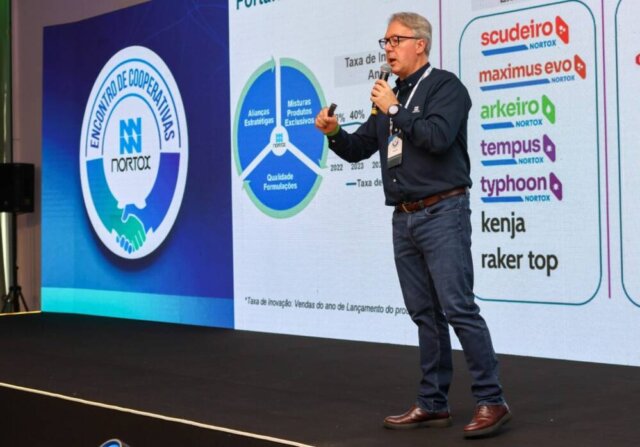
 The launches were presented to representatives of 39 agricultural cooperatives from Paraná, Santa Catarina, Rio Grande do Sul, Mato Grosso do Sul and São Paulo, as Nortox expands its portfolio of products combining generic active ingredients with patented molecules.
 The event began with a presentation by Nortox President and CEO Romeu Stanguerlin on the company’s development, recent performance and growth targets through 2030. Ferrari subsequently outlined the evolution of the company’s portfolio and its investments in research, innovation, product development, plant nutrition and seeds.
 Per DunhamTrimmer, questa transizione rappresenta una fase decisiva per l’Argentina. Il mercato dispone di ampi margini di crescita, man mano che gli agricoltori ricercano sistemi produttivi in grado di combinare efficienza, sostenibilità e un uso più efficiente delle risorse. Tuttavia, trasformare l’interesse del mercato in un’adozione sostenuta richiederà che le tecnologie dimostrino prestazioni costanti nelle condizioni agronomiche e climatiche locali.
 Il mercato del biocontrollo ha rappresentato il 12,4% del mercato argentino dei bioinput, rispetto all’87,6% delle categorie combinate di inoculanti e biostimolanti. L’adozione è concentrata principalmente nell’orticoltura, nella frutticoltura e in altri sistemi produttivi caratterizzati da una maggiore intensità tecnica.








 The results were presented during a closing press conference attended by Moisés Schmidt, President of Aiba and Bahia Farm Show; Alessandra Zanotto Costa, President of the Bahia Cotton Producers Association (Abapa); Maicon Crestani, President of the Association of Agricultural Machinery and Equipment Dealers of Bahia (Assomiba); Jarbas Bergamaschi, President of Fundação Bahia; and Alan Malinski, General Coordinator of Bahia Farm Show.
 She highlighted the inauguration of Abapa’s new Fiber Analysis Center during the fair and the success of the Cotton Village exhibition area, which showcased the importance of cotton production to western Bahia and the broader Matopiba region.