According to a research, Bitcoin is concentrated in the hands of a small number of people. Despite Bitcoin’s popularity, only 10,000 individual investors hold a third of the bitcoin in circulation. The National Bureau of Economic Research published this information in a research (NBER).
However, determining which persons are in the hands of this massive concentration of assets is challenging. Because the most prominent addresses do not represent people, but rather exchanges and institutions that hold digital currency on behalf of other investors, this is the case.
The NBER discovered a group that controlled 5.5 million Bitcoin in 2020 using a data collecting strategy that distinguished between intermediary and individual addresses. The figure has been revised to around 8.5 million coins this year.
Furthermore, roughly 3 million Bitcoin is controlled by the top 1,000 individual investors. The study claims that the concentration of digital currency might be considerably higher.
“This measure of accumulation is certainly an underestimate,” the researchers told Bloomberg. “We can’t rule out that some of the larger addresses are managed by the same organization.”
The Risks of Bitcoin Consolidation
The centralized nature of Bitcoin mining is much more pronounced. According to the NBER, the top 10% of miners control 90% of mining capacity, while the bottom 0.1 percent (about 50 miners) control 50% of total capacity.
As a result of the significant asset buildup, the network is exposed to 51 percent of assaults. Most bitcoin mining businesses, for example, may be taken over by a single person.
“Major actors, whether they are miners, cryptocurrency owners, or exchanges, continue to dominate this ecosystem.” This exposes the currency to systemic risk, implying that “the majority of future adoption gains will accrue disproportionately to a small group of users,” as the researchers explain.
The cryptocurrency universe is gradually changing the world, offering financial opportunities to millions of people around the globe, and a few months ago, during Dogecoin’s boom, some people even became millionaires, including a Brazilian. Now, a former grocery manager has disclosed that his investment in Shiba Inu has made him a fortune (SHIB).
According to information from the Fortune newspaper, a 35-year-old American worker made a risky investment of $8,000 when SHIB cost just $0.00000001, guaranteeing 800 billion tokens — that is, adding up the highs of the last few months, he earned his place on the millionaires team. In May, after reaching more than US$ 0.00035, the investor took out US$ 500 thousand and remained firm with the other part of the investment.
Shiba of the million!
Currently, investor “Rob,” as he was dubbed in the post, is using the funds to spend more time at home with his children and work on cryptocurrency-related projects that have won him his long-awaited retirement — the worker made US $68K per year as a grocery manager.
Shiba Inu prices have recently risen to new highs, guaranteeing an investment more than $1 million.
In recent months, SHIB has entered into some bullish moves and continues to impress older investors — some have even become billionaires. The currency, like any other, might collapse in value, as it happened in May 2021.
According to a survey by CB insight, 70% of software firms fail, while 97% of consumer hardware startups die or become zombies. While unicorns and initial public offerings have everyone raving about successful businesses, it’s critical to understand why so many fail so you can avoid the same mistakes. Here are some of the most prevalent causes and how to avoid them.
1. Failure to strike a balance between labor and pleasure
You may have heard as a child that “all work and no play makes Jack a dull lad,” yet this cliche is closer to business failure than most people believe. Burnout and an inability to cut losses and focus energy where it would be most lucrative are said to be the reasons behind 8% of firms failing, according to research. You’ll have to put in more effort to build a business, but it doesn’t have to be dangerous. Prepare yourself psychologically for how difficult and unpleasant it is to start a business, and then make it a point to travel, workout, and relax in other ways.
2. Insufficient funds
One of the most important aspects of owning a business is making sure you have enough cash to run it and enough left over to keep it going until you break even. You should not stop hunting for funding just because you raised a significant amount last year. Premature scaling, for example, is to blame for 90% of startup failures. When scaling, it appears that you are expanding since you are employing and funding, but you may be biting off more than you can chew. Money Monarch goes on to say that you shouldn’t combine your personal and company finances. You may even have side hustles to keep your household afloat while you focus on your business. In business, money mistakes are normal, but you must guarantee that your life will not be disrupted if something goes wrong.
3. There isn’t enough demand for your goods.
Most entrepreneurs assume their product is so fantastic that buyers would beg them to buy it. Obviously, the money will start flowing from there. However, this is naive, and it is one of the reasons why 45 percent of businesses fail. Instead, you should know what your product will achieve in the market and be willing to adapt to changing market conditions. Beta-testing your product before launching it will help you avoid failure and market rejection.
4. Losing concentration
Personal concerns, distracting ventures, and a general lack of concentration account for 13% of startup failures. You and your team may begin to wonder where you’re going and if you want to be a part of a startup and the obligations that come with it at some time. Before you call it quits, be prepared to cope with this and have measures in place to assist you get out of the black hole.
You must be an expert on your product, understand your consumer, and have a burning drive to succeed no matter how difficult things become. Businesses don’t succeed overnight, but by avoiding these and other blunders, you’ll be well on your way to turning your goal become a reality.
One of the most significant ways the internet has affected the world is in how we store data and where we store it: Online! From credit card details to Wi-Fi passwords and our to-do lists, we keep virtually all our data on the internet — or at least on tech devices that are internet-enabled. And this has significantly made life easier. But it has also made us and our data vulnerable.
The internet is not invulnerable and with every new addition to your technology stack comes a new avenue of potential threat to your data and personal information. With that said though, there are steps you can take to make your personal information more secure on the internet. Here are some of them:
Don’t Share Your Info with People
This sounds straightforward but you’d be surprised at how many people randomly give out their personal information to people through emails, online groups, social media, site links, etc. This includes taking seemingly innocent quizzes on Facebook. Don’t do it! Keep your personal data personal unless you are absolutely sure that the person you are giving it to can be monitored and questioned about the use of your data.
Revamp Your Password Strategy
If you have not started switching up your passwords and securing them, you need to start now. Avoid using the same passwords for all your sites and apps. Use stronger passwords and make sure you regularly change them. If you are scared of forgetting your passwords, you can use a password manager. Also, if you use smart-home devices, make sure you change the default passwords and regularly update the software. Use two-factor authentication or hardware security keys where compatible. And once again, do not use the same or similar passwords for your accounts (e.g “John” and “j0hn”).
Secure Your Wi-Fi
More often than not, your home Wi-Fi is the connecting link between your devices, which means it is very important that you keep it secure. A simple search of “how to find Wi-Fi passwords on laptops” will show you just how easy it is for your Wi-Fi password to get compromised. Regularly change your router’s password and avoid using the same password you use for your Wi-Fi for other accounts.
Check Site and App Permissions
Keep an eye on the fine print. Sometimes, you voluntarily give out your information by enabling sites and apps to track your data or enabling certain permissions that allow them to collect your data. Check your site and app permissions and make sure you are only permitting the apps to see what you want them to see.
Use Anti-viruses
Viruses remain one of the top ways hackers cause data breaches, and sometimes even damage your devices. So make sure you add an extra layer of protection to data and your devices by using strong antivirus software such as Norton or Avast.
Be Careful What You Post on Social Media
Some of us are so immersed in the use of social media that we give out personal data without a second thought. Sharing your location, your birthday and pictures with recognizable locations all make good fodder for hackers and even more nefarious people. Imagine getting kidnapped because you shared your location on Facebook. Ridiculous, right? Well, it can happen. Limit what you post on social media.
Regularly Update Your Software
Most times when manufacturers release a patch or software update, it’s because they’ve discovered a defect in the original software. And that defect can be an avenue of attack for hackers to steal your data. So try to keep all your software on all your devices updated.
It is almost impossible to completely secure your data from breaches on the internet but following some of these tips will give you a greater degree of security than most other internet users out there.
The blackout of social networks (Instagram, WhatsApp and Facebook) on Monday (4) revealed chaos far beyond a technological issue. We live in a society increasingly dependent on digital content and this can pose serious risks to your physical and mental health. People had to spend hours without access to their favorite digital content and many revealed how dependent they are on these tools.
Through this event, I monitored people’s behavior during and after the return of social networks. If, while the blackout lasted, the person picked up his cell phone to constantly look for something to do or analyzed whether he had already returned. If the person sought other social networks, this is already a warning for a possible addiction. Depending on the degree that it affected, revealing the size of the problem.
It is necessary to remember that a short time ago we did not have these networks and we lived. What happens today with self-indulgence so that we are not able to use other means and arguments in everyday life? To find out if the person is suffering from this addiction, see some situations that happened to many users during this time when the applications were down.
He stood looking at his cell phone not knowing what to do;
I would enter applications constantly to see if it was back;
But what causes nomophobia?
Nomophobia is a phobia caused by discomfort and/or anxiety when the individual is without access to communication through electronic devices.
In the brain, in the region of the basal ganglia, working with the limbic system, the sensation of pleasure that the release of dopamine promotes with each new like or expectation of a message received on the social network transforms the habit into addiction, encouraging people to become increasingly online seeking reward, increasing anxiety that works as a pendency for this search.
Furthermore, the function of dopamine is to provide positive feedback, a reward to the body, which becomes a constant search. This is compensatory, as the anxiety itself tends to seek more or get into a bad atmosphere asking for more reward. Like an intermittent and gradual cycle.
People who use social media to work in their daily lives reported feeling relieved and dropping their braces during the blackout. This occurs because the social network is being exploited as a professional responsibility in these circumstances; when we do something out of obligation, we are rewarded for doing something out of obligation. In contrast to folks who use social media for fun, it becomes a need with time.
This does not include influencers, who justify the addiction to the social network as a profession, or the production of content on the social network that has become a profitable profession, yet, in this way, it is part of the vicious cycle.
Excel is one of the most used programs by professionals. Microsoft’s spreadsheet editor has features that go far beyond formulas: it allows you to create visual panels, perform data searches, Excel functions create graphics for presentations, among countless other features. The tools are available in their entirety for the desktop — whether in Windows or macOS — and, to a large extent, also in Android and iPhone (iOS) mobile apps.
The spreadsheet program in the Office suite concentrates several options that help in the day-to-day — professional and personal — of its users. MKTPlace has separated a list with six useful functions for those who work with the editor.
1. Dashboards
A dashboard is a visual dashboard that shows all the important information about a business or process. It helps organize data and metrics that will be taken into account when making decisions. This ability is interesting for many professions, but it is especially used by IT professionals and in business management.
In Excel, the first step to create a dashboard is to build a spreadsheet with the data you want to display in the dashboard. Then you need to select it, go to the “Insert” menu and select “Pivot Table”.
Select two fields and create the pivot table, repeating the process with different fields to form multiple tables. The next step is to build dynamic charts with the assembled tables. At the end, you’ll have a dashboard full of information organized in a much more intuitive way than in the original spreadsheet.
2. Graphics
Graphing is another visual solution for organizing data. They are used by a huge amount of professionals such as managers, accountants, IT workers, human resources and others. The function is also very useful for students and teachers, as well as anyone who wants to give presentations.
Excel has a huge variety of chart types, such as pie, bar, line, column, area, radar, among others. To generate a graph, just select the table with the database, click on the “Insert” menu and select the preferred model. Each type can even be customized with colors, styles, fonts, alignments and design to the user’s taste.
3. NPV
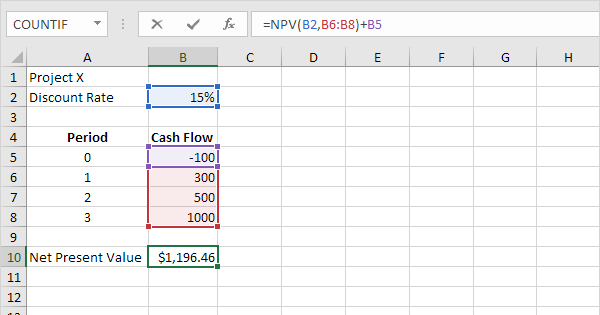
Excel functions allows you to calculate the Net Present Value (NPV), an account used by investors to find the real gain of an application. The calculation is necessary for both individual investors and entrepreneurs who wish to increase their company’s equity.
Microsoft’s spreadsheet editor has the VPL function. The formula is “=vpl(rate;value)”, without quotes, and must be typed in a blank cell. If there is more than one period, it must be added in sequence.
Net Present Value
4. Pivot table
Excel pivot tables synthesize data from very large tables, making it easy to analyze information. They are automatically updated when the values in the original table are changed, keeping the information always correct. These characteristics make the resource interesting for positions that deal with a large volume of information, such as personnel department managers, marketers, developers, etc.
After selecting a simple table, go to “Insert” and choose “Pivot Table”. As described in creating dashboards, you can create multiple pivot tables using different fields from the same original table. They can be entered in the same spreadsheet as the original or in a new one — the automatic update will work just as well.
5. Conditional formatting
Conditional formatting is for highlighting cells based on certain values or parameters. For example, you want to quickly see which months you spent more than US$1000 in the supermarket. To do this, just take the household budget spreadsheet and apply conditional formatting so that Excel will redden the cells larger than this amount.
The feature, which can be used by virtually all professionals who work behind their computer screen, is located within the “Home Page”. Select the table and click on the menu to view the tool. Excel provides a shortcut to the most popular templates, but you can edit conditional formatting by going to “More rules” to create your own standards.
6. PROCV
Excel’s VLOOKUP function lets you find data in rows of a table or a range. It performs a vertical search — that is, along a column — based on a given value and offering in response other data from the corresponding row, where the searched value was found. In this way, it links different tables, avoiding duplication of data and typing errors.
Its formula is “=VLOOKUP(search_value;table_array;column_index_num;[search_range])”, without quotes. In this string, “search_value” is what you want to find; “table_array” is the interval where the function will perform the search; “column_index_num” is the number of the column where the answer will be displayed; and “search_range”, optional padding, allows the user to define whether they want VLOOKUP to find an exact or approximate match. Yes, Excel functions are so usefull!
Asian stocks mostly fell on Tuesday as traders remained concerned about China Evergrande Community’s unresolved financial problem and assessed the functional impact of China’s increasing energy constraint.
The largest Asia-Pacific stock index from Morgan Stanley Capital World goes live today. Following a choppy day on Wall Street, Japan fell 0.13 percent on Tuesday.
The benchmark S&P/ASX200 index in Australia fell over 1% in early trade Tuesday, while the Nikkei in Japan fell 0.6 percent.
On the start, China’s blue chip index CSI300 gained 0.1 percent, while Hong Kong’s Hold Seng Index gained 0.44 percent.
The type ahead for Evergrande, the sector’s most indebted property developer, is being forensically scrutinized by retailers after the company remaining Friday did now not meet a closing date to beget an curiosity fee to offshore bondholders.
Evergrande has 30 days to beget the fee prior to it falls into default and Shenzen authorities are actually investigating the company’s wealth administration unit.
With out making reference to Evergrande, the Individuals’s Monetary establishment of China (PBOC) acknowledged Monday in a commentary posted to its net predicament that it might presumably perchance “safeguard the respectable rights of housing customers.”
Widening vitality shortages in China, throughout the interim, halted manufacturing at a sequence of factories together with suppliers to Apple and Tesla, and are anticipated to hit the nation’s manufacturing sector and related present chains.
Analysts cautioned the persevering with blackouts may perchance perchance affect the nation’s listed industrial shares.
“What we gaze in China with the builders and the blackouts goes to be a unfavorable weight on the Asian markets,” Tai Hui, JPMorgan Asset Administration’s Asian chief market strategist informed Reuters.
European shares slumped to their lowest in two months on Friday, as warnings from corporations and manufacturing facility say recordsdata highlighted the economic headwinds from present-chain constraints and elevated costs.
The Europe-wide index fell 0.4% in a extinct originate to October, which has historically been a tricky month for equities, with know-how, miners and banks main large declines. The STOXX 600 ended the week with declines of two.2%.
On-line electricals retailer AO World Plc tumbled 24.3%, saying a shortage of transport drivers in Britain and completely different disruptions within the realm current chain hit revenue improvement within the first half of of the yr.
Throughout the meantime, a inquire of confirmed euro zone manufacturing improvement remained stable in September nonetheless say took a mammoth hit from current chain bottlenecks which may presumably presumably be inclined to persist and protect inflationary pressures extreme.
“Just because it seems the ECB will protect its protection for the foreseeable future, would not imply that elevated inflation must be omitted,” talked about David Madden, market analyst at Equiti Capital.
Underwhelming figures from Asian factories and in a single day losses on Wall Highway dented the realm mood as shoppers awaited a file that’s anticipated to degree to euro zone inflation surged to a 13-year extreme.
With govt bond yields surging to multi-month highs and considerations about inflation coming to the fore, the benchmark STOXX 600 closed September 3.4% lower in its worst month-to-month exhibiting in virtually a yr.
“For equities, this combination of slowing improvement – albeit at a extreme stage of search recordsdata from – rising inflation and elevated bond yields has meant slightly bit elevated volatility, lower market returns and a rotation beneath the ground,” Goldman Sachs (NYSE:) strategist Sharon Bell talked about in a hint.
“It hasn’t helped that earnings revisions possess additionally started to slack from their frenetic dart earlier within the yr.”
BofA International Evaluation lower its outlook for European shares, predicting a decline of in relation to 10% by year-cease given a shift within the macro backdrop in opposition to “anti-goldilocks”, the place slowing improvement is accompanied by elevated low cost prices.
BMW AG rose 1.3% after lifting its annual revenue margin forecast as elevated costs for current and veteran autos outweighed the type of present-chain factors.
French roar-owned utility EDF (PA:) and vitality neighborhood Engie rose 5.9% and a pair of.5%, respectively, with merchants pointing to discount that electrical energy tariffs had been untouched by the supervisor in its opinion to own a have a look at further mark rises.
France’s most practical telecoms neighborhood Orange fell 0.8% after it talked about it’ll steal insurer Groupama’s 21.7% stake in Orange Financial institution, its on-line banking unit.
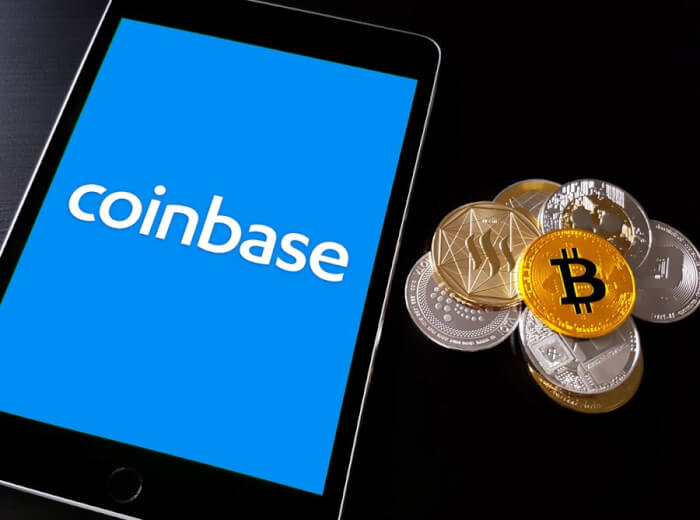
According to a security statement provided to consumers impacted by the incident, hackers took funds from the accounts of at least 6,000 clients at the cryptocurrency brokerage Coinbase on Friday (1).
According to Coinbase, the theft took place between March and May of this year, when unauthorized third parties took advantage of a weakness in the firm’s account recovery procedure to obtain access to victims’ accounts and move funds to bitcoin wallets not affiliated with the company.
According to the Reuters news agency, a Coinbase representative said, “We quickly rectified the vulnerability and began to work with these clients to recover control of their accounts and compensate them for lost cash.”
Coinbase further explained that hackers needed to know emails, passwords and phone numbers associated with accounts to managed to carry out the attack as it was done. This raises questions of how hackers managed to apply the scam, with discussions on the net of which employees could be involved in the case. Nevertheless, the brokerage stated that there is no evidence to indicate that the information was obtained from the company .
Coinbase shares traded on the New York Stock Exchange closed with a high of 1.61% this session, following the very positive day market attainment, quoted at US$ 231.15. (With Reuters)
Nvidia’s GeForce RTX 40 series graphics cards can be launched for even steeper prices than the previous generation. The new values can range from US$ 399 to US$ 2,999 .
The information was released this Monday (13) by the Chinese website My Drivers. According to the page, Nvidia is adopting the price increase strategy to discourage the use of the pieces by cryptocurrency miners and to get back the line for hardcore gamers.
The company even released specific pieces aimed at mining and even put blockers on game models, but that didn’t help. Reports from March indicated that it is possible to circumvent the so-called hash rates on common boards.
GeForce RTX
Because of the scenario, which has even contributed to the scarcity of plates and the increase in prices, Nvidia seems to have seen the readjustment policy as the only way to bring the market “back to normal”. And the increases, compared to the GeForce RTX 30 series, reach 100%. Check the comparison below:
Other models
Last week, the YouTube channel Graphically Challenged had already released a forecast of product prices. The values match those reported by My Drivers, and the list still reveals alleged prices for the GeForce RTX 4050 (US$ 279), RTX 4050 Ti (US$ 329) and RTX 4060 Ti (US$ 499).
RTX 40 MSRP Price predictions. Miners & gamers voted with their wallets.
Nvidia has not commented on the matter and the expectation is that the new series of graphics cards will be unveiled next year for release in late 2022.
Yahoo announces former CEO of Tinder as new chief executive. Again a separate company with the original name, Yahoo now has a new CEO. Taking over the role is Jim Lanzone, who previously held the role of Executive Manager at the Tinder Relationship App.
Lanzone will be responsible for managing Yahoo after the company’s latest market move. Under the name Verizon Media, it was acquired by investment fund Apollo Global Management. Despite not having detailed plans for the company yet, the group has in its hands a portal widely accessed around the world, Yahoo.com, in addition to services such as email and news on sports, technology and finance. AOL, a former content provider and portal, is also part of the package.
Prior to joining Match Group, Lanzone worked for more than a decade for US broadcaster CBS, including as the head of the conglomerate’s interactive arm. He replaces Guru Gowrappan, who is now a “senior advisor” within Apollo’s own executive board.
Replacement
At the same time, the Match Group has already confirmed who will occupy the chair of CEO of Tinder. The chosen one is Renate Nyborg, who since October 2020 was general manager of the platform in the Europe, Africa and Middle East regions.
Chosen for her leadership in expansion regions and in times of high service, the first woman to hold the position at the company begins work on September 27th.
The American company will be affected after Yahoo announces former CEO of Tinder as new Chief Executive.
The US Department of Defense has officially canceled a contract to provide cloud storage services. Microsoft had an agreement with the Department and it won. The company was made official as the winner of the $10 billion deal for the JEDI Cloud project, promoted by the Pentagon, in October 2019, but there were some setbacks.
In recent days, the Pentagon has restarted procedures and transformed the plan into a new multi-buyer contract and will seek joint proposals from Microsoft and Amazon, and is also willing to analyze possible proposals from other interested companies that manage to meet the necessary requirements. The idea is for the new decision to be final, especially given the current delay in proceeding with the project.
Although some Microsoft workers objected to the decision to make a proposal, JEDI would have seen Microsoft supply cloud services for data storage, artificial intelligence activities, and other computer needs. JEDI was put on hold as a result of the lawsuit, but a judge permitted the matter to go to trial this spring.
In 2018, there was a third party interested in the business, but Google withdrew from competing for the JEDI Cloud project and was deemed unable to provide the necessary structure. On the other hand, Amazon, which was defeated, accused then US President Donald Trump of favoring its rival in the choice.
In court, the process went ahead in April this year with a favorable opinion to Amazon’s prosecution — which probably influenced the recent move by the government.
Amazon celebrated the Pentagon’s new decision in a statement, while Microsoft said it respects the decision and that the country’s security is more important than contracts.
There is scientific evidence that PowerPoint – not the software, but the concept – is not very productive. And it is shown by the fact that great communicators don’t use PowerPoint. The problem is that displaying words on a screen while speaking (regardless of whether you’re reading or showing the pictures) doesn’t increase audience understanding and retention. Therefore, time spent building a PowerPoint presentation is wasted.
In any case, the world’s truly great communicators have long since abandoned PowerPoint (and its clones) in favor of non-slide approaches. Here are four alternative methods:
1. Go totally without slides (Sir Ken Robinson)
One of the most watched (62 million views) and most loved TED Talks of all time features educational reformer Sir Ken Robinson. Rather than clogging up his message with slides, he presents his ideas in a way so engaging and clear that his words go to the heart and stay in the brain.
While this oratory approach requires effort to create and rehearse, it is effort that really increases audience understanding and retention. As an added benefit, a speech without slides focuses on the speaker rather than the screen, creating a deeper emotional connection between speaker and audience.
Another advantage is that when people don’t know they’re going to receive a slide handout, they’re much more likely to take notes, an activity that greatly increases retention, especially when done with a pen or pencil.
2. Start with a briefing document (Jeff Bezos)
Instead of giving presentations at his meetings, Jeff Bezos requires the caller to prepare a 1-3 page briefing document containing the relevant ideas and requested decisions. Participants spend the first five minutes silently reading the document and then lead a brief discussion of its content.
Creating a fully formed, readable, self-contained document requires you to carefully consider your ideas and then express yourself clearly. This is more work than creating an outline of bullets, but it ensures that you communicate more accurately, which is beneficial for everyone. That shows us great communicators don’t use PowerPoint.
Also, a summary document is more useful to take with you than a set of slides (or a video of your presentation) because it contains fully formed thoughts that can be read and absorbed quickly. The hard copy also provides a place where participants can take notes.
3. Provide workbooks to fill in the blanks (Tony Robbins)
One of the most memorable performances I’ve ever experienced was at a Tony Robbins event a few years ago. Robbins, who has recently been controversial but remains a phenomenally effective communicator, distributed bound books containing the points he planned to make, but with blank areas for the audience to fill in the missing parts.
Creating this type of workbook takes about the same effort as creating a slideshow, but it makes the presentation more memorable rather than harder to understand. In fact, I still remember many of the points that Robbins made … more than two decades later.
4. Avoid meetings altogether (Mark Cuban)
Finally, there’s the Gordian solution: just stop holding meetings altogether. It is notorious that Mark Cuban only goes to meetings when he is on the TV show Shark Tank. Otherwise, he conducts business entirely via email.
I’m not sure this approach is practical for everyone, but it’s worth it, it’s been over a year since I’ve been submitted to a PowerPoint presentation. (Although I gave it another day, which in retrospect was a method of communication I should have avoided.)
Yes, great communicators don’t use PowerPoint. But let’s face it: 90 percent of the time you can ask a would-be presenter “what’s the gist, in three sentences” and you’ll get more conversational results than if you watched an entire PowerPoint presentation. Rule of thumb: Instead of PowerPoint, get to the point.
By 2050, one-fifth of the world’s population will be 60 years old or older — that’s more than 2 billion people. In 2030, the number of elderly people will exceed the total number of children between zero and 14 years old.
“The Silver Economy”, a study carried out in 2018 for the European Commission by the Technopolis Group and Oxford Economics, notes that in 2015 in Europe, 39% of the population – 199 million people – was over 50 years old and spending on products and private services amounting to approximately € 3,300 billion. An estimate that in 2025 it is expected to reach 222 million people, equal to 42.9% of the European population, with a spending capacity of approximately 5,000 billion euros.
In this scenario, the so-called silver economy, the set of products, services and solutions aimed at individuals over 60 years of age, has gained prominence. To give you an idea, according to the Harvard Business Review, this market moved US$ 15 trillion in the world in 2020.
In many countries we still have a movement of opening companies for this discovery. Many have not yet managed to perceive opportunities. The numbers we have are already relevant, but they will still grow much more. The future perspective is of a growing market both from the point of view of entrepreneurship and large companies that end up creating new products, services and solutions for this audience.
So this shows us the great potential that this sector of the economy has for new investors. Maybe it’s the opportunity to check if this is not the way to start a new business
Windows 11 was unveiled by Microsoft. Not a simple update and at a time that is anything but casual: for the most popular operating system in the world, with over 1.3 billion users, it is time for a new generation, designed for a new phase of the world. The pandemic has put the personal computer back at the center of our lives, after years in which the rise of the smartphone seemed irresistible. And Microsoft is ready to seize the opportunity, as CEO Satya Nadella himself admitted: “With Windows 11 we give a new meaning to the role of Windows in the world.” And he cited three aspects around which the idea of the Redmond company revolves: “Windows now recognizes us, there cannot be a ‘personal computer’ without a personal ‘digital agent’; Windows is a stage to create, to free the ingenuity that is in each of us; Windows is not an operating system but it is a platform to create your own platforms, communities and businesses, “said the man who led the company to new triumphs, up to the very recent milestone of $ 2 trillion in capitalization on Wall Street.
Android apps on Windows
In Nadella’s words, there is the turning point that the Indian-born manager has given the company: an “open” Microsoft, based above all on the cloud and on interoperability with other platforms and other systems. And here, one of the most surprising announcements, Windows 11 will be able to run Android apps (through a partnership with Amazon and its Amazon Appstore). The apps of Android can be opened alongside other software.
Something new was needed
With Windows 11 Microsoft wants to propose the Windows “of the next decade and beyond” as Nadella said again. It must be able to manage the changes that have been going on for some time in the world of PCs, with the many new two-in-one devices (just like Microsoft’s own Surface), equipped with digital pens, touchscreens and also controllable with the voice. This is why Windows 11 arrives, despite Microsoft having presented Windows 10 in 2015 stating that that would be the definitive name, that “there would be no Windows 10.5 or Windows 11” and that the necessary updates would simply arrive, as and when there it was needed. Something new was needed, which in Windows 11 is immediately grasped, right from the first installation.
The news, from the Start button to more streamlined updates
The Start button, a cornerstone of Windows since the fundamental Windows 95 version, in the eleventh version of the system is no longer on the left but in the middle, with a style more similar to the Mac Dock. forgettable Windows 8. According to Microsoft, the new User Interface is used to find the documents and applications we need earlier and better. New transparencies arrive, animations on transitions, the possibility of having “dark mode” or “light mode” (dark or light interface), faster web browsing on Edge but also on other browsers, Windows Update updates up to 40% more lightweight also to make the servers and the network work less (or to consume less and therefore be more “green”).
Microsoft showed a short video introducing the new system via Youtube:
Designed for smart working
Windows 11 is meant for times when you work on multiple devices and in multiple environments and situations. The search works on your pc, on Onedrive and on the web. Office 365 is integrated and offers the latest files no matter which device you are using. Snap Layouts is coming: it manages windows for multitasking, offering a full-window layout, divided into two or 4 windows (or more) depending on the size of the monitor in use. Resuming work becomes easier: if you set up windows in a certain way on an external, large monitor connected to the notebook, then unplug the laptop and work elsewhere, when you reconnect the computer to the secondary display the windows revert to their arrangement more suitable for a large screen.
Windows Widgets are back
Virtual desks now have their own background and their own aesthetic settings to understand where you are at a glance (you can set a desktop for work, one for home, one for gaming, etc). Windows Widgets are coming, a personalized and updated feed by artificial intelligence that offers the most useful tasks chosen by the user at a glance: calendar, weather, news and so on. The Windows Store is up to date, not only with Android apps but also with video content from external providers (Disney Plus was shown).
In a month marked by high volatility due to increased uncertainties regarding its mining in China, bitcoin experienced on Tuesday, 22, a drop of almost 10%, trading below $ 29,000, a level not seen since January. And this makes many investors wonder if Bitcoin in a downtrend. Even with a quick recovery during the day, the cryptocurrency became one of the main subjects among economists and crypto-active experts, who, despite the fall, highlight the long-term value of bitcoin.
The drop in the price of bitcoin in recent months is a response to a number of factors in the current market moment, with emphasis on the Chinese government’s contrary stance on cryptocurrency mining and, to comments from big names in the financial market. The hunt for bitcoin miners in China and statements by Michael Burry, the investor who inspired the movie The Big Bet, about excessive leverage in the crypto market are negatively impacting prices.
These factors, such as bans in China and pessimistic comments a possible market crash, are nothing new for cryptoactive investors, who should keep their focus on the long term.
If the price had not risen so sharply since the end of last year, there would be less concern about this fall.
From a more technical perspective, Ki Young Ju, CEO of data analysis firm CryptoQuant, has shown that the market’s current momentum is indeed uncertain and, because of this, deserves increased attention until its direction becomes clearer.
“The market is very uncertain at the moment. We are in a neutral range now. Stop the trades, be patient and wait for the next volatility,” CryptoQuant’s CEO posted on Twitter. Despite this, Ki Young Ju commented that its duration should not be long, pointing out that “the market is still positive in terms of supply and demand in the long term.” So we see it’s too early to say Bitcoin in a downtrend.
According to experts, a drop of this magnitude is not likely to happen again, mainly because of the entry of large investors into the market, who may see the current moment as a buying opportunity for the long term.
Every bank is working on its own crypto-active related project and how to offer bitcoin to its wealthy customers.
Glimpsing the opportunity to increase their position in bitcoin by paying less for the cryptoactive, several companies have made large bitcoin purchases during the downturn, such as MicroStrategy. Headed by Michael Saylor, the company focused on enterprise software development, announced on Monday, 21, the purchase of an additional 13,005 bitcoins for $489 million, which brought the company to over 100,000 bitcoins in its possession.
Joe Biden Considers Exempting US Refineries from Biofuels Target. The issue confronts two important supporters of the current administration: refinery executives and farmers who depend on biofuels mandates to sustain a huge market for corn.
The impasse could cause a turnaround in the government, which had been reversing the expansion of exemptions to the Standard for Renewable Fuels (RFS) program, created by the previous president, Donald Trump.
In principle, the law requires refineries to mix billions of liters of ethanol and other renewable options into their fuel each year or to buy credits from those who do.
The credits, known as Renewables Identification Numbers (RINs), are currently at their highest price in the program’s 13-year history. Consequently, refiners argue that the RFS threatens to bankrupt fuel manufacturers already hit by the drop in demand seen during the pandemic.
The value of renewable fuel credits fell 15% on Friday morning after the news broke. They traded at $1.70 each, down from $2.00 on Thursday, traders said. Later, the papers were sold at US$ 1.85.
Democratic senators Chris Coons and Tom Carper of Delaware — Biden state — have had at least two meetings in recent weeks with US Environmental Protection Agency (EPA) head Michael Regan to discuss measures to help the refiners, according to the three sources.
Coons and Carper were trying to help the only refinery in the state, a plant with a production capacity of about 28,600 liters a day. These requests were added to a chorus of appeals from other states that own refineries, including Pennsylvania, Texas and Louisiana. It means means Joe Biden considers exempting US refineries from biofuels target
At the meetings, according to two of the sources consulted, Regan and the senators discussed options such as: a general national exemption from some obligations; reducing the number of renewable fuel plants in the future; the creation of a price cap for credits; and issuing a declaration of emergency.
EPA spokesman Nick Conger confirmed that Regan had met with senators but did not comment on the discussions or confirm whether the agency is looking for ways to provide relief to refiners.
Coons did not respond to requests for comment. A Carper spokesman said the senator spoke with Regan several times about the high costs of RINs. It help us to understand that Joe Biden considers exempting US refineries from biofuels target
Refineries like PBF Energy, which operates the plant in Delaware, said biofuel laws could close factories and wipe out thousands of unionized jobs.
The company recently closed most of its refinery in New Jersey after the latest in a series of shutdowns along the east coast of the United States.
The region, which faces higher refining costs because of its distance from oil fields, has seen fuel production capacity drop by about 40% since 2000.
Federal data show that only eight of the 17 refineries operating on the US East Coast in 2000 are still operating.
In addition, at least one company is already betting that the government will end up helping the refineries. Reuters previously reported that Delta Air Lines Inc stopped purchasing RINs, leaving its refinery in Pennsylvania with a liability of $346 million at the end of the first quarter of 2021. So this situation show us Joe Biden considers exempting US refineries from biofuels target
The Congress of El Salvador approved, early this Wednesday, the 9th of the law that classifies bitcoin as a legal tender in the country.The decision makes El Salvador is the first country to adopt bitcoin as its official currency.
Salvadoran President Nayib Bukele announced the plan last weekend and is expected to enact the law this Wednesday morning. The idea, according to him, is to increase the dynamism of the economy and make the country more attractive to investors.
“The ‘Bitcoin Law’ was recently passed by the Legislative Assembly with a qualified majority. 62 out of 84 people voted! It’s all in the past! “, the president exulted. “This is a legislation that will place El Salvador on the map, and we’ll be more appealing to global business,” said Congressman Romeo Auerbach, a Bukele supporter.
Anabel Belloso, from the opposition, who voted against the project, lamented that the law “has not been discussed with specialists, nor with patience”: “The law has many implications in the economic sphere and not everyone knows how this will work, leading to considering that cryptocurrencies are volatile in the market, they are unstable,” he said.
With the new law, bitcoin must be accepted as a form of payment by “any economic agent” in the country, excluding those who “It is a well-known truth that they do not have access to the tools that allow them to conduct bitcoin transactions.” Part of country’s population is excited for El Salvador is the first country to adopt bitcoin as its official currency .
For accounting purposes, the US dollar, the official currency of El Salvador, will be used as a reference, but the text states that the bitcoin exchange rate “will be freely established by the market” and that the State will provide alternatives for “automatic and instantaneous conversion between the bitcoin and the dollar” for those who prefer it that way.
According to Bukele, giving bitcoin the status of legal tender in the country aims to generate jobs and increase “financial inclusion for thousands of people outside the formal economy” – according to the president, 70% of the population of El Salvador is currently unbanked.
In addition, the Salvadoran president also said that bitcoin could make it easier for Salvadorans living abroad to send money to friends and family in the country.
Currently, El Salvador’s economy is heavily dependent on remittances sent from other parts of the world, which represent more than 20% of GDP. Data show that more than two million Salvadorans living abroad send around 5 billion dollars each year to their home country, that is the first country to adopt bitcoin as its official currency.
Providers of this type of service charge high fees and operations take days to be carried out. With bitcoin, the cost and timeframe for these transactions would be reduced considerably: “This will improve the lives and futures of millions,” predicts Bukele.
Unlock the hidden potential within the forex market and unleash your profit-making skills with the top forex platforms. Experience the power of cutting-edge technology, innovative features, and seamless user interfaces. It's time to take control of your financial future and master the markets like a pro. Don't miss out on your chance to thrive in the world's largest financial market. Join the elite league of successful traders and unlock profits that were once only a dream.
We use cookies on our website to give you the most relevant experience by remembering your preferences and repeat visits. By clicking “Accept”, you consent to the use of ALL the cookies.
This website uses cookies to improve your experience while you navigate through the website. Out of these, the cookies that are categorized as necessary are stored on your browser as they are essential for the working of basic functionalities of the website. We also use third-party cookies that help us analyze and understand how you use this website. These cookies will be stored in your browser only with your consent. You also have the option to opt-out of these cookies. But opting out of some of these cookies may affect your browsing experience.
Necessary cookies are absolutely essential for the website to function properly. These cookies ensure basic functionalities and security features of the website, anonymously.
Cookie
Duration
Description
cookielawinfo-checbox-analytics
11 months
This cookie is set by GDPR Cookie Consent plugin. The cookie is used to store the user consent for the cookies in the category "Analytics".
cookielawinfo-checbox-functional
11 months
The cookie is set by GDPR cookie consent to record the user consent for the cookies in the category "Functional".
cookielawinfo-checbox-others
11 months
This cookie is set by GDPR Cookie Consent plugin. The cookie is used to store the user consent for the cookies in the category "Other.
cookielawinfo-checkbox-necessary
11 months
This cookie is set by GDPR Cookie Consent plugin. The cookies is used to store the user consent for the cookies in the category "Necessary".
cookielawinfo-checkbox-performance
11 months
This cookie is set by GDPR Cookie Consent plugin. The cookie is used to store the user consent for the cookies in the category "Performance".
viewed_cookie_policy
11 months
The cookie is set by the GDPR Cookie Consent plugin and is used to store whether or not user has consented to the use of cookies. It does not store any personal data.